
Marine Biological Hall of Distinction: Isabel Peréz Farfante

Updated: May 18

This article is part of our Marine Hall of Distinction collection. In this special collection, we discuss the marine biologists who have contributed most to marine biology & oceanography. We do this to commemorate these marine biologists & show gratitude for everything they have contributed to our oceans. Today's marine scientist is Dr. Isabel Pérez Farfante.
Dr. Isabel Perez Farfante was a cuban marine zoologist who specializes in shrimp systematics. She is well known for her work with the Smithsonian as a systematic zoologist.
In today’s article, we will delve into her formative years & education, her personal life & career, as well as her achievements, awards, & accomplishments. With that being said, let’s plunge into the extraordinarly life of Dr. Isabel Peréz Farfante!
Her Formative Years & Education
Isabel Cristina Perèz Farfante was born on July 24th, 1916, in Havana, Cuba. She was born to Gervasio & Isabel Peréz (Farfante), both immigrants from Spain. As a young teenager, she was sent to live with relatives in Asturias, Spain, located on the Northern Coastline. The goal of this move was to give her access to premium high school education. Upon finishing her primary education, she began her studies at Universidad Central de Madrid. Unfortunately, the timing couldn’t have been worse, as the country was torn apart by the Spanish Civil War. Isabel & her family were staunch Republicans, a group which was later crushed by the new government. As such, she had to leave Spain, & continued her education at La Universidad de Habana, graduating with a Bachelor’s of Science in 1938.
She took a position at El Instituto de la Vibora, which roughly translates to The Snake Institute, in Havana. Soon after, she became an assistant professor of Biology at the Universidad de Habana.
In 1941, at the age of 25, she met & married the esteemed geographer & economist, Gerardo Canet Alvarez. The pair both applied for Guggenheim Fellowships, with Isabel being awarded the fellowship from 1942 to 1943 in Organismal Biology & Ecology. Gerardo was awarded the fellowship soon after in 1945 in Geography & Environmental Studies. Her Guggenheim Fellowship, combined with a fellowship at the Woods Hole Oceanographic Institute, as well as an Alexander Agassiz Fellowship in Oceanography & Ecology enabled her to enter the Radcliffe College of Harvard University for a Master’s Degree in Biology. She graduated in 1944, & subsequently pursued a doctorate, which she completed in 1948.
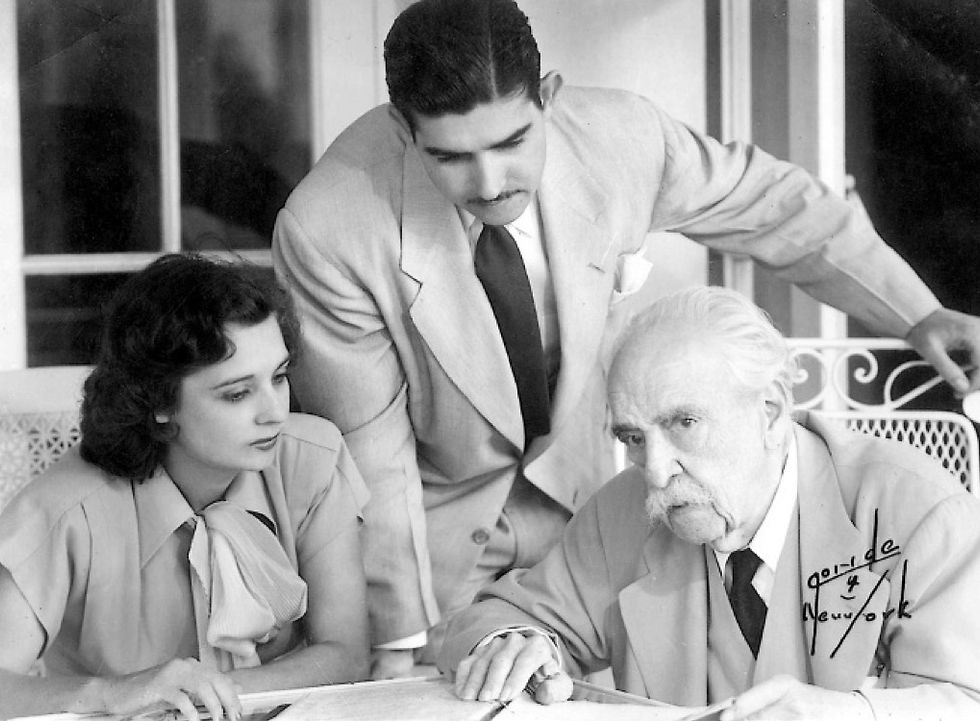
Her Personal Life & Career
During the course of her doctoral studies, Dr. Perez Farfante visited the U.S. National Museum. During this visit, she bumped into famed herpetologist & naturalist Thomas Barbour, the director of the Harvard Museum of Comparative Zoology. Barbour had a long history with Harvard University with it being his Alma Mater, & had also previously done extensive research in Cuba. Barbour respected Dr. Perez Farfante greatly, & heard of difficulties she was having with equipment, & facilities for her doctoral project. Upon learning of this, he appointed her as the Associate Curator at the Museum of Comparative Zoology in 1946. Barbour would later go on to speak highly of her in his book “A Naturalist in Cuba”. While at the Museum of Comparative Zoology, she worked alongside Henry Bryant Bigelow, the first director of the Woods Hole Oceanographic Institute.
Upon finishing her doctorate she returned to La Universidad de Habana as a full professor, & continued until there until 1960. From 1952 to 1958, she retained the position of biologist in which we focused on shrimp. From 1959 to 1960, she became the Director of El Centro de Investigaciones Pesqueras (The Fisheries Research Center) in Havana.
As with many Cubans, Dr. Perez Farfante & her husband Gerardo initially welcomed the change in regime from Fulgencio Batista to Fidel Castro, hoping for change. However, this soon changed. The new government appointed a co-director of the institute who did not have any training or background in marine biology, with minimal knowledge of the subject. This new co-director interfered with her work greatly. Ernesto, often referred to as Che, Guevara personally asked her husband, Gerardo, to accompany him on a series of trips to establish economic ties with other countries. Gerardo refused as he didn’t want to spend much time away from their 2 young sons, Gerardo Jr. & Eduardo, or his beloved wife. As a result, both of them were placed on a secret “blacklist”, by the Cuban Government. This was revealed to them by a friend they had in the regime. With this ominous realization, the couple realized they could no longer stay & Cuba, & had to leave as soon as possible. They sent their sons a month ahead of them, & soon after went to the airport without reservations, purchased a ticket, & fled to the U.S. with a single suitcase.
Her previous work with Harvard University allowed her to be appointed as the Associate of Invertebrate Zoology in 1961, a position she held until 1969. During her tenure as Associate, she conducted a study on commercial shrimp populations for the U.S. Fish & Wildlife Service.
In 1966, she joined the National Marine Fisheries Service as a Systematic Zoologist at the National Marine Fisheries Service Systematic Laboratory at the Smithsonian Institution in Washington, D.C. From 1986 to 1990 she continued her association with the National Marine Fisheries Service as Carcinologist Emeritus. In 1987, she became a Research Associate with the National Museum of Natural History. She remained a Research Associate until her retirement in 1997 during which she moved to Key Biscayne, Florida. Key Biscayne is a small town in South Florida known for its tropical beauty.
For years afterwards, she worked with the Rosenstiel School of Marine & Atmospheric Sciences on Key Biscayne on their various collections. She worked on a currently unpublished manuscript in collaboration with Maria Bello, & Brian Kensley on peneoid & sergestoid shrimp from a Bahamian deep oceanic trench called the “Tongue of the Ocean”.
Unfortunately, on August 20th, 2009, Isabel Cristina Peréz Farfante passed away in her home on Key Biscayne surrounded by her husband Gerardo, her two sons Gerardo Jr. & Eduardo, & her beloved caretaker & housekeeper, Augustina Lugo. The contributions that Dr. Peréz Farfante made to the field will not be forgotten, & her legacy continues on to this day.

Her Awards, Accomplishments, & Achievements
1. She was awarded the Guggenheim Fellowship in 1942 for Organismal Biology & Ecology.
2. She was awarded a fellowship with the Woods Hole Oceanographic Institute, & the Alexander Agassiz Fellowship in Oceanography & Ecology.
3. She was the first Cuban woman to earn a doctoral degree from an Ivy League Institution.
4. From 1962 to 1964 she was an Independent Scholar of Radcliffe College.
5. During the course of her research, she discovered massive shrimp populations in the Batabanó Gulf which allowed an economically important shrimp fishery to develop in the region.
Directories / Credits
Citation 1: “Wonderful Women Wednesday: Dr. Isabel C. Pérez Farfante”, Written by Emily Nierkrasz, & Published on September 1st, 2021. Published by the Smithsonian Institution.
Citation 2: “Isabel Cristina Perez Farfante”, Written by Unknown & Published at an Unknown Date. Published by Prabook.
Citation 3: “Isabel Pérez Farfante”, Written by Unknown & Published at an Unknown Date. Published by the Guggenheim Fellowship.
Citation 4: “Isabel Pérez Farfante de Canet”, Written by Unknown, & Published at an Unknown Date. Published by the Journal of Crustacean Biology.
Strategic Partnerships
Reel Guppy Outdoors
SharkedSkooler
Marine Enthusiasts Podcast
Cash Daniels
Tides of Tomorrow
The Open Book, Topanga
Olivenbaum Music
Pitfire Artisan Pizza
Our Loyal Patrons
P. R. Ochoa


Comments