
“Don’t Give Up!”, An Interview with Environmental Activist & Chair of Surf Rider-Chicago Devin McAllester


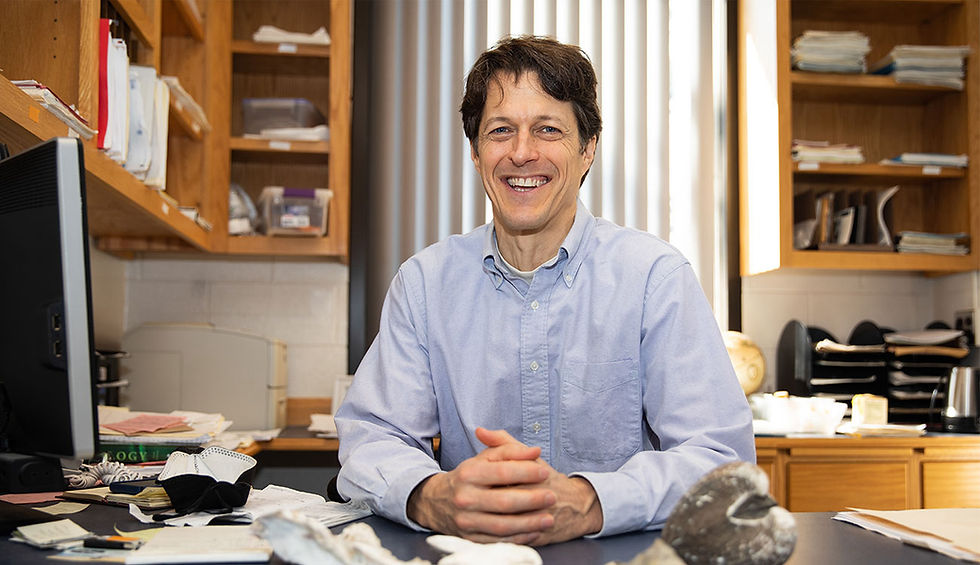
Recently, our head writer was fortunate enough to sit down for an interview with Environmental Activist & Chair of Surf Rider-Chicago, Devin McAllester!
Devin McAllester is an Environmental Activist & Chair of Surf Rider-Chicago known for his work with the Surf Rider Foundation.
In today’s interview, we sit down with Devin to discuss his career, his passion for the Great Lakes, the beaches surrounding Chicago, the Surf Rider Foundation, & the programs of Surf Rider-Chicago in a comprehensive 17-question interview. Before delving into today’s interview, please note everything said has been edited for clarity, & that the opinions of our interviewee do not necessarily reflect the opinions & values of our organization. With that being said, let us delve into the contents of the interview!
The Contents of The Interview
Questions About His Passion:
1. What sparked your passion for the ocean & marine science?
I’ve always liked the water. I grew up playing on the beach, going kayaking, & playing in the waves. I grew up mostly in the Chicago Area. I liked to surf on Lake Michigan. I moved away for a long time, then I came back about 3 years ago & got back into surfing. I’ve gotten more involved in environmental advocacy, which eventually led to my current position at Surf Rider.
2. What sparked your passion for surfing?
It’s the right mix of being outside, it’s exciting, & there’s an art to it that I like. It’s not something you can instantly pick up, you’re always honing your skills. The feeling of sliding down a wave is something else, it’s next level. It’s a beautiful sport.
3. Was there any particular person, place, moment, or piece of media that assisted in sparking your passion?
If we’re talking about environmental advocacy & community organizing, I moved back to the Chicago area in 2023. In 2024, a beach near where I live that used to be free started charging people to get on the beach. You used to be able to just walk onto the beach, swimming wasn’t allowed, but it was totally free & open to the public. If you didn’t live in that village, you had to pay $10 per person to get on the sand. I felt that was deeply unfair. Because I was a surfer, & Surf Rider works on beach access, Surf Rider seemed like the kind of organization that might help work on that. I started working on trying to make that beach free again. I started attending Surf Rider events, which is sort of what kicked off my path to where I currently am in terms of environmental advocacy & community organizing.
4. What is your favourite terrestrial, or marine animal?
I’m going with morning doves (Zenaida macroura). In my backyard, there are all sorts of birds. We have a little koi pond, & they like to come to take a bath. Morning doves always seem so relaxed & calm. They’re very sort of docile & humble birds. They’re not very showy. Other birds are kind of jerks, like the grackles, & the blackbirds. They enjoy attacking other birds. Morning doves have got this nice kind of call. They are very chill, friendly birds. They’re my favourite animal.

Questions About His Work:
5. How would you describe the Surf Rider Foundation to someone who isn’t familiar?
We’re an environmental nonprofit that weds wave, wind, & human powered sports with environmental activism. We work on beach access, & helping people access the water. We have fun events such as learn-to-surf days, & paddle out surfing competitions. We also work really hard on clean water. Whether that’s fighting industrial pollution, fighting plastic pollution, or working with restaurants to reduce single-use plastics. It’s an environmental nonprofit with a fun side.

6. How did you join Surf Rider-Chicago, & what is your current position with them?
I started going to Surf Rider events in 2024 when working on the beach access issue in Wilmette, Illinois. I attended a few events in the summer, then in the following January (2025), they needed some help. The local chapter needed some help with the website & the email system, so I started doing that. I became their communications coordinator. Then, in January of this past year, we had elections, & I became their chair. I am now the chair of the Chicago chapter.
7. What are your responsibilities in your capacity as Chair?
I lead our executive committee, so we have a whole leadership team. Everyone has different roles. We have our social media coordinator Milo who manages our Instagram & Facebook content. We’ve got Ted, who’s our volunteer coordinator. He does a lot of our event planning. We’ve got Quinten, our vice chair, Quentin’s helping with our water testing program. I help coordinate the efforts of all of our leadership team. I also serve as a spokesman for the chapter. If ABC wanted to do a piece on our beach cleanups, for instance, then I would help coordinate that, & might do some interviews. I help with direction. Obviously, we would decide on that as a team, but, I kind of steer that process. I manage those sorts of big things of coordinating & managing our campaigns & programs, making sure everything’s running smoothly. All that good stuff.
8. How would you describe your Great Lakes Friendly Restaurant program?
The idea is essentially that a lot of single-use plastics come from dining. Imagine if you’re going & getting takeout. There’s a plastic foam takeout container, they toss some plastic silverware, there are little plastic ramekins, & oftentimes there’s a plastic bag. The idea is to collaborate with restaurants to both recognize restaurants that have eliminated single-use plastics, but just as importantly to help restaurants reduce those single-use plastics. There are incentives for restaurants, we offer discounts on restaurant supplies. If you wanted to buy stainless steel ramekins, or paper straws, if you were a participating restaurant, you would get discounts. It’s collaborative!
We also try to promote them on our social media accounts, like our Instagram & our website. They get a sticker decal that they put on the front of their restaurant. We also have a dashboard on our website where you can see Great Lakes Friendly restaurants. Let’s say I was visiting San Diego, & I wanted to grab lunch. I could go on Surfrider’s website, find an Ocean Friendly restaurant, then choose that as where I get lunch so that I’m supporting a restaurant that’s working on reducing plastic.
9. How would you describe your Blue Water Task Force Program?
The idea behind the Blue Water Task Force is that water testing at public swimming beaches usually has gaps. One gap could be seasonal, which is the gap we have in Chicago. They test in the summer, fall comes, the district stops testing, but people are still going in the water. The idea behind the Blue Water Task Force is to fill those gaps in water quality testing at public beaches. In Chicago, we’re trying to start up the program & Quinten’s leading the effort. We plan to focus on a few beaches in the off-season during fall & spring. There are a lot of people, especially in the fall when the water is warm, who are still going into the water. Water quality in Chicago varies wildly day to day. If we hadn’t had a lot of rain for a long time, the water quality could be good. You can have that sort of nice crystal clear blue water. If we get a lot of rain, it can get kind of murky, & it can be a little hard to tell whether or not the water is safe in terms of bacterial levels.
Our goal is to test at three beaches in the fall & spring once per week. That information will be available to the public through our website.
10. How would you describe your Beach Cleanup program, & how often do you conduct beach cleanups?
We conduct half a dozen to a dozen beach cleanups per year, mostly in the summer, but also in the spring & fall. The goal of the beach cleanups is threefold. Obviously, when you clean a beach, you’re taking all of this mostly plastic garbage off the beach, so you’re making it prettier. You’re reducing plastic pollution as well, & you’re preventing it from breaking down into those nasty microplastics & contaminating the water. That’s definitely an aspect.
I think another important aspect is educating the public. If someone attends a beach cleanup they go down to the beach, they fill a bucket with a whole bunch of broken up plastic, & they get to see firsthand how bad the single-use plastic pollution problem is in sort of a visceral way that’s going to stick with them a lot more than some statistic.
The third prong of our beach cleanup program is collecting data from all chapters across the country. Surf Rider has about 200 chapters & clubs. Then we aggregate that data, & it’s available on our website. It helps us communicate to policymakers the scale of the issue. To say we found X pounds of foam takeout containers on beaches this year helps us communicate to a policymaker that foam takeout containers are a serious problem.
11. Type 6 Plastic, PS (Polystyrene) commonly known as styrofoam, is one of the most destructive types of plastic due to its tendency to fragment. Surf Rider-Chicago is currently working to ban the sale of foam food service containers in the state of Illinois. Do you mind guiding us through your “Ban The Foam, Save The Shore” program?
There’s currently a bill that’s being considered at the state level to ban polystyrene foam food service containers. That bill was brought to life by a broad coalition of environmental groups. Foam breaks down easily, & it sort of breaks into smaller, & smaller pieces without ever going away. That’s a pretty big problem, especially when you’re thinking about water. A foam container that ends up in the lake won’t biodegrade like a paper container. Instead, you end up with all these microplastics that end up in our water supply. They end up in the fish & the birds.
We’re very hopeful that the state of Illinois will pass that bill, & that foam food service containers will become a thing of the past.

11. What does your schedule look like week-to-week or day-to-day?
I’m a volunteer, you have to set some sort of boundaries. You can’t spend your whole life on this, as much as perhaps I’d like to.
I think that we have a lot going on. We have beach access issues, industrial pollution, water testing, & beach cleanups that need our attention, plus administration work. I think the biggest challenge for me is being able to focus my time on a particular issue & give it the attention that it needs. It’s easy to say “I’m going to spend 15 hours on Surf Rider this week!”, then you spend an hour here, an hour there, & it all sort of trickles away.
I’m fairly new to being chair, I’ve been chair for less than 6 months. I’m still figuring out things in terms of my day-to-day schedule, I slide in Surf Rider where I can, when I can, when it’s needed. I do my best to give all of our various programs & campaigns my attention.
12. If someone were interested in volunteering with Surf Rider-Chicago, how would they approach you all?
We have a calendar of events on our website. A great first step is to attend one of our beach cleanups or attend one of our fun events. We have learn-to-surf days, sea glass collection days, & rock collection days. Any of those are great opportunities to get involved. On our website, there is a volunteer interest form, where you can give us your contact information.
If you’re interested in volunteering on the beach access issues, or if you’re interested in working on clean water issues, you can fill out that form & we’ll get back to you with ways you can help us out.
13. What are your plans as Chair for the chapter in the coming years? (2026, & 2027)
We want to grow. Surf Rider-Chicago is a place for anyone who loves the lake. I think that we are not reaching the full breadth of engaging lake lovers that we could. All sorts of groups love the lake. There are kayakers, paddle-boarders, scuba divers, & snorkelers. One big goal of mine is to bring all those groups together so that we can collectively accomplish more in terms of environmental protection.
I see Chicago as a beach city, just like Los Angeles. I think that it hasn’t fully realized its beach city potential. One of my big goals is helping more & more people get out there to enjoy the water.
14. What has been your biggest triumph or proudest moment across your career?
I’ve only been Chair for about 6 months, I was on the executive committee for about a year before that as the communications coordinator. I feel that I & the chapter are in this position where we are building steam & heading towards our goals, but we haven’t fully realized them. I’m still super proud of everything that we’ve done.
We organized a learn-to-surf day with a group called Latino Outdoors. Latino Outdoors is a nonprofit that helps the Latino Community get outside & enjoy the great outdoors. Latino Outdoors-Chicago is led by a wonderful organizer, Vicky, & we collaborated with her to host a learn-to-surf day. There were 17 participants, 12 volunteer surf instructors, & no waves at all! But, everyone had a blast. It turns out you don’t actually need waves to start to learn to surf. You can have people practice standing up on the beach, & they can practice paddling in the water. I think people had a great time, & it’s awesome to see people try surfing for the first time, dip their toes in the water, get excited about it, & watch their connection with the lake grow.
15. I’m sure that you have faced just as many challenges & setbacks as you have leaps forward, what has been the biggest hurdle or challenge that you have faced across your career, & how did you overcome it?
I think the biggest challenge for anyone working in environmental protection or beach access is feeling as if there’s nothing that can be done. Hopelessness is the biggest challenge. I guess I have overcome by believing that a positive difference can be made, & that we can do something. It doesn’t have to be this way. It doesn’t have to be the case that people are charged $25 to get on the beach. It doesn’t have to be the case that our water is filled with plastic garbage. We can do something about it, we will do something about it, & there will come a day when it’s not the case.
16. What is your advice to new ocean conservationists, aspiring ocean professionals, & passionate young people looking to make a positive impact on the sea?
Just start working at it, & don’t give up!
17. Do you have any final words about marine science, the Surf Rider Foundation, the beauty of the sea, or ocean conservation?
If you live near the water, you should go to the beach. Enjoy the day. Work hard to protect it, but also enjoy it.
Directories / Credits
Strategic Partnerships
Reel Guppy Outdoors
SharkedSkooler
Marine Enthusiasts Podcast
Cash Daniels
Tides of Tomorrow
The Open Book, Topanga
Olivenbaum Music
Three J’s Kitchen
Our Loyal Patrons
P. R. Ochoa


Comments