
“There Is A Place For Everyone In The Ocean”, An Interview with Marine Scientist & Accessibility Advocate, Freya Longden

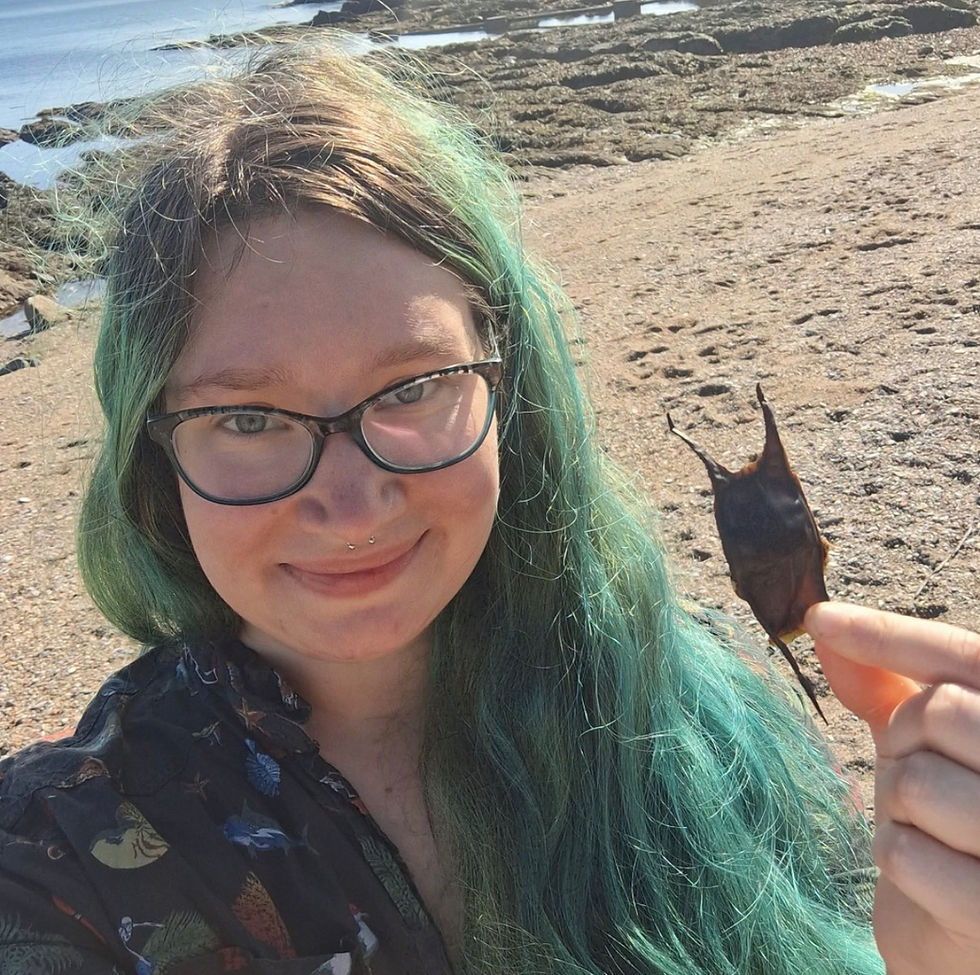
Recently, our head writer sat down for an interview with the infectiously passionate Marine Scientist & Accessibility Advocate, Freya Longden!
Freya Longden (She/Her) is a British marine scientist & accessibility advocate hailing from Bristol, UK. She is best known for her work with the National Marine Aquarium in Plymouth, UK, & her advocacy for accessibility in marine science.
In today’s interview, we sit down with Freya to discuss her infectious passion for the ocean, her work in marine science, what ocean literacy looks like, her accessibility journey, what it means to be accessible, how we can learn to be more accessible in ocean spaces, & her advice for young, passionate people looking to make their way in an ocean profession. Before delving into today’s comprehensive 16-question interview, please note that everything said has been edited for clarity, & that the opinions of our interviewee do not necessarily reflect the opinions & values of our organization. With that being said, let us delve into the contents of the interview!
The Contents of the Interview
Questions About Her Passion:
1. What sparked your passion for marine science & all things ocean?
Pretty much exploring to begin with, especially as a kid. I spent a lot of family holidays by the beach, especially in the Southwest of the UK. I absolutely loved getting involved getting out there, seeing what I could find. It went from there really.
We went to Devon & Cornwall, which are pretty much seaside towns. There are a lot of beaches, a mixture of proper sandy beaches, & some rocky shores. We spent a lot of time either snorkeling through kelp beds or rockpooling, finding all kinds of things. It was a really lovely place to explore; they’ve got some amazing biodiversity down there.
2. Was there any particular person, place, media franchise, or book that assisted in sparking your passion?
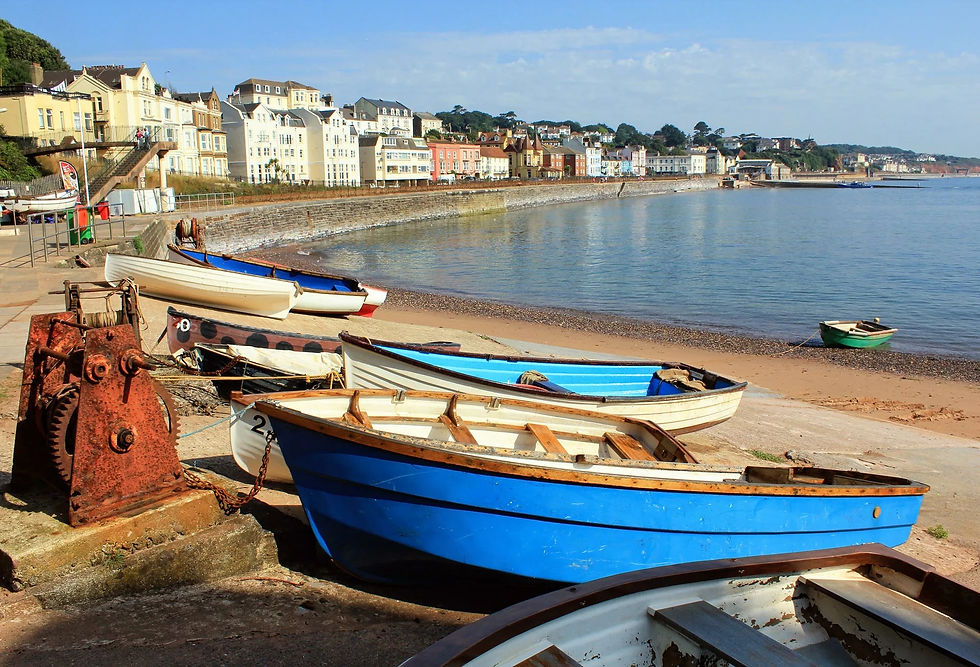
Dawlish is such an amazing little area in Devon. It’s got these amazing cafes, & wildlife to explore.
For a person, I’d say Steve Backshall. He was a big inspiration to me. I remember running home from school every day to make sure I made it in time for an episode of Deadly 60. Now, 15 years later, I still rush to put on whatever show he’s just released, or read his articles.
For media, I’m a big Disney fan. I’m a massive Disney fan. My favourite has always been Lilo & Stitch. I fell in love with lots of tropical animals, just from watching Lilo & Stitch on repeat & falling in love with Hawaii, which made me really want to explore the local wildlife I’ve got here because of that. They had so many amazing local species that they were exploring alongside fighting aliens, & all kinds of things in the film.
3. What sparked your passion for marine education & ocean literacy?
I’ve always loved sharing information to be honest. I was the nerd friend at school, always coming in every day at lunch, being excited about these new facts I’d learnt from a documentary & things like that. It came from seeing my friend’s reactions, & my classmates' reactions to some of this cool information. I’ve really seen how important ocean literacy is. The ocean is so important, from producing the oxygen we breathe, to medicine, to biodiversity, to the mental health benefits of the ocean. It’s so important; it’s such an integral part of our lives. I think having an ocean-literate society is so important for protecting the ocean, but also for protecting ourselves as well.
To me, ocean literacy is about having the knowledge & understanding of how our oceans work, how they function, our relationship with them, & then having confidence to be empowered to engage with it. Whether that engagement is going for a sea swim, reading a book about the ocean, or contacting local counsellors & government about marine issues, just confidence to be involved.
Quite often, I think the ocean can be a scary place for a lot of people. Being able to connect people with it, then being able to take it further in whatever way works for them, is the definition, to me, of what an ocean literate person is.
4. What is your favourite marine or terrestrial animal personally, & what is your favourite marine or terrestrial animal which you have worked with?
I generally love animals that have quite a weird biology. I don’t particularly love octopuses & sharks. They are incredible animals, down to how many different species there are, & how long they’ve been around.
My favourite to work with has probably been Gloria. She was a Giant Pacific Octopus that I worked with a long time ago while I was a volunteer. I spent quite a lot of time doing public shows with her, with her eating & enjoying her enrichment activities, & me telling the public all about her while she was doing it. She was such an amazing octopus, incredibly intelligent, & it was amazing to get to see her every day. She was probably my favourite I’ve worked with, but even now I work with some amazing animals like turtles & sharks that I really love as well.

Questions About Her Career:
5. Which university did you attend for your bachelor’s degree, & was there any particular reason for your choice in that institution?
I went to the University of Plymouth for my undergrad, I did a course in Marine Biology & Coastal Ecology which was absolutely amazing. I loved my course so much. It was incredible to get to meet so many different researchers in the field. That was one of the main reasons I picked Plymouth in the end; all of the lecturers are really active in their fields. It’s such a great city for marine science. It’s known as the Ocean City in the UK because of its connection with Plymouth Sound National Marine Park, which is the first marine park in the UK. It’s also home to the Marine Biological Association, the Ocean Conservation Trust, Plymouth Marine Lab, & loads of independent researchers alongside the university. It’s just this amazing hub of marine activity. I thought it was a perfect place for me. It’s a place I’ve visited quite a lot as a kid as well, on family holidays. Plymouth felt like a very good place for me to be.
6. Which university did you attend for your master’s degree, & was there any particular reason for your choice in that institution?
I was very lucky that I got to stay in Plymouth for my master’s degree. I’ve just finished that degree (July 2026). I decided that Plymouth was still the perfect place for me. I absolutely love it here! I’ve got an amazing network of friends & family down here now as well. So, I thought I’d stay. The course is absolutely brilliant, very skills-based. Our coursework wasn’t all writing essays. It was creating parliamentary documents, & things like that. We got a lot of skill development in our assessments, like learning how these different documents need to be formatted, & what sort of content they need. I was able to do some amazing fieldwork as a part of my dissertation as well. It made sense to me to stay where I was, & progress at home.
My project was looking at an invasive seaweed species, Worm Wart Weed (Gracilaria vermiculophylla) in UK estuaries, & how that impacts benthic macro-biodiversity. This species hasn’t been studied in the UK very much at all. It’s been around for the last 20 years, but no one’s looked at what it’s doing as an invasive species.

Part of my fieldwork was going to Kingsbridge Estuary, which was absolutely amazing. I got to do the project in collaboration with South Devon National Landscapes Estuaries Partnership, which is this amazing group that helps manage lots of estuaries around Devon. I got to do lots of sampling in the estuary, which was incredibly muddy. I’m still very grateful that my fieldwork team managed not to get themselves stuck & need to be rescued. It was great! I spent a few days in the estuary speaking to the local community that came by to check out what we were doing. We got to take loads of samples of organisms living in the mud, then recorded the presence & absence of seaweed, which I’ve now been able to use to look at diversity metrics to create a baseline map of its distribution in that part of the estuary so that whoever takes it further in the management scheme can refer back to the original baseline map to see how it's changing.
It looks like seaweed impacts community composition. Even though roughly the same sort of species richness was present in the areas with seaweed compared to those without, the actual identity of what those species are was very different. That will obviously have impacts higher up the food chain, like for migratory birds commercial fish species, & any other animal group living around the estuary. It has lots of knock-on effects, which is amazing, & my advisor Melanie Austin was absolutely amazing, & supportive as well.
7. One of your earliest positions was as an Aquarium Assistant with Bristol Aquarium in 2021. How did you enter the field of Aquarium Sciences, & what did you focus on in this position?
I started off at Bristol; it was my first sort of big role. I started off volunteering there for about a year, doing things like public talks, specifically with octopuses, sharks, & things like that. I also did things like shadowing the school’s team when they were doing school tours. I got to spend quite a lot of time talking to the husbandry department, seeing what their day-to-day life looked like, & things that they focused on.
From there, I got the role of Aquarium Assistant, which is this amazing front-of-house position where you kind of bounce around a few different areas. I’d spend mornings doing admissions, & helping with stocktaking, then I’d run & do school tours or a birthday party, then I’d do these big public talks to a few hundred people. It was a very varied role. Bristol Aquarium is one of the only marine things near Bristol, so I was very grateful to get a role with them there. It was just this amazing experience, meeting people in so many different careers & niches. That’s where I particularly fell in love with engaging with communities. We had quite a lot of community groups from the South West (UK) come to visit us for various workshops.
8. What did you do in your capacity as an intern with the international sea turtle conservation organization Archelon Research Foundation?
This was so much fun to do! As part of my undergraduate degree, we got to do a placement year. I spent 3 months in Greece over the summer on Crete with the Rethymo project with Archelon, & it was just amazing. We were doing lots of public interactions, going into local hotels in the area, doing talks to visitors & guests, but we also got to do quite a lot of very practical conservation work.
Our teams would survey a big stretch of beach around the north part of Crete, & we were recording any conservation concerns that we were finding, things like tire tracks on the beach near nests, or if we were seeing particular erosion patterns along the coast we were able to report those. We also got to help with the hatching session, which was absolutely amazing. Once we identified the nests, we could mark them, wait for them to hatch, then record how many hatchlings made it to sea. We would look at the eggs inside the nest after hatching, excavate the nest, & look at the different development stages of any eggs that weren’t able to hatch. Some of those could have been because of bacteria in the nest, or not being fertilized in the first place. We got to report all of that data back to Archelon, who was able to track any trends over the last 10 years in the area to see what the turtle population was doing. It was absolutely incredible! It was these 3 amazing months where I got to live in Greece with friends; it was absolutely brilliant.
It was very warm, & the accommodation was tents. We were in a campground. I did camp for 3 months, which was definitely a challenge for me. I love camping, but that was a particularly long time to spend on an air bed. But, it was Crete in summer, so it was just absolutely beautiful right by the beach. We got to spend our time off snorkeling & exploring the island. It was a really, really special place.

9. What do you focus on as an Ocean Discovery Ranger with the National Marine Aquarium? How would you describe the facility to those unfamiliar with it?

The National Marine Aquarium is an aquarium in Plymouth. It’s run by the Ocean Conservation Trust, which is an amazing ocean charity in the UK. It has 3 main focuses that it works with.
The first one is the community & public engagement side. That means getting people to the aquarium to come explore, & come to learn with us. We also do skills things like work experience programs, volunteering, snorkelling sessions, things like that.
We also do habitat restoration of seagrass meadows around the Southwest. We have this amazing habitats team that researches, restores, & monitors seagrass beds around the area.
We also have our advocacy side, which works quite a lot with local MPS, local government, the UK government, & the UN as well, trying to drive marine policy change. It’s an amazing charity. We’re very lucky that we have a lot of resources & facilities to do so many different projects through it.
My work is primarily with the engagement team. I run all kinds of activities as part of my role, which is so much fun! I have the most amazing ranger team. Everyone is so incredibly talented, professional, & passionate. I absolutely love doing things like our Oceans For All sessions, which can be sensory sessions, & tours. We have virtual reality headsets that we can take into different settings for people who can’t access the beach as easily. Things like going into residential care homes, & taking them to all kinds of community groups around Devon. It’s so much fun to do!
There are so many people who, as a kid, might have gone to the beach, or they might remember swimming in the sea, but they don’t have as easy access to these amazing blue spaces. Being able to bring the ocean to them or for them to come to the aquarium & explore different areas & all the amazing wildlife is really special. I remember there was this amazing woman who hadn’t been to the beach in like 3 decades, & she stepped into the aquarium. I remember seeing her walk in for the first time, & she just immediately started crying. The ocean had been such an important part of her life for so long, but because of health concerns, she wasn’t able to go, so being able to provide that experience, & that connection again for her was a lovely thing to do. She was an absolutely amazing lady to speak to.
Questions About Her Advocacy:
10. You have been a champion of accessibility in the field of ocean science. What led you down the road of advocacy?
The ocean as I’ve said has always been a very, very big part of my life. I was unfortunately diagnosed with myalgic encephalomyelitis (ME/CFS) about 10 years ago. I’ve been quite limited physically in what I can do. It’s been a really tough journey for a very long time, especially when I was still at school. I had lots of teachers & doctors telling me that I would never make it in marine science because there wasn’t a place for me here. My disability would be too much for anyone to want to deal with professionally, & there just wasn’t space for me. People wouldn’t want to be working with me because of it. I’m quite a stubborn person, so I didn’t take it too well. I was 7 when I decided I wanted to be a marine biologist, & I wasn’t going to let that stop me.
I’ve been in a very privileged position where I’ve been able to attend university. I’ve still been able to work, but there are lots of people with ME/CFS & similar conditions who don’t have that luxury, because it can be a very difficult disability to live with. I want to give that back, & show people in similar positions that it hasn’t got to be the barrier that you might be told it is. There are so many different accommodations now, & generally people are a lot more accepting of needing extra support, & being able to provide that extra support. There is a place for everyone in the ocean. The ocean supports all of us, & so we all should have a say. We should all have the chance to engage with it. It doesn’t matter what that engagement looks like, whether it’s small things or big things. If it’s things from home, that’s something I’m a big advocate of; you can be an ocean scientist from home. Citizen science is absolutely incredible, & it is still science. There are so many ways to get involved; you haven’t got to do that traditional path anymore.
11. Why is accessibility important for people in marine science?
I think it’s important because so often throughout history, people with disabilities have been overlooked. For a long time, we were shut away, ignored, & silenced. But actually, the ocean is for all of us. It impacts all of us, & quite often people with disabilities have had to adapt to different situations; there are so many skills that we have developed because of our disabilities. These can be super helpful in dealing with marine issues, like our resilience, problem-solving, adaptability, flexibility, & just looking at things from a completely different perspective can come up with so many different ideas that wouldn’t have been thought of without us being there. Even down to smaller things like having chairs with backs on them for support can be so helpful to so many different people, but until someone says it, you don’t think about it. The ocean is very much a place where we need every single person involved to deal with it, for the ocean’s sake, & our own. It’s important that everyone is given that opportunity to be a part of it.
12. How can we, in the ocean profession, make our spaces more accessible?
This is a really difficult question because access in general is quite a personal experience, so things that might make something more accessible to me might then be a barrier for someone else. It’s about trying to find that balance to support as many people as possible, & having flexibility to change access if you need to. Even things like adding image descriptions to social media posts can open up a lot more engagement because other people can then access those posts.
So often, people are having these conversations about how we can make our different institutions accessible without actually consulting any people with disabilities. If you’re trying to engage a community of people, how can you do that without speaking to them about it? We all have different requirements & different needs, & without those voices, you don’t know which ones are feasible. They might have ideas of what works for them already that can be more easily implemented. It’s about having those conversations, & being honest about what’s practical & possible within your setting as well. There are some accommodations to places that are not practical, whether that’s building age, location, or something similar, but there are lots of other things you could do instead that might make it more accessible. I think there’s this big idea at the moment that if you’ve got a ramp, that immediately makes your entire building accessible to everyone, but there’s no such thing as fully accessible. There’s always going to be a balance between what access facilities you have that become barriers for someone else.
It’s also about keeping those discussions open & ongoing, not just a 1-hour Zoom call with someone, then making all the decisions. Things can change over time, & some things need to be an ongoing process rather than a one-off conversation.
13. What has been your proudest moment or biggest triumph thus far? (Note: This interview was conducted on September 23rd, 2026)
Definitely finishing my master’s degree. I submitted that last week. To me, that was a big one because I’ve been told quite a lot that I would never finish my GCSEs, or finish my A-levels. I would never get into university. I would never get a degree. I would never get a master’s degree. So, to me, my biggest achievement is finishing school. Being able to say that I have been able to do this, I have done this, & look at all these amazing things I’ve been privileged to do is a big one for me.
Also, getting my role at the National Marine Aquarium with the Ocean Conservation Trust, because they were a charity that I’ve followed ever since I was a kid. Being able to be a part of the team, & being part of providing that experience for other people is really special.
14. Across your career, I’m confident that you have encountered your fair share of hurdles & challenges. What is the largest challenge you have faced across your career? How have you overcome it?
For me, this really links back to my disability issues. My biggest challenge was probably people’s perceptions of what I could & couldn’t do. During my time at university people would assume that because of my physical challenges, I wouldn’t be able to do fieldwork. By advocating for myself, I was very able to explain what accommodations I’d need, & I was able to still do these things. Taking regular rest breaks, being able to sit down instead of long standing periods in the lab, things like that really do make a difference. I was very lucky that I was able to work with some amazing people.
Definitely the biggest challenge that I’ve experienced, & a lot of friends in similar positions have, is people just assuming things rather than asking you. Quite often people don’t want to ask because they don’t want to come across as not being sure what to do. They don’t want to be in a very difficult, uncomfortable, conversation. Unfortunately, a lot of times these conversations are uncomfortable, & that’s okay. It’s okay to feel that way.
I was very lucky, especially in my fieldwork. In my master’s, I was the project lead, & I was able to tailor it to what I needed. All the volunteers I had with me during that time also had various physical conditions, so we created this amazing safe place in the fieldwork team, where if someone needed a break, it was no questions asked; we would always stop immediately for however long as needed. It was also in a 30° C (86° F) heat wave, which for the UK is very, very hot. It was in a heat wave, with no shade, in an estuary, so it was quite a physical thing. I think having that space for people to be able to say what they needed is really important.
15. Do you have any advice for disabled individuals looking for careers in marine science, or young, passionate people who have an interest in marine biology?
Use that passion! There’s a reason that you love this so much. There is absolutely a place for you in marine science, marine conservation, & the marine field. We need everyone, & you are definitely a part of that. Passion is our drive; it’s the thing that makes us want to do what we do.
Take opportunities as they come, even if they’re not necessarily the thing you’re most interested in. You can still learn a lot from it; you can get a lot of skills from it. It’s also okay to say no to opportunities. That is something I learned quite early on in my career. There were things I was getting involved in that I didn’t particularly enjoy, & things that were offered to me that didn’t fit how I was thinking or feeling. They were too much at the time. It’s okay to say no. So often we are told to take every single thing that comes to us, because it’s such a competitive field. It’s okay to take a step back, whether it’s for your own mental well-being, or it’s just not the right fit for you. If you ask for accommodations & try to advocate for yourself, & get some sort of pushback from that, maybe that’s not the environment that’s best for you. It’s okay to say no to things.
16. Do you have any final words about your work, your advocacy journey, science communication, ocean literacy, accessibility, or the beauty of the sea?
The ocean is such an amazing place. It connects all of us. We have this amazing habitat, resource, & space. It’s really special to me to be able to do all the things that I’ve done, & hopefully inspire other people to be a part of that journey, in whatever form that looks like. Whether that’s citizen science at home, signing petitions, sending emails to MP’s, or picking up a bit of litter on your walk to school or work. You haven’t got to do these big dramatic acts for you to be a conservationist or involved. Simple things go a really long way, especially if everyone is able to get on board with that. If you have a bit of self-doubt that you’re not doing enough, you absolutely are. Just caring is an amazing place to start.

Directories / Credits
Strategic Partnerships
Reel Guppy Outdoors
SharkedSkooler
Marine Enthusiasts Podcast
Cash Daniels
Tides of Tomorrow
The Open Book, Topanga
Olivenbaum Music
Pitfire Artisan Pizza
Three J’s Kitchen
Presence News
Our Loyal Patrons
P. R. Ochoa
OCTOPUSYSES AND SHARKS OHH MY HOODNESS AMAZING