
“We Want To Play A Part In Making Sure That Fisheries Remain Sustainable For The Next Generation, & Hopefully Future Generations To Come Too!”, An Interview With Lobster Aquaculturist Joe Moody

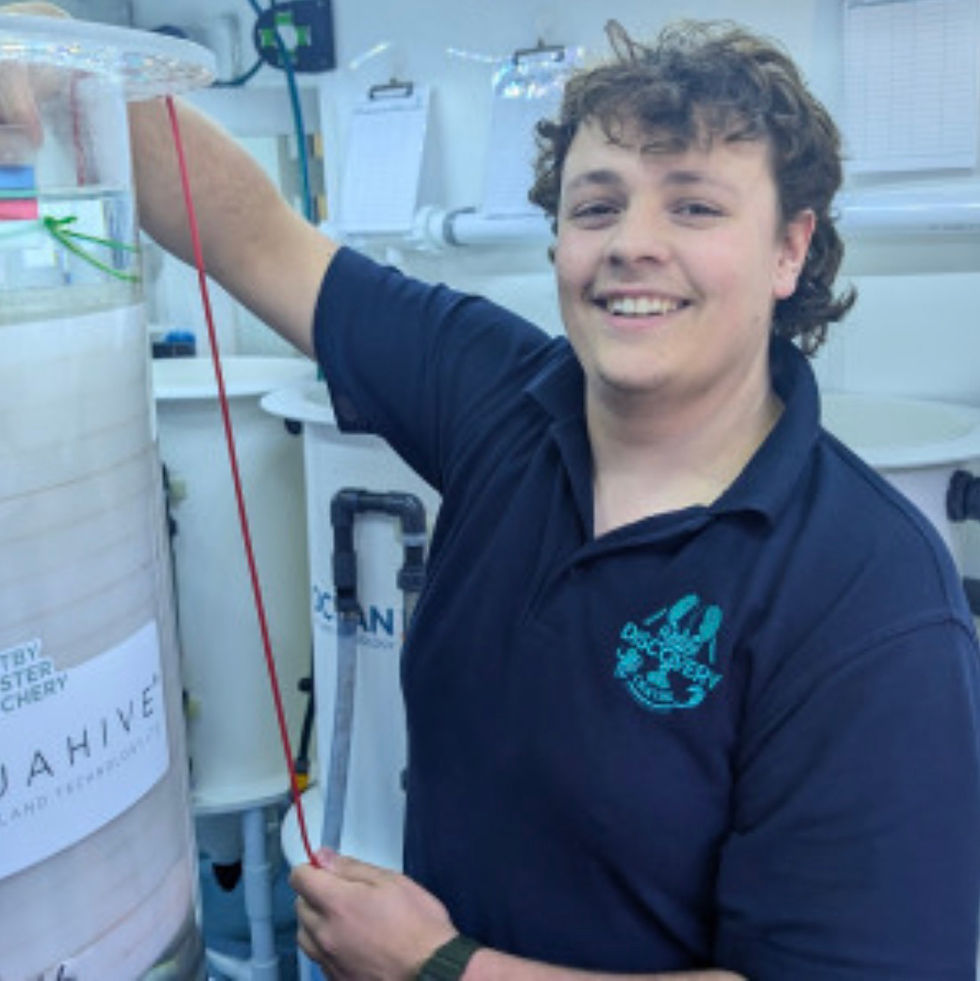
Recently, we were very fortunate to sit down for an interview with Lobster Aquaculturist & Ocean Conservationist, Joe Moody!
Joe Moody is the Head Aquaculturist at Whitby Lobster Hatchery, a conservation initiative dedicated to the European Lobster. He leads the organization’s hatchery initiative to increase the European Lobster population.
In today’s interview, we sit down with Joe to discuss his passion for the sea, his education, his work with the Whitby Lobster Hatchery, & his advice to passionate people looking to make their way in the field in a comprehensive 18-question interview. Before delving into today’s interview, please note everything said has been edited for clarity, & that the opinions of our interviewee do not necessarily reflect the opinions & values of our organization. With that being said, let us delve into the contents of the interview!
The Contents Of The Interview
Questions About His Passion:
1. What sparked your passion for the ocean, & marine science?
I know it’s super cliche, but for as long as I can remember, I’ve wanted to become a marine biologist. Instead of watching cartoons like a normal kid, I loved watching nature documentaries, particularly those focused on the ocean. David Attenborough’s Blue Planet is a personal favourite of mine, I found it so fascinating how many unique-looking and unique-acting creatures there were. I don’t know if you’re the same, but even with all you know about the ocean & the things that live in there, every now & again you’ll see something & go, “How does that work? How has evolution led you here?”
I think it started way back in school. Every time we’d get a personal project to do, I’d always find a way to make it about the ocean. My mom tells me this story from when I was in year four, I was about eight years old. We had an aspirations board outside of our classroom where you put what you wanted to be in the future. Amongst all the classic childhood jobs, athlete, pop star, whatever, right in the middle, there was me listing marine biologist. I probably knew I wanted to be a marine biologist before I knew how to spell it.
2. What sparked your passion for aquaculture, & aquariums?
It’s quite a new passion. Aquaculture wasn’t something that we covered much during our university course. My only real exposure to it was that I kept crabs for my dissertation project. I did a feeding experiment with them, we kept them in what's called a “Crab Hotel”, but that was it. The name glamorizes it slightly, it’s just a big stack of tanks where you can keep lots of crabs with water flowing between them all. As with all aquaculture facilities, the goal is to keep the animal alive & healthy, so there wasn’t any room service in the crab hotel. There was something quite amazing about getting to watch a creature so closely. It was never really anything I considered taking forward, because we didn’t really know about it. All I knew was that I wanted to do something hands-on, & my passion was conservation. I didn’t realize that aquaculture was such a great way to marry those two things.
3. What is your favourite terrestrial, or marine animal personally, & what is your favourite marine or terrestrial animal that you have worked on?
It probably isn’t surprising that my favourite animal that I’ve worked with is most certainly the European lobster. I guess this is the case with any animal that you spend a lot of time with. When you witness them every day, you notice little nuances in their behaviour, & they’re just so fascinating. They’re absolutely amazing. For the sake of argument, I have some honourable mentions. When I was a kid, I was in awe of how big things could get. I loved marine megafauna. The Blue Whale deserves an honorable mention. I loved anything that looked sort of weird & unusual. I had a bit of a Moray Eel obsession for a moment.
If I had to choose one that wasn’t a lobster, I would go with the Blue Shark.

Questions About His Career:
4. What university did you attend for your undergraduate degree, & was there any particular reason you chose that university?
I studied Marine Science at Newcastle University in the North of England. There are many reasons why I wanted to study there. On the first day I visited, I completely fell in love with the course. Despite what I said before, there was a short period where I reconsidered what I was going to study at University. I wouldn’t go as far as to say my secondary school talked me out of Marine Science, but they definitely encouraged me to study something a bit less niche, something more employable. I went to the university to check out their biochemistry course, but after seeing the course, & talking with some of the lecturers there, I made up my mind that it was marine science that I wanted to do.
I also liked that it was close to home. Newcastle, & where I’m from in Yorkshire, share the same stretch of coastline. As a result, they generally have quite similar geography & habitats. I’ve always been interested in the local marine environment, I think it’s really underappreciated. I think a lot of people see the North Sea as a cold, grey, dull place. I mean it is cold, especially today, it’s freezing, & it is quite grey, but it’s not dull. If you look below the surface, there are so many beautiful & interesting creatures under there. They may not be as colourful as their coral reef cousins, but you shouldn’t judge a person on looks. You should judge a person on their personality & actions. I think the North Sea is the same, but the North has a great personality.
5. How did you come to work at the Whitby Lobster Hatchery?
I had quite unfortunate luck of graduating from a university course in the year 2020, straight into a global pandemic. I had a master’s planned, I was going off to Zanzibar to study the life history of the Halavi Guitarfish. Of course, because of the pandemic, it was postponed multiple times, then eventually indefinitely. With all of the unknowns of the pandemic, I had to put my life on hold a little bit. You know, I was constantly hoping that the next set of restrictions would lift, & I could go do this amazing project. It never quite did. I felt a bit low, & a little bit nervous. I thought maybe I was wrong to choose a subject I was passionate about over something more employable. All of this was happening between rejection letters & ignored job applications. It wasn’t great. I was scrolling through jobs one day, & I saw an advert for head aquarist at the Whitby Lobster Hatchery. I thought “Oh, what the hell is the Whitby Lobster Hatchery?”, I’d never heard of it, so I was instantly intrigued. Not only was it a unique project, but it was local to me as well. As I read more & more about the job, I realized that I was far from the experience that was needed. I sent over my CV & my cover letter anyway, & I didn’t get the job obviously, but it did put me in touch with them. I asked if they took volunteers, & they did! I remember walking in on my first day & thinking, this can’t be right. This can’t be the place. We have a small native marine aquarium attached to our hatchery called the Discovery Center. At the time I arrived, it was still being built. I hadn’t got lost, I had found the right place. It just didn’t look like the kind of place that released lobsters.
I volunteered there every Friday for the better part of a year, & slowly became more independent. Eventually, I did full solo days as a volunteer. Then in April (2024), a part-time position came up for the busy breeding period, & they asked me! So I quit my previous very boring shelf-stacking job in a supermarket, & here I am now! Haven’t looked back since.
6. Over the course of your career at the Whitby Lobster Hatchery, you’ve held 3 positions. What positions have you held, & how did you work your way up to becoming head aquaculturist?
It all happened very quickly. My title was simply Aquarist in the first part-time job offered to me. My job was to look after the life support system, feed the lobsters, count larvae, & other proper good hands-on stuff. Then, at the end of the 2024 season, the current head aquarist moved on, which left me as the only hatchery employee at that point. My role shifted over the winter period to what’s called a Hatchery Technician, which reflected the kind of shift in the work. The hatchery goes into the decommission stage over the winter which involves completely draining the system, cleaning the pipes, & making sure that it runs as efficiently as possible. That’s why my title sounded more technical as I wasn’t looking after lobsters at the time. Once I was done decommissioning stuff, I had experience in all aspects of the hatchery. As 2025 rolled around, I got my promotion to Head Aquaculturist, & I went full-time then.
I think the biggest change wasn’t in the work that I was doing, but in the jump in responsibility. I wasn’t only in charge of hatchery things anymore, I was now in charge of volunteers & stuff. It’s been a fun challenge. I’ve enjoyed developing a much wider set of skills, a much wider set of skills than I thought I ever would when I first started volunteering. No offence to anyone who volunteers.
7. Illuminate the work you all do at the Whitby Lobster Hatchery. How would you describe the work of the to all those unfamiliar?
To put it simply, we’re a conservation charity that hatches, rears, & releases the Juvenile European lobster back into the North Sea. We have a small aquaculture facility which is located in Quayside. The process starts with the fishermen. We take egg-bearing female lobsters, which we call hens. We hold them in our tanks, where they will eventually hatch. When they hatch, we count them & move them into our development room. There, they’ll stay for about two weeks or so. Soon, they’ll reach a point during their development where they’ll change to their third or fourth stage. Between stages three & four, they undergo quite a significant morphological change. During stage three, they are small & curled up, almost shrimp-like. They gradually change into what essentially is a mini-lobster, so their claws stick out in front of them, & their tails curl out behind them. They can actively swim, feed, & find places to hide. They will stay in our facility until it is time to release them. To release them, you want a nice calm day. We focus on keeping the environment controlled & clean, which ensures the lobsters we release are as healthy as possible.
There are a few different ways we release them. The best way & the way we release most of them is by sending out a dive team. We’ll send them off with divers to different shipwrecks off the coast. Some of them, we will take on a boat, & stick a long tube off the edge to pour them down. We want to release them at the bottom, as the vast majority of predation will occur from pelagic fish or seabirds. So, we send them straight to the bottom where they can find places to hide. The final release we do each season is a public-focused shore release from Whitby & the surrounding beaches. We’ll take some of the trays, & advertise our releases so the public can come along. We will release them into rock pools with plenty of seaweed-covered sandy bottoms. As soon as they are released, they’ll want to hide. It’s like saying goodbye to your many, thousands of children.
8. What is the goal of your work, & how does it impact the local marine ecosystems, as well as fisheries?
One of the most important aspects of what we do is conservation. You can split that conservation into two branches. The European lobster is a keystone species in our local habitat. They play an important part in the marine food web. They are omnivorous scavengers, which means they’ll eat just about anything, preferably dead things. They clean up the sea essentially. They add lost energy back into the food chain, so they play a very important role. Despite Whitby’s relatively small size, it is a huge lobster fishery. It’s the third largest in Europe after items after its neighbours, Scarborough & Bridlington. Lobster is super important commercially. The reason we want to ensure there is a future in lobster fisheries is that, as techniques go, potting is relatively sustainable.
To start, it’s a static fishing gear, which means once it is released it will cause minimal damage to the seabed, much less than a trawl or a dredger which kind of tears it to pieces. It’s quite sustainable in that sense. They’re selective too. By law, any pot that is released must have an escape gap. That escape gap is designed so that any lobster that is undersized can crawl out of the pot if it finds its way in. That takes away the stress of being hauled up. If an undersized lobster is hauled up, it’s obviously thrown back again. There’s also significantly less bycatch, as other animals can escape too. Whitby’s been a fishing port for years & years. They’ve caught things like whitefish, & tuna. When fisheries collapse, fishermen don’t just stop fishing. That’s their living. So, they’ll move on to something else. Everything they’ve caught near here has had more pronounced unsustainable impacts on the local marine environment. That’s one of the reasons why we want to ensure the lobster fishery survives.
I think one of the unique things about us is that what we do is not at odds with exploitation as conservation so often is. Our project shows you can do both. You can take from the sea & put back into it in a sustainable way. We’re really pleased & lucky that the fishermen have got behind what we do. We want to play a part in making sure that fisheries remain sustainable for the next generation, & hopefully future generations to come too.
9. What does a typical day for you consist of?
Quite poetically, I guess it follows a lobster larva as it develops in our hatchery. They’re fed artemia, also known as brine shrimp or sea monkeys. We harvest them every single day. The fresher the feed, the more nutritious it is for our lobsters. We harvest about five million artemia every day, which sounds like a lot, but they are tiny. Once the first feed’s harvest, we chuck it in the tanks. If you imagine the hatchery as three rooms, the first room is the live feed room, the second is the hen room, & the third is the development room. We move from the live feed room into the hen room next, to start catching the freshly hatched larvae.
The European Lobster is nocturnal. Most of its activity, including hatching, occurs at night, which means we leave the tank empty on an evening, & come back to find thousands of larvae. It’s not a continuous process, thankfully we only have to count once a day. At the height of the season, you can see up to 10,000 larvae per day, which is a lot. It’s a lot for one person to count, especially when you’re doing it by hand, which is how we do it, with a clicker, & nothing else. It can take a long time, & if you’re unlucky, you’re on your own & you’ve got 10,000 larvae to count.
Once we’ve done that, we move into the development room, which is where they’ll spend the majority of their time with us. We put them into one of 12 large upwelling tanks. We call them that because the water comes in from the bottom, creates a nice flow, & keep them moving. We check on these upwelling tanks every day for lobsters that have reached stage four. Lobsters are natural cannibals at all stages of their lives. When they molt to stage four, as I mentioned before, their tail flips out so they’re much better swimmers, & they gain use of their claws, so they become a significant threat to any larvae who haven’t molted yet. Once they hit stage four, we move them into what are known as aqua-hives, which are these big cylindrical tanks that can hold trays. Each of these trays holds 135 individual cells, one per lobster, & that’s where they’ll stay until they’re released.
If you have any time left or any time between counts, that’s usually spent on system maintenance. Things like cleaning pipes, siphoning, or changing filters. The system must remain clean, so you can raise the lobsters in an environment that is close to ideal. Sometimes you can squeeze in a few emails too.
10. Take us through the lifespan of a lobster born in your facility. What does each stage of life look like, & what is the average mortality rate?
They’re very small during all of the life stages in the hatchery. They start super duper small as an egg which is attached to the female’s abdomen which is below her tail. They start jet black in colour, & over the span of 9 months go from a jet black to a rusty red, which means they’re ready to hatch. We don’t tend to hold them for that time. The fishermen bring us those rusty red colour eggs, which reduces their handling time with us. Once they hatch, they collect in little tanks where we count them. They’re about half a centimeter, maybe less. The first three stages are somewhat similar, though they can be distinguished by size. Behaviour-wise, all three of them are planktonic. They can’t do very much in the way of swimming. They can grab things with their claws, but they awkwardly droop down from their body.
They’re passive suspension feeders at this stage, so they eat whatever comes to them. When they reach stage four, as I mentioned before, they go through quite a significant morphological change into that mini-lobster, & grow to about 2 centimeters. They become active swimmers at that point, which is when they become a danger to the other ones. That process in the hatchery is about 2 weeks in the hatchery, in the wild it is about 4 weeks.
In the wild, the mortality rate is incredibly high, so lobsters are what’s known as R-strategist breeders. They have large broods, but little to nothing in the way of postnatal care. It’s a strength in numbers sort of thing. The goal is to hatch as many as you can & hope that one or two of them survive. The high mortality rate is somewhat by design, but it doesn’t make the actual numbers sound any less shocking. The vast majority of mortality will happen in the first three stages. So, the most vulnerable stages of their lives are the ones we keep them through the hatchery during. We’ve managed to get the survival rate to about 9% in the hatchery, from hatch to release. We’re happy with that. It doesn’t sound like a lot, but compared to the wild, it’s not bad.
11. On average, how many lobsters are born in your facility annually, & how many lobsters are released annually?
Last year (2025), we managed to release over 20,000 lobsters, which was our biggest year! We’re super happy with that. We did 9,000 in 2023, & 15,000 in 2024. We’re hoping that number keeps climbing. We’ve released about 44,000 total.
Based on our survivor rate last year, we probably saw about 200,000 lobster larvae come through the hatchery.
12. What education programs do you have at the Whitby Lobster Hatchery, & how do you attempt to involve the community in your work?
We do a lot of work with school groups. That’s probably our biggest one. They come in pretty regularly to visit the Discovery Center where we teach them about all the creatures you can find in the tanks. We talk about the hatchery process as well, & tell them the importance of what we’re doing. We’ve had over 100 in the last year, & a lot of them are local. It’s always great seeing them thinking, & in awe of the stuff in the tank. It’s super rewarding. We also give talks to local groups, & institutions, which are a bit more in-depth. They always go really well, & we host stalls as well at local events. There’s one coming up in the next few months called the Fish & Ships festival which celebrates Whitby’s fishing heritage. We will have a little stall there, & talk to people about what we’re doing.
I think it’s important to me to inspire, & take pride in the local marine environment. It’s something I’m passionate about, whether it’s showing off the local marine life in the aquarium, or talking about the work we do with the lobster. It always ends up being a highlight for me when we get to share what we do, & teach.
13. What research programs does the hatchery partake in or support?
We’ve previously worked with dissertation students. We’ve had some students come & volunteer with us before their dissertations. They’ve loved the hatchery & the idea of raising lobster. They’ve come back to us later on, & based their project on the facilities we have. One (research project), looked at feeding behaviour in juvenile lobsters, & another looked at stress responses in mother hens. They used a heart rate monitor that stuck to the back of the carapace, which was really cool.
I originally envisioned myself going into research, as I think a lot of people who studied marine biology did. So, it’s always exciting to get involved in that. Another great thing is that the results of those experiments can be very useful to us. They can inform stuff about the hatchery process. It’s a nice two-way thing, people doing their dissertations get to do something unique, & we get useful data out of it.
We’ve also done external projects. Back in 2024, I looked at the water quality in the River Esk, which runs through Whitby. It’s great to know the water chemistry when we are releasing our lobsters. I mean, we don’t release them into the river, we release them into the ocean, but all of the water there will eventually make its way to the sea. So, knowing what’s happening out there is useful for informing our release sites.
We’re also currently working with local fishermen & York University to co-design a project to create a device that the fishermen can stick to their pots. The goal is to give fishermen a way to collect data themselves in a simple accessible way, so they can use the data as well. What’s the point in collecting data if the people who need it most can’t use it?
14. How are volunteers involved with the operations of the hatchery? If someone wanted to become involved in volunteering with the Whitby Lobster Hatchery, how would they approach contacting you all?
Volunteers are so incredibly important to the work we do. I can’t stress how important they are. The hatchery staff is a team of two. There’s my colleague Amber & me, that’s it. Between the two of us, we can get the job done, but it wouldn’t leave time for anything else. So, we wouldn’t have time for all of the outreach, & research projects that I mentioned if it weren’t for volunteers dedicating their time to us. We’re so lucky to have found ourselves with such a dedicated team. An extra special shout out to our weekly regular volunteers. We absolutely could not do it without them. They’re integral to the work we do. I hope some of them are reading & hearing how important they are.
If you wanted to get involved yourself, we’ve hosted loads of volunteers. We’ve got different ways you can do it. You can do it in week blocks, or you can do it regularly such as once a week. We’re always looking for more volunteers. If you head over to the website (https://whitbylobsterhatchery.co.uk), there’s a super simple volunteer application form. Just pop in your name, contact details, a few details about why you want to volunteer for the program, & your background in marine science maybe. That’ll come straight through to me. Summer’s the best time to come, as I mentioned, that’s the lobster breeding season. There’s loads to do in the summer, many hens to tend to, & larvae to count.
15. What is the biggest triumph, or proudest moment you have had in your career thus far?
That’s a tough one! There are two that stand out, hatchery-specific. I mentioned before that we hit 20,000 larvae last season. That was way beyond what I expected us to achieve, & way beyond the target I set for myself, which was essentially to break last year & hit 15,000. It was my first full season in charge of the hatchery, & I still felt like I was learning the ropes. That was one of our proudest moments.
The second thing that I’m most proud of is the team we’ve built over the years. We’re a very weird, wonderful, & varied bunch. We’ve all got our own skills & strengths. We’ve got different roles in the Hatchery & Discovery Center as a result, & somehow it just works! It’s such a joy to work with all these amazing people. That takes it, I’m the most proud to be a part of a dedicated, knowledgeable, & overall lovely team of people. All brought together through the love of lobsters. I’d say my most proud thing is the people I work with. They’re great.
16. I’m sure you’ve experienced as many challenges & setbacks in your career as you have leaps forward. What is the biggest challenge or hurdle you have faced in your career thus far, & how did you overcome it?
I’ve always kind of struggled with my self-confidence. I think that has definitely held me back before. Especially when I first took charge of the hatchery operations when I was a hatchery technician. My first job in that role was the decommission process, which was something I’d never done before. I was on my own. Amber, whom I mentioned before, my colleague, hadn’t started on the hatchery side yet. She was still working in the Discovery Center, so everything was on me. Having responsibility doesn’t pair very well with low self-confidence. I learned a lot, I learned that I could do it. That decommission set us up for the biggest season we’ve had yet. It’s something that I’ve been working on, trusting in myself that I know what’s best for the hatchery & for the lobster. There are definitely still times where I think “God, what am I doing?”, & I get imposter syndrome. That probably won’t ever go away, but hey, I’m having a good time.
17. Do you have any advice for young passionate aquarists, people interested in marine conservation, or young marine scientists?
Keep at it. Your passion will take you so much further than you think, & so much further than anyone will tell you it can.
Get yourself out there. Go to conferences & career fairs. Talk to people. As minor as it seems at the time, it will eventually build you up a base of experience & contacts, & it will show off your enthusiasm for this line of work. I was at an event earlier this week at my old university, showing off careers, & volunteering opportunities that were focused in the marine sector. When you’ve got limited vacancies, from an employers perspective, to have met someone face to face before offering any further offers is a huge comfort. As crazy as it sounds, I don’t think it was my degree in marine biology that got me this job. I’m sure it helped, but, I was more dedicated myself to the work. I kept pushing, asking to learn more & eventually when a paid position came up, I was the top candidate.
It might take a while, but eventually you’ll find what you’re looking for.
18. Do you have any final words about your passion for the sea, the work done at the Whitby Lobster Hatchery, lobsters, the ocean in general, or aquarium science?
There’s so many ways that we can look after & care for our oceans, not just to protect them, but to work in harmony & exploit them in a sustainable way. What we do at the Hatchery is niche & unique, but there are so many organizations out there doing whatever they can to help the ocean. Help those organizations out in any way you can, be it money, time, or showing an interest.
Perhaps this one’s more relevant to anyone listening in the UK, but learn more about your local marine environment on the surface. It may not be as exciting as the California coastline, but if you look below the surface, which you should always do in the ocean, there are just so many colorful, interesting, & wonderful things living on your doorstep.
The ocean has always played an important part in my life. It was the first thing I remember having a deep obsessive interest in. I work by the sea. I feel calm by the sea. I proposed to my girlfriend by the sea. It’s a very special place for me. I’ve chosen a career that helps me give something back, as a thank you in a way for what it’s done for me. It’s quite a lot for a load of water. I love the ocean, & I hope that inspires people to also love the ocean.

Directories / Credits
Strategic Partnerships
Reel Guppy Outdoors
SharkedSkooler
Marine Enthusiasts Podcast
Cash Daniels
Tides of Tomorrow
The Open Book, Topanga
Olivenbaum Music
Pitfire Artisan Pizza
Our Loyal Patrons
P. R. Ochoa


Comments