
“If It’s Something You’re Passionate About, You Need To Stick With It!”, An Interview With Science Communicator & Marine Biologist Gerard Loisel


Recently, we were quite fortunate to sit down with marine biologist & science communicator, Gerard Loisel.
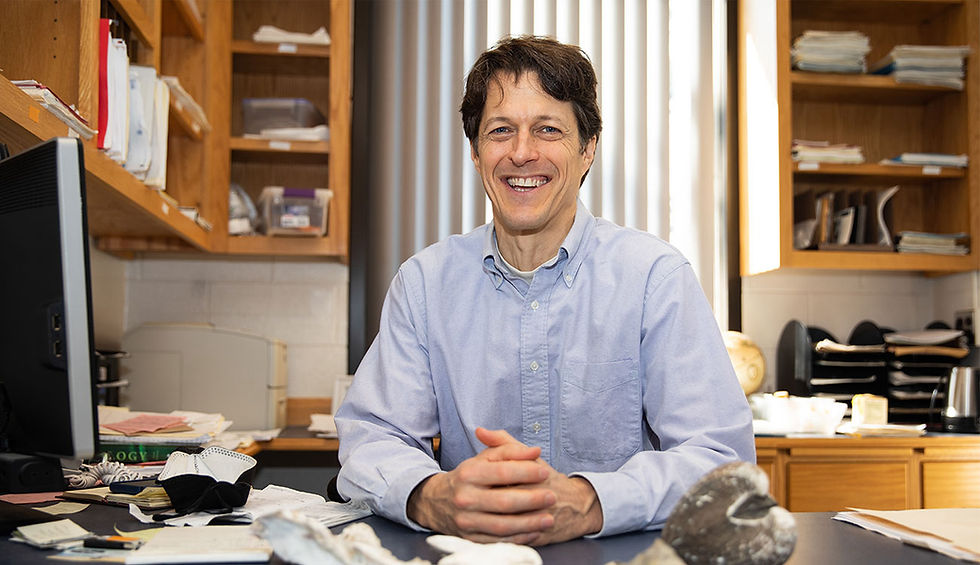
Gerard Loisel is a marine biologist & science communicator from Key Biscayne, Florida. He is well known for his marine biology camps for youth, his work in science communication, & his work in marine science.
In today’s interview, we sit down with Gerard to discuss his illustrious career, his work in science communication, his work in marine science, & his passion for the sea in a comprehensive 10-question interview. Before delving into today’s interview, please note everything said has been edited for clarity, & that the opinions of our interviewee do not necessarily reflect the opinions & values of our organization. With that being said, let us delve into the contents of the interview!
Questions About His Passion:
1. What sparked your passion for the ocean & marine science?
When I was a kid, I knew that I wanted to study animals. I wasn’t sure what kind. I would go to zoos, & I was interested in mammals at first. Then I got interested in reptiles around high school age. There’s a place called Miami Serpentarium in South Florida. I went there to see if they would hire me. I wasn’t 18 yet, so the director said come back when you are of age.
Then I became interested in fish. I think it started because I had a marine aquarium. A lot of people do freshwater aquariums first, then switch to marine. I didn’t do that. I thought marine fish were interesting, so I joined the Florida Marine Aquarium Society to find out how to keep them alive. It went from there.
2. Generally speaking, what is your favourite marine or terrestrial animal?
I would have to go with one of the two fish that’s on my marine biology camp's logo, which is a spotted drum (Eques punctatus). It’s the fish that I studied in college. They are often misidentified as juvenile jack-knifefish. I thought they were interesting-looking. They change pretty drastically as they become adults. When they’re juveniles, they’re hard to identify. I remember when I first went to the Smithsonian, I went to their fish museum. When you get an expert who comes, they can look at the jar & identify the fish without removing it. That’s what they did with me in Washington when I walked in. They’d bring out the juvenile jack-knifefish & spotted drum so I could tell them which one is which. That fish is on my logo.
3. Who Designed The Logo For Your Marine Biology Camps?
I did! I have a sense for that kind of thing, I have a knack for it I suppose. For a while I was a disc jockey, you know on weekends I would DJ. I created my own radio commercial, & I remember I went into the studio with a very famous Disc Jockey who did The Voice. He asked me “What marketing company did your commercial?”, & I go “I did!” If you’re passionate about something, nobody is going to be better at promoting it than you are. You’re probably going to put more time into it. I designed the logo, & I drew the spotted drum. I also put together my own radio commercials when I had my Disc Jockey Business.
It was a weird kind of thing. I’m at the University of Miami studying marine biology, & I was an undergraduate. I was in a fraternity, & we had some great parties. It seemed like the oldies parties were the best, with 50s & 60s music. I kind of fell in love with music, & decided to form a company that only did that. This was only after I’d hosted a charity event on campus to help fight multiple sclerosis, it was a 45-hour dance marathon. I had radio personalities coming in, & I had a radio personality tell me at 3:00 in the morning, “I gotta leave, I gotta be on the air at six”, & I go “No, you can’t leave, I got a dance floor full of people!”, I didn’t know what to do. He tells me that he has to be on the air, & the other disc jockey is nowhere to be found. He offers to show me how to do it, & shows me the mixer, turntables, & headphones. He gave me a very quick lesson on how to become a disc jockey, and, as they say, the rest is history. It was interesting, I was doing a charity event & as a result of something that happened in the middle of the night, a whole new career evolved. What I really enjoyed about that was that I’m doing marine biology Monday through Friday, & on the weekends, I’m playing my favourite songs for people & getting paid to do it. It was pretty cool.
If you’re passionate about something, you can always do more than one thing. I’m in a life of earning a living doing more than one thing. I’m a soccer coach, I was a disc jockey, & I did camps. I do multiple things, all of which I enjoy doing. There’s a saying, if you love what you do for a living, you’ll never work a day in your life. I didn’t come up with that, but it’s very true.

Questions About His Career:
4. Where did you attend university for your undergraduate studies, & was there any particular reason for that choice?
I’ve met a lot of football players, & other athletes. One football player who was the president (of the Hurricane Club), right before me, said that many athletes when asked why they pick the University of Miami, a lot of football players say “Well, my dream is to someday play in the NFL, so I figure if I go to the University of Miami & play Football, I have a higher chance of going into the NFL.”, because we’re known as the pipeline to the pros.
I tell people my situation was similar even though I didn’t play football. I played soccer, but there’s no men’s soccer team at the University of Miami. I wanted to go to university to become a marine biologist, so I ended up going there. It’s kind of interesting, because this was a long time ago, back in the 70s. Students were discouraged from specializing too early. They said “If you’re going to go into marine science, wait until you go into graduate school.” I think there was only one college in the country back in the 70s that offered a bachelor’s degree in marine biology. The way most people did it was that you majored in biology, minored in chemistry, & studied marine science in graduate school.
I decided to go ahead & take some (marine science) courses anyway. I graduated in three years, I could have graduated in two & a half years, except my senior year, I took a graduate course in marine science. Looking back now, it’s an interesting path that I took. I got my bachelor’s degree when I was 19, & as a 19-year-old with a bachelor’s degree, I was offered a job to teach high school marine biology at a small private school in Miami by a lady who was like a second mother to me. I heard from a colleague who was tutoring over there, when warned me that she was concerned that I was only 19. He told me to look as old as I could when I went to meet her. How do you look older? I wore a tie, & a dress shirt, & when I walked in the secretary looked at me & said “Well, you really do look 19.”, but we somehow clicked right away. She started taking me around campus & telling everyone I was going to be their marine biology teacher. I got the job!
I got a job at 19 teaching high school marine biology. I ended up using that money to help pay for graduate school. When I finished graduate school, I figured I was going to move on because my goal was never to be a teacher. So, I told the principal that now that I was finished with grad school, I’m going to move on. She told me she wanted me to stay. I said “Well, don’t get me wrong, I like teaching, but my dream work is not to be a teacher”, because my dream was to work in a laboratory. She said “If you stay, I’ll build you a laboratory.” Some people think that when I say this I mean she converted a classroom into a laboratory, no. She built one from the ground up. The school was on the water, had a dock on (Choctawhatchee) bay with boats, & she built me a lab. I think everything happens in life for a reason. I’ve had some people say very kind things over the years to me over the years about my ability to communicate. A parent of one of the kids in my camp said to me “How did you end up becoming a teacher?”. When I said that wasn’t the plan, I told her the story I just told you. She said to me there was a divine intervention going on, because apparently that was my real calling. I’m blessed with being able to communicate & explain things to people in a way they can understand. I think that’s what I was destined to do. Years ago, I thought “How does a 19-year-old know enough about marine biology to teach it at any level?”, & the answer is that I deviated from the norm of not taking marine science classes until I got to graduate school. It didn’t even occur to me that the decision I made to take classes as an undergraduate would pay off, because that is why I knew enough marine biology to teach high school marine biology at 19. That all worked out.
When the lady who owned that school passed away, I ended up becoming a college professor for 26 years teaching undergraduate marine biology & oceanography, but it all started there as a 19-year-old marine biology teacher. The school had a reunion this past fall, & they were kind enough to invite me to attend. I was amazed at how many stories they remembered. I have a reputation, even now, as being a storyteller. I try to use stories to help people create an image. I have a lot of stories related to marine science, & I use those stories to help people develop a better understanding of whatever the topic is.
I remember when my marine biology college class had required field trips, & we went down to the Keys. We went on a glass-bottom boat to go out to see a coral reef. Some of the students weren’t good swimmers, so we chose the glass-bottom boat approach. As we’re about to head out, some of the students who’d already boarded the boat had spoken to the guide. The guide does more than talk about marine life. The guide talks about local restaurants & tourist attractions in the Keys. When I got on the boat she asked if I was the professor, & I go, yeah. She says that the students were telling her how I’m a great storyteller. She asked if I wanted to give the talk, & I said no, you give the talk. She was worried that she didn’t know enough, & I said you’ll be fine. I’m building up her confidence. She says the students told her I’m a great storyteller, & she says that she needs a mangrove story. What? This was a long time ago, when people used a Rolodex. Does she think I have a Rolodex with my stories? I told her, I don’t think I have a mangrove story for you. She did a great job, & when she was done, she came up to me & asked me for my opinion. I told her that she was great, & that she identified a lot of fish correctly, which a lot of times they don’t.
5. What is your specialty within marine science?
Well, my specialty is ichthyology. That’s what I study. I keep telling people, especially the media, that there are lots of marine biologists. There’s coral people, there’s shrimp people, there’s whale people, & there’s fish people, I’m a fish guy. As a matter of fact, I did a camp in the Florida Keys. A kid comes up to me, & asks “What if we catch a fish & you don’t know what it is?”, & I said that’s probably not going to happen because I’m a fish guy. I’m that kind of marine biologist, but I listened carefully.
In my camp, we do a sea turtle program. I had a gentleman named Bill Ahern who was the sea turtle permit holder for Miami-Dade County for years, & he did my Thursday Sea Turtle program. I always listened to what he said. He’s a turtle expert. I learned a lot from him about sea turtles. I have former students that become experts in different areas. I have a former student who’s a whale expert, whom I’m always ready to rely on if I’m asked a question or if I’m sent a video by the media. If it’s not a fish, then I’m going to give you my opinion & then I’m going to go elsewhere.
I remember when the first interview I did for NBC 6 involved a Killer Whale. They needed me for the noon news. I was going to the Florida Keys to look at some field trips for my camps. I pulled into a Hampton Inn, & interviewed in the lobby of the hotel. As I’m pulling in, I call my wife & tell her that they’re going to interview me about this killer whale. She goes “But, you’re not a whale expert?”, & I explain that I told them that, & that they wanted to interview me anyway. I think they liked what I said when I was talking about the interaction between the trainers & the whales. Still, though, I keep reminding them I’m a fish guy.
6. How did you enter the field of marine science, & what was the first research project that you ever worked on?
Being a fish, I studied reef drums. One of the first jobs I got other than teaching was a study with the U.S. Army Corps of Engineers. They were doing a study on the impact of beach restoration in reefs close to shore, & they wanted a fish survey. In other words, they wanted to know what fish are there before & after the dredging operation. I got hired because I’m a fish expert, but even better for them I’m a coral reef fish expert. That was a great job. I got paid to go scuba diving & write down what fish I saw. We had a system where you could determine not only what was there, but how abundant they were. The other person who was hired was an open ocean fish expert. He’s a good guy, & he & I were friends. When we got on the boat, we had to have dive buddies. We’d get on the boat, & he’d say “What was that fish?”, because he could narrow it down to one of two things. Because I’m a coral reef fish expert, I could identify them, that’s what I was there for. That was pretty cool. We published a paper on that.
Then there was a National Marine Fisheries Service Study on recreational fishing. I was originally hired to interview fishermen, make sure they identify their catch properly, & weigh as well as measure their catch. It was interesting. They quickly promoted me to a regional coordinator. Then, they promoted me to state coordinator, which means they sent me to Jacksonville to train me. They started having me train people, & part of the challenge is that you have to hire people.
I would get a lot of marine biologists applying because it’s a cool job. They’re getting paid to go to marinas, & fishing piers to talk to fishermen & look at their catch. Some of the people who applied were people with PhD’s in crabs, they didn’t know a grunt from a snapper, but they wanted the job. I had to make sure that I hired people who knew their fish. I developed a test for them. Years ago, the Miami Sea Aquarium, back when it was open, had this area called the Lost Islands where there were a bunch of fish. I’d walk them through there, point to a fish, & ask them what it was. Some people liked that, some people didn’t. I developed another test for them with flash cards, where I would hold up a fish & have them identify it. If you’re going to do a fishing survey in South Florida, you need to know these 10 fish for sure. If you miss one or two of them, I can help you with that.
Part of the reason they hired me to do that is that they were concerned that people were reporting fish not from that area, so they had me look into that. People were misidentifying the fish. Again, I think that my real calling was to be an educator.

7. How did you transition to online science communication?
I was teaching marine biology to kids at a small school, & I was hit halfway through the course. When COVID hit, everything went into lockdown. So now all of a sudden, I’m not coaching anymore, & I’m not teaching anymore. The principal of the school called me & asked me how I was, I said I was okay. She says “Listen, we can continue to hire you if you can finish the course on Zoom”, & I said what most people my age said in the spring of 2020 “What’s a Zoom?” Within a year, I thought Zoom was the greatest thing since sliced bread. I’m a storyteller, & I have a way of expressing myself. Zoom allows me to do that. Thanks to Zoom, I was now able to teach marine biology to kids all across the country. I taught kids in Washington D.C., Louisiana, & Philadelphia, thanks to Zoom. I don’t do it so much anymore because we’re all pretty much to in-person stuff.
8. How did you come to host “Marine Aquarium World”, for PBS? How many episodes did it run for, & how long was each episode? What was the subject of the series? What did you learn about television?
I learned so much about television that I remember. When they put the little tape on the floor, I knew that was my mark. I had to hit my mark without looking down at the floor. I remember I was interviewing somebody about their fish in their tank. They told the person “When Gerard talks to you, just look at Gerard. Don’t look at the tank. Talk about the fish, but look at him, whatever fish you mention we’ll go back & get later on B-Roll.” I had no idea what that meant!
It was 13 episodes, each 30 minutes long. It took a year to shoot. We did remotes, they had me go down to the Florida Keys & collect fish. This was PBS, so we’re all volunteering. The cameraman was a volunteer. I guess they paid for the boat & the boat people. I never met this cameraman before, he would later become famous. I think he may have even won an Oscar for The Life of Pi. We’re on the boat, we’re about to go into the water. I said to him that I don’t know what we’re going to see, fish are hard to catch. I don’t know if I’ll catch anything. He says that I should just do what I do, & he’ll be there.
It was one of those weird things where there were fish everywhere. All of a sudden, I catch the first fish & I turn, & there’s a camera right there. I didn’t realize he was going to become an award-winning cameraman. So we go back to the studio, because we also shot studio parts. We interspersed the clips from the studio with the clips we shot in the keys. They’re telling me to make sure I say his name over & over again to thank him for his time. His name is ingrained in my brain. Years later, I’m teaching marine biology at a small school, & there are these two boys who are twins. They tell me their last name, & it’s the same last name. It was his kids. He did some amazing stuff.
Questions About His Marine Biology Camp & Advice For Aspiring Marine Scientists:
9. I’m sure that you have faced just as many challenges & setbacks as you have leaps forward, what has been the biggest hurdle or challenge that you have faced across your career, & how did you overcome it?
You know, I compare it to the movie Forrest Gump, where things happen sometimes along the way. You think this is an obstacle, & all of a sudden something happens that forces you to go into a different direction. I call those Forrest Gump moments, where all of a sudden you come to a crossroads, & you think you’re going to make a decision, but the circumstances decide for you. The best example is the one I gave earlier. I wasn’t going to be a teacher, but the owner of the school wanted me to stay.
My favourite movie of all time is The Great Escape, which is a true story about POWS escaping during World War II, & it’s not so much a war movie. It’s a movie about overcoming adversity & figuring things out. They dug three tunnels, figuring you know if the Germans found one of the tunnels, they’d still be in business. So they built three, & that’s exactly why it happened. They did find one tunnel, but they were still able to go through with the escape. I always tell people to try to have multiple revenue streams in life. Have multiple tunnels, so if one of them shuts down, or all of a sudden you have a situation develop, you can fall back on other tunnels.
When that principal called me in 2020, & she asked me how I was doing, I asked if she’d ever seen the movie The Great Escape. I explained how I still had one tunnel going on. She goes, well, if you can finish teaching your class on Zoom, you’ll have two tunnels. That was true. I learned about Zoom. Here was a tough situation, difficult for everybody, but I got to turn Zoom into a positive.
10. Do you have any advice for early-career ocean professionals, aspiring marine biologists, & young people with a passion?
When I was an undergraduate, I had professors telling me not to study marine biology, because there were so few jobs available in the field. I didn’t listen to them. I didn’t pay attention. I said that this is what I wanted to do. What I always tell people is if you’re really passionate about something, don’t be discouraged by how many other people are going to apply for that job. When that job comes up, just make sure you’re the most qualified person for that job. Who cares how many other applicants there are? If it’s something you’re passionate about, you need to stick with it.
I finally got picked for Jury Duty last year, & I had never been picked before. It turns out the judge didn’t know me, the attorneys didn’t know me, but they asked me what I do. During one of the breaks, one of the jurors said to me “So, you’re a marine biologist?”, & I said yeah. She said “Listen, I’m wondering if you can help me, because I’m studying botany. I’m getting my PhD in botany. I’m concerned as to whether I’ll be able to find a job with a degree in botany.” & I’m thinking, boy have I got a speech for you. So I gave her the speech about not worrying. Just be willing to do things that most traditional botanists might not do. Be willing to look into related areas, but if you’re passionate, stick with it. Don’t not do it because you’re concerned that you’re concerned that you’re going to be competing with other people for jobs. Just make sure you’re the best qualified person when you apply, & let the rest take care of itself. She said to me “Wow! Can you come & talk to my class?”, & I said sure. I knew that there were too many of us for the jury. On the last day, I asked if some of us were alternates. They said that yes, two of us were, & that we wouldn’t know until we’re about to go in for deliberation. Sure enough, they dismiss the botany student. Good thing she talked to me yesterday, because I got to encourage her.
If you do something you love for a living, you’ll never work a day in your life. I’ve been very lucky that I’ve been able to do so many things that I love. I got to tell you something, when I get out there in the water with those kids, I’m 18 years old again. It’s like the fountain of youth, you know? I enjoy doing it, & I think that people shouldn’t be discouraged. Get your degrees, be the best-qualified person you can.

Directories / Credits
Strategic Partnerships
Reel Guppy Outdoors
SharkedSkooler
Marine Enthusiasts Podcast
Cash Daniels
Tides of Tomorrow
The Open Book, Topanga
Olivenbaum Music
Pitfire Artisan Pizza
Our Loyal Patrons
P. R. Ochoa


Comments