
“The Many Unknowns About The Ocean That We Don’t Understand Make It More Interesting To Care About, & Protect!”, An Interview With Vice Chair of Surf-Rider Chicago Quentin Rodgers


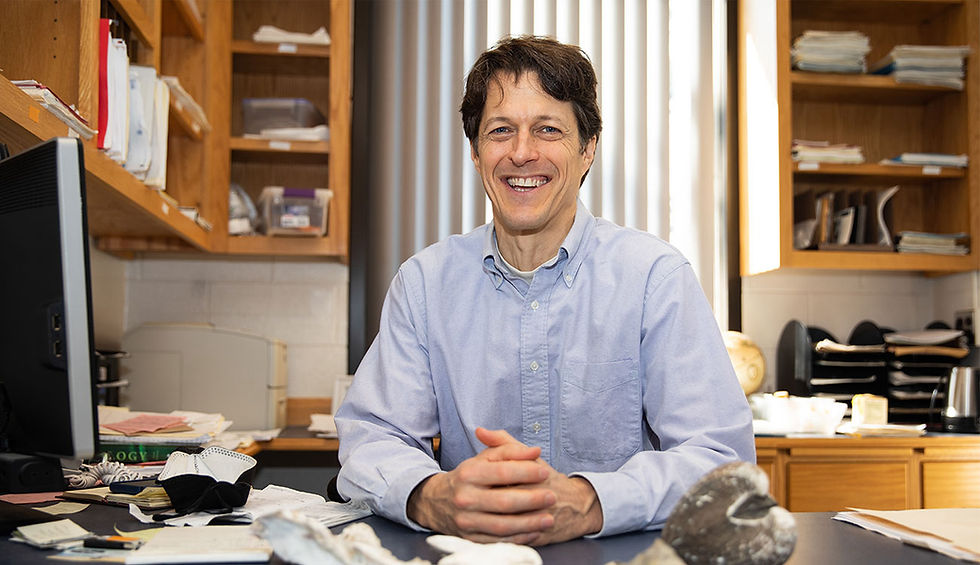
Recently, our head writer was fortunate enough to sit down for an interview with Ocean Conservationist & Vice Chair of Surf-Rider Chicago Quentin Rodgers.
Quentin Rodgers is an Ocean Conservationist & Vice Chair of Surf-Rider Chicago known for his work with the Surf Rider Foundation.
In today’s interview, we sit down with Quentin to discuss his illustrious career, his work in science communication, his work in marine science, & his passion for the sea in a comprehensive 18-question interview. Before delving into today’s interview, please note everything said has been edited for clarity, & that the opinions of our interviewee do not necessarily reflect the opinions & values of our organization. With that being said, let us delve into the contents of the interview!
The Contents of the Interview
Questions About His Passion:
1. What sparked your passion for the ocean & marine science?
I would definitely say it’s a mix of always being someone who loved science & also loved nature. I guess the thing that specifically got me into it was my first trip to Australia. I had gone to Western Australia around Margaret River, which is on the Western Coast. It’s kind of a surf town. It’s known for a professional surfing competition that takes place every single year called the Margaret River Pro. That was the reason why I was there, to go see the competition for myself for the first time. It’s maybe a few hours from Perth. That was kind of my first true introduction to the ocean. Ever since then I’ve been a lot more focused on protecting the beaches, protecting the waters, you name it!
2. What sparked your passion for surfing?
It was initially my passion for skateboarding that got me into surfing. Ironically enough, the thing that sparked my passion for surfing was a video game that I played as a kid. It was called Kelly Slater’s Pro Surfer. It came out in the early 2000s. I had the demo on a skateboarding game, & after playing that, I was really in awe of surfing. I was looking up YouTube videos, or whatever I could, trying to get as much surfing in as I possibly could as well.
3. Was there any particular person, place, moment, or piece of media that assisted in sparking your passion?
When it comes to people, obviously Kelly Slater, who’s known as the greatest of all time. He’s kind of the Tony Hawk of surfing with 11 world titles. He competed up until I want to say 2023, started competing in 1989. He was inspiring, as were other surfers such as Andy Irons, & Stephanie Gilmore, who is currently competing to this day.
As for types of media, I would probably say Rocket Power, the cartoon, got me into it as well.
4. What is your favourite terrestrial, or marine animal?
I would probably have to give 2 answers for this one. My favourite marine animal would be orcas. I love orcas. My favourite terrestrial animal would be the Tasmanian Devil. Something interesting about Tasmanian Devils that a lot of people don’t really know, which we just found out in 2022, is that they are capable of biofluorescence. We found this out in 2022 at a zoo in Toledo, Ohio. They are capable of biofluorescence around their face, around their ears, mouth, & nose. It’s pretty interesting. I know that wombats, & I believe that platypuses are also biofluorescent.

Questions About His Work:
5. How would you describe the Surf Rider Foundation to someone who isn’t familiar?
The Surf Rider Foundation is an environmental protection nonprofit. I would sum it up in two phrases. The first phrase is environmental protection of our coastlines, beaches, & waters, & the second is recreational advocacy, which means making sure that as many people have access to our beaches as well as waters to enjoy them.
6. How did you join Surf Rider-Chicago, & what is your current position with them?
I joined Surf Rider-Chicago in 2021. I was looking for environmental protection groups that were near me that I could join & get involved in, since I love nature, & I wanted to do my part. I initially joined them through their website. I started looking for chapters, because they have a database of all their chapters. There are about 80 chapters for Surf Rider, & you can access them all on their website. There are quite a few on the West Coast, as well as the East Coast, & obviously up here in the Great Lakes, which was the closest one to me. I live in Indiana, & we don’t have a chapter, but I’m a part of the Chicago Chapter. As of February of this year (2026), I am the Vice Chair of the Chicago Chapter.

7. What are your responsibilities in your capacity as Vice Chair?
I support the chair, I take over for the chair when they might not be available. I lead the chapter in my various base mission projects. I’m currently in the process of spearheading one right now that we will be talking about later.
8. How would you describe your Great Lakes Friendly Restaurant program?
It’s pretty much an offshoot of a larger program called the Ocean Friendly Restaurants program that Surf Rider has. Think of it as a community-building program where we support restaurants, lift them as examples of success to influence plastic reduction legislation, & provide them with tons of benefits. Everything from marketing gear, to stickers & brochures, to even listing them on our national website. We also provide them with access to vendor discounts. A good example that I like to point to is a restaurant in Chicago called JT’s Genuine Sandwich Shop, they’ve saved about 25,000$ per year after switching to reusable dining-ware. They’re one of the case studies we did research on.
I think what people miss about sustainability is the long-term expectation. In the short term, it seems pretty expensive, but in the long term, it does pay its way. It does pay back. You know, it just takes dedication. It takes dedication to go through with it.
9. How would you describe your Blue Water Task Force program?
The Blue Water Task Force is actually going to be the program that I’m spearheading for the Chicago chapter. It’s basically a network of volunteer laboratories by different chapters of Surf Rider. We’re testing for different bacteria levels throughout the year. We’re covering the parts of the year that the state typically doesn’t or won’t test.
For example, around here, the state will test for E. Coli during the height of summer when people are out on the beach. After a certain period of time or a certain month, let’s say September, they stop testing & they won’t test again until May or June. What the Blue Water Task Force is doing is that we’re covering all the other months. That way we can provide consistent monthly results to the public, as people go into the water throughout the year, even after the state or municipalities stop testing. People are still going into the water. People are going into the water in October, November, December, or the beginning of the year as well. The state isn’t doing testing during those parts of the year. We’re filling that gap, & uploading the results to our website, so that people can check. We update them based on the most recent tests.
I’m spearheading a Blue Water Task Force Program for the Chicago Chapter, we’ll be testing three sites starting out. I believe two in Chicago, & one in Indiana where I live. We’re going to be testing during the off months, when the state isn’t testing. We are currently in talks with a couple of universities to partner with us for testing, since starting a laboratory is fairly expensive.
I don’t know one of the sites off-hand, but I know we are testing one site called Montrose Beach. It’s one of the most popular beaches in the entire city. Then, in Indiana, we’re testing a site called Whihala Beach. Whihala is this stretch of beach that’s in Indiana. It has a lot of traffic that goes into it throughout the year. It’s a well-known surf spot in the region as well.
Another important reason why we’re also testing is that it’s near a lot of refineries & industrial companies such as BP & U.S. Steel. With people going into the water throughout the year, I feel like we felt it was an important place to focus on as well. We’re currently spearheading that project; hopefully, we can get it started by September of this year (2026).
People can find out results, once we get them uploaded, on Surf Rider’s website for the Blue Water Task Force Program. They operate a website solely for this project, where all chapters upload their data for all the sites that they tested for things like E. Coli, especially for bigger beaches. For example, Whihala is a fairly long beach, so you have to test more than one site within the site if that makes sense.
For all of the Blue Water Task Force sites that we test, you can see how often we test each site, as well as the results of that testing. We signify results through colour-coding. Green means that it is fairly safe. Yellow means that it’s moderate, kind of heed our warning before proceeding. Red is obviously the most dangerous level, meaning you probably shouldn’t be going into the water. It’s fully accessible to the public.
10. How would you describe your Beach Cleanup program, & how often do you conduct beach cleanups?
Our beach cleanup program is spearheaded by one of our executive committee members named Steve Arnam. He’s been spearheading it for who knows how long, absolute legend. Our beach cleanup programs consist of going to two beaches & removing debris. We go 4 times a year. We’re trying to access more beaches, because we have noticed other beaches that definitely need a cleanup. We have two at Montrose beach in Chicago, & then we have two at my home beach, Whihala Beach. We actually just had one last Saturday! We had quite a bit of turnout. Even one of the city council members had joined in.

For the most part, we recovered about 900 pounds of trash from the beach alone. We also unfortunately discovered 3 deceased birds, one of which was clearly a result of plastic pollution. It had a piece of plastic, like a circular piece of plastic around its beak, to the point where it couldn’t eat anything. It was unfortunate, but things like that are why we do what we do. Things like that are why we do what we do, to ensure that stuff like that happens as rarely as possible. In total, we found two pigeons, & one toothed bird. One of them was fresh I think, we don’t know what caused it to pass away.
11. Type 6 Plastic, PS (Polystyrene) commonly known as styrofoam, is one of the most destructive types of plastic due to its tendency to fragment. Surf Rider-Chicago is currently working to ban the sale of foam food service containers in the state of Illinois. Do you mind guiding us through your “Ban The Foam, Save The Shore” program?
Our Ban The Foam, Save Shore Program is to ban the sale & distribution of foam food service containers in Illinois. A few years ago there was a proposed bill by Illinois lawmakers called Senate Bill 1531, which was looking to ban polystyrene foam food containers. Right now, it’s kind of in limbo. We’re doing our part. We’re working with other organizations as well, such as the Alliance for the Great Lakes, as well as the Illinois Environmental Council to try to get this legislation passed, as well as other related legislation passed as well:
12. How would you describe your Sustain the Great Lakes Restoration Initiative?
The Great Lakes Restoration Initiative is not a program that we are spearheading, though we are involved in it. It’s more of an EPA federal government program. A lot of funds that we, tribal governments, states, & municipalities receive will come from this initiative. It’s the largest Great Lakes investment in over 20 years. This program has funded over 8,000 projects, with over $4 billion. The funds are distributed to the EPA, & subsequently distributed accordingly. We target some of the biggest threats to the Great Lakes ecosystem such as toxic substances, like hexavalent chromium, invasive species, & non-point source pollution impacts.
When we had our Hill Day event, which is an event where Surf Rider & Congressional offices will interact with each other to talk about various policies, the Great Lakes Restoration Initiative was one of our talking points, because it’s extremely important. The Great Lakes Restoration Initiative has done wonders in many states here in the Great Lakes Region, & it has tons of bipartisan support. We’re going to continue to do our best to get more funding for it, that way it can be supported for years to come, because we see how good things get when we work together & run this initiative.
13. What does your schedule look like week-to-week or day-to-day?
As Vice Chair, I’m dedicating at most 6 hours, sometimes a bit more per week to focus on the various projects that we are working on. Whether that be stuff related to the Blue Water Task Force Program that I’m trying to get set up for our chapter here in Chicago, or even other campaigns that we’re working on. It’s fairly busy. On a daily basis, not so much, but on a weekly basis, it accumulates. With the project that I’m spearheading, it’s a lot to do, but at the same time, we kind of get a bit of a break every now & then, which is nice.
14. If someone were interested in volunteering with Surf Rider-Chicago, how would they approach you all?
You can approach us on our website. Google “Surf Rider-Chicago”, & we will show up. Immediately on our website, you have the volunteer tab. Also, you can approach us on Instagram, which is chicago_surfrider. You can follow us there, we post our events whenever we have them. You can even copy the events from our website directly onto your phone’s calendar.
15. What has been your biggest triumph or proudest moment across your career?
My proudest movement with Surf Rider, I would definitely say it’s tied between two things. One thing I would say is that my proudest moment was when I was voted as Vice Chair in February of this year (2026). It’s something I was really hoping for, for so long. To help out, do my part, & join an amazing team is wonderful.
The other was a triumph sometime in June of last year. Surf Rider & a couple of other organizations won a lawsuit against the EPA, related to their not doing what they’re supposed to do. This case lasted about two to three years, & it concluded last year in June of 2025. It was related to the EPA not revising its standards when it came to accounting for new technologies when it came to capturing or reducing pollution. They didn’t revise their standards when it came to these innovations to reduce the amount of pollution that we were receiving. I believe they had 56 standards they were supposed to revise, or that they could revise, but when reviewing each standard, most had not been revised at all. Some of them had not been revised since the 1970’s. There were tons of different guidelines & standards that they had for capturing pollution for different corporations. In the decision made by the courts, it was decided that while the EPA had a certain level of discretion before deciding what standards to revise, they don’t have unlimited total discretion to ignore everything, especially when Surf Rider as well as several other organizations were reaching out to them about what was going on, & telling them that they need to revise some of their standards.
16. I’m sure that you have faced just as many challenges & setbacks as you have leaps forward, what has been the biggest hurdle or challenge that you have faced across your career, & how did you overcome it?
I would cite the biggest obstacle that I’ve had as being able to make time to do as much as I do with Surf Rider. With my life being as busy as it was, & as it is, it was really difficult to find time to go to various events, beach cleanups, & take part in various campaigns as much as I wanted to. I couldn’t because I was stuck at work or something. I overcame that by prioritizing, & I felt that I was better off leaving my current job. My last day was sometime mid-April. Now I’m able to commit more to Surf Rider. Still working of course, but with a more manageable schedule where I can balance both things, which I’m really happy about. I knew the time was coming, I just needed to decide when that time would be, you know? I wanted to make sure I went out on my own terms.
17. What is your advice to new ocean conservationists, aspiring ocean professionals, & passionate young people looking to make a positive impact on the sea?
Be patient, but stay motivated. A lot of the time whatever you’re doing is not going to be accomplished immediately, especially when we’re talking about things related to environmental policy or getting a program started. It’s not going to be a one-&-done fix. It’s going to take some time. While that can be annoying sometimes, & a bit frustrating, you can stick it out. Just stay motivated because what you’re doing will make a difference. What you’re doing will help tons & tons of different people, & the environment. You’ll be doing what you love. Even though it’s going to be tedious, & sometimes stressful, you’re doing it because you love it.
18. Do you have any final words about marine science, the Surf Rider Foundation, the beauty of the sea, or ocean conservation?
My final words towards the Surf Rider Foundation are that I appreciate all the work that they’ve done over the past 40+ years. I’m glad to be able to be a part of such an amazing organization that has done so much good. Not just for each community, but for coastlines all across the country. I’m grateful that I can have a part of that by doing what I do as Vice Chair. It genuinely makes my day knowing that I have a good team with me, supporting me, working with me, & having people I can learn & grow from. It means a lot knowing that I have a good support system behind me as well. That encourages me to do this.
When it comes to Marine Science, it is debatably the most interesting realm of science with so many different facets, & so many different things to learn. The many unknowns about the ocean that we don’t understand make it more interesting to care about, & protect!
Directories / Credits
Strategic Partnerships
Reel Guppy Outdoors
SharkedSkooler
Marine Enthusiasts Podcast
Cash Daniels
Tides of Tomorrow
The Open Book, Topanga
Olivenbaum Music
Pitfire Artisan Pizza
Our Loyal Patrons
P. R. Ochoa


Comments