
The Beluga Whale Of Iqaluit (Delphinapterus Leucas)


This month’s article series shall be discussing the elusive & frigid, Iqaluit. Iqaluit is the capital of the Canadian province, Nunavut.
Iqaluit is considered one of the most ideal places for fishing in the nearby area. It is the only city in the entire province, with a minuscule population of 7,429 people. This is the lowest population of any provincial Canadian capital.
Located on the Baffin Island, the city is close to the Arctic circle. Iqaluit was also known by the name “Froshbisher Bay” from 1942 to 1987, at which the cities name was restored to its Inuktitut name. The city encompasses a 19.92 square mile area (51.592563 square kilometers). Outside of Nunavut, the city is not well known for anything.
The city is so small, that there is only 1 paved road in the entire town. The name “Iqaluit” is an Inuktitut name, meaning “Place Of Many Fish”. The reason for this name is that fishing is a long standing tradition of the Inuktitut people of the area. Though Iqaluit is not the most biodiverse land wise, it has some of the most magnificent marine life. One of the creatures that makes up their marine ecosystems, it the Beluga Whale.
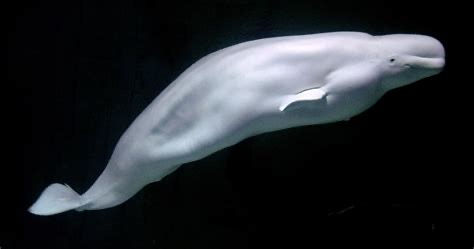
The Beluga Whale is a species of whale closely related to the Narwhal. This species of whale is well known for its pure white colouration, & large bulbous heads. Beluga whales are dispersed throughout Arctic & Sub-Arctic waters of the earth. They are found as far south as James Bay in Canada, & as far north as Thule, Greenland. The Beluga Whale is extremely important to the Inuktitut people culturally.
Over hundreds of years, the Inuktitut have formed a sacred bond with this gentle beast. The Inuktitut people value this species for its intelligence, as it is considered to be sentient in this culture. Additionally, The Inuktitut population have hunted this species for its meat, as well as teeth.
In this article we will discuss the discovery & life of the Beluga Whale, the mating strategies, tactics, procedures, practices, cycles, techniques, & habits of the beluga whale, the distribution of the beluga whale, the scientific detailings of the Beluga Whale, & the cultural significance of the Beluga Whale to the Inuktitut people. With that being said, let us delve into the melon-head whale.

The Discovery & Life Of The Beluga Whale
The Beluga Whale was discovered in the year 1776, by Prussian zoologist Peter Simon Pallas. Individuals in this species are approximately 10 to 15 feet (3.048 to 4.572 meters) in length. Female specimens are moderately smaller then males, as they rarely grow to be over 12 feet. Their weight ranges from 1,000 to 3,300 pounds (453.592 to 1,496.855 kilograms). There is sexual dimorphism in this species, with males being on average 25% larger. Their life span is between 35 & 80 years.
This species has existed for at least 2.58 million years, according to current fossil records. This species is rather intelligent, & are able to be trained.
Beluga Whales are not aggressive animals to either each other or humans, & are generally sweet mannered creatures. Individuals are not territorial, & migrate with the seasons. Of all the whales, Beluga whales are one of the most gregarious species. Individuals are known to form social groups of 10 or more. These social groups can include up to 1000 individual whales. These social groups may be with their maternal family members, or unrelated whales. They are loyal to these groups, & are known to support each other emotionally & physically. These bonds are not strictly for survival, & are to some degree, similar to human friendships. In addition to caring about each other, they are able to recognize different individuals calls.
In the wild, Beluga whales will often engage humans, as they have a natural curiosity. Surprisingly, there are recorded cases of humans dropping electronics, or items into the ocean, & Beluga whales returning them to the humans. Generally, Beluga whales are extremely playful, curious, & intelligent creatures, who do not mean harm.
Beluga whales are extremely agile creatures, & are able to navigate the water column with ease. Research indicates that they are able to swim at a maximum of 13.2 miles per hour (21.24334 kilometers per hour), though they generally swim at a comfortable 2 to 6 miles per hour (3.21869 to 9.65606 kilometers per hour). Strangely, they are able to swim both forwards & backwards.
Individuals in this species are able to remain buoyant due to their thick, oily blubber.
Like the majority of whales, beluga whales sleep by turning relaxing half their brain, while maintaining complete cognition in the other half. They do not completely sleep like humans, as this would put them at a massive disadvantage against predators.
The diet of a Beluga consists of octopus, squid, crabs, shrimp, clams, oceanic snails, small fish, & sandworms. They are not cannibalistic at any stage in their life. Depending on the size of the whale, it will consume 2.5% to 4% of its body weight in food per day. They use echolocation to determine where their prey is, & to hunt in general. With all current research, it is believed that Beluga whales have a relatively low metabolic rate.
Due to the large size of the Beluga Whale, very few creatures are able to consume or harass it. The two primary predators of the Beluga whale are Orcas, & Polar Bears.
Beluga whales are all white or grey in colour, & lack a dorsal fin. They are rather large, & muscular as well, with small heads. Atop their heads, there is a bulbous organ known as a melon, which is used for echolocation. Their teeth are small, white, & sharp.
The IUCN Red List has acessed this species, & categorized it as vulnerable. The last population assesment occurred on January 9th of 2023. It is unknown what the population trend of this species is like.
The Mating Strategies, Tactics, Procedures, Practices, Cycles, Techniques, & Habits Of The Beluga Whale
The Beluga whale breeds via sexual reproduction, & has two distinct sexes. Individuals are not usually hermaphroditic. Female Beluga Whales will sexually mature at 6 to 14 years of age, while males will mature slightly later.
This species mating system is considered to be polyamorous. They do seem to have a specific breeding season, that being early spring or late winter.
Their gestational period lasts 14 to 15 months under optimal circumstances. Beluga whales will gather in large groups in order to reproduce. In order to initiate copulation, individuals will rub each other, until both are in agreement. After this, they will copulate. After copulation, the male will not interact with the calf. The male will often mate with multiple females, however the females will only mate with 1 male. Only 1 calf is born at a time, & will be approximately 140 to 1,200 pounds (63.5029 kilograms to 544.3108 kilograms), & 5 feet (1.524 meters) long at birth. The delivery is quick, & often uneventful.
The calf will nurse for 2 years off the mother, before beginning to consume solid food. Then, the calf will gain independence, & form its own social network. The calf may choose to stay with its mother longer, however they will often move away at this point, similar to young adults.
Females will have an interval of 3 years in between births. Female Beluga Whales will stop breeding & having calves at or around the age of 49.
The Distribution Of The Beluga Whale
The Beluga Whale is primarily found around the Arctic Regions of the world. They are recorded as far north as Somerset Island, Canada, & as far south as Northern California, & New Jersey. Individuals seem to prefer shallow coastal waters in summer, & open ocean in the winter. Beluga whales have been recorded diving up to 1,000 meters deep to find food.
The Scientific Detailings Of The Beluga Whale
Unlike the majority of other ceteceans, the Beluga whale has a set molting schedule. Molting is when the Beluga Whale will shed its older, yellower layer of skin, for a lighter new layer. They will usually molt in the spring or summer, as they need warmer water to shed properly. While migrating through coastal waters, they will rub themselves up against rock & gravel.
Their blubber is incredibly thick, accounting for at least 40% of their body weight. The Beluga Whale has 1 common parasite, which is known as Toxoplasma Gondii. This parasite is known to affect house-cats, & occasionally humans. It is known to parasitize the intestinal tract. Approximately 44% of all Beluga Whale Corpses recovered are known to have this parasite. It is unclear how it transfers from individual to individual.
The teeth of the beluga whale are small, & conical in shape. They have between 20 & 40 teeth distributed evenly between their upper & lower jaw.
Their phylum is Chordata, meaning that they developed these 5 characteristics all species under the phylum of chordata develop 5 similar characteristics either In adulthood or as juveniles. The characteristics that they develop include, a notochord, dorsal hollow nerve cord, endostyle or thyroid, pharyngeal Slits, & a post-anal tail. & three middle ear bones.
Their class is Mammalia. Mammalia is classified by the production of milk by the mother for their child to nurse, a neocortex which is a region of the brain, some capacity of fur or hair, & three middle ear bones. There are currently 6,400 species categorized under the class of Mammalia.
Their order is Artiodactyla. which are even toed ungulates. Species categorized under Artiodactyla are ungulates, hoofed animals which bear weight equally on two of their five toes, these toes are the third & fourth toes. The other three toes are either present, absent, vestigal, or pointing posteriorly.
Their infraorder is that of Cetacea. Key characteristics of this infraorder are their fully aquatic lifestyle, streamlined body shape, often large size & exclusively carnivorous diet. Another characteristic is their incredible social intelligence. There are roughly 90 species categorized under Cetacea.
Their family is Monodontidae. This is a cetacean family that only comprises 2 living species, those species being the Beluga whale & the Narwhal. These 2 creatures are incredibly genetically similar.
Their genus is Delphinapterus, which is monotypic.
This species binomial name, is Delphinapterus Leucas.
The Cultural Significance Of The Beluga Whale To The Inuktitut People
The Beluga whale is extremely culturally, & economically significant to the Inuktitut people, who are the indigenous peoples group of Iqaluit. The Inuktitut people believe that the Beluga Whale is sentient, & value it greatly for its thick blubber, & intelligence. Preparing its meat is considered to be a cultural activity. Various recipes can be found on Inuktitut ways to prepare the Beluga Whale meat. The Inuktitut name for the Beluga whale is Qilalugaq.
Directories / Credits
Citation No. 1: “Nunavik Inuit Perspectives On Beluga Whale Management In The Arctic Circle”, Written By Martina Tyrrell, & Published in 2008. Published by Journal Storage. Retrieval Date: February 22nd, 2024.
Citation No. 2: “Belugas”, Written By Unknown & Published at an Unknown Date. Published by the International Fund For Animal Welfare. Retrieval Date: February 22nd, 2024.
Citation No. 3: “Beluga Whale”, Written By Unknown & Published at an Unknown Date. Published By Whale & Dolphin Conservation USA. Retrieval Date: February 22nd, 2024.
Citation No. 4: “Beluga Whale”, Written By Unknown & Published at an Unknown Date. Published By National Geographic. Retrieval Date: February 22nd, 2024.
Citation No. 5: “Beluga Whale”, Written By Unknown & Published at an Unknown Date. Published By The Alaska Department Of Fish & Game. Retrieval Date: February 22nd, 2024.
Citation No. 6: “Beluga Whales Have Complex Social Networks-Study”, Written By Judy Shin, & Published on August 13th, 2020. Published By Earth.org. Retrieval Date: February 22nd, 2024.
Citation No. 7: “Resting metabolic rate of a mature male Beluga whale
(Delphinapterus leucas)”, Written By David A. S. Rosen, & Andrew W. Trites, & Published in January of 2013. Published by Research Gate. Retrieval Date: February 22nd, 2024.
Citation No. 8: “Beluga Whale: Delphinapterus Leucas”, Written By M. Sharpe, & P. Berggen, & Last Updated On January 9th, 2023. Published by the International Union For The Conservation Of Nature. Retrieval Date: February 22nd, 2024.
Citation No. 9: “Deep dive…into Beluga Whales”, Written By Lisa Jewell, & Published on September 13th, 2023. Published By WeWhale. Retrieval Date: February 22nd, 2024.
Strategic Partnerships
Reel Guppy Outdoors
SharkedSkooler
Marine Enthusiasts Podcast
Cash Daniels
Tides of Tomorrow
The Open Book, Topanga
Pitfire Artisan Pizza
Olivenbaum Music
Our Loyal Patrons
P. R. Ochoa



Comments