
The Pacific Tide: A Prickly Shark Encounter In La Jolla And What It Means

Updated: May 14

California’s Pacific coast is one of the most biodiverse and abundant ecosystems worldwide teaming with almost 2000 species of microorganisms, plants, fish, marine mammals, turtles, invertebrates and sea birds supported by a Mediterranean climate. Its famous off-shore, underwater and coastal rock formations date back to the Crustaceous period and help subsidize this special bionetwork making the state’s ocean waters and sea life sacred and unique. Unfortunately, California’s precious coastal ecosystem also faces massive threats in the vein of climate change/global warming, the devastation of kelp forests, ocean acidification, algal blooms and habitat destruction; sounding the alarm for the time-sensitive need for human intervention, conservation management and awareness.
The Pacific Tide series highlights monthly oceanic events occurring on the California coast and/or portrait important species who call the Pacific coastline waters home emphasizing the importance of conserving this critical ecosystem.
In this month’s installment of The Pacific Tide, we explore a rare encounter with a deepwater prickly shark in La Jolla Cove, California by Scripps Institution of Oceanography students while also reconnoitering on the history of cove before dissecting the behavior of prickly sharks and voicing any concerns being raised by this encounter.
The La Jolla Coast from Dinosaurs to Seals and Social Media
Sandstone arches, smoothly eroded bluffs, clinging cliffs, copious sea life, glittering sunsets and the famous seven-sea cave system of the La Jolla Caves: this is the postcard beauty of La Jolla Cove which welcomes tourists and biologists alike just a short 20-minute drive from San Diego proper in Southern California. La Jolla Cove honorably appears on yearly lists for ‘Best Scenic Beaches’; but there is more to this sparkling coastline sea than just a picture-perfect backdrop: it is also one of California’s most important oceanic-centralized ecosystems home to a massive seal rookery, scores of fish species, sharks, whale sightings and vital microbes. The seabed sports two submarine canyons making it the ideal environment for rare sea dwellers while the coastal rock formations have been buffeted with ocean waves and tides since dinosaurs roamed the land that is now California. These credentials have allowed La Jolla Cove to receive marine protection reserve status while also, with some outcry, being classified as a shared-use public beach.
Edging La Jolla Cove are the seven caves of the illustrious La Jolla Caves boasting striking geological orifices and rock faces that have garnered fame as some of the most eminent coastal caves in the United States. Situated between La Jolla Cove and La Jolla Shores beaches; these caves – White Lady, Little Sister, Shopping Cart, Sea Surprize, Arch, Sunny Jim and Clam’s – satisfy tourists with their kayaking and snorkeling offerings but more importantly provide real estate and feeding grounds for La Jolla Cove’s sea life. Its history is drenched with scandal from suicides to prohibition-era whiskey smuggling, restaurant lobster-fishing to illegal immigrants entering the United States and even rumors of one of the caves (Sunny Jim) receiving its moniker from “Wizard of Oz” author L. Frank Baum.
While the modern technological age that thrives on social media encourages tourists to misuse La Jolla Cove for their own personal photo shoots causing the city of San Diego and the state of California to rule the gavel on protections for the area and its sea life (particularly the pinnipeds); it is also here that these seals and sea lions thrive and give birth to future generations, sharks search for their next meal, kelp forests sway in the waters and rare plankton undergo chemical conversions. La Jolla Cove is also the home base for research, sea dives and exploration for scientists and students from the world-renowned Scripps Institution of Oceanography (SIO) part of the University of California, San Diego campus founded in 1903.
A Prickly Encounter
In February 2026 as the sun descended the Southern California horizon and the moon began reflecting its soft orb on the Pacific; the waves of La Jolla Cove gently caressed the sands and the seven caves after its last tide. Although the sounds softened akin to a meditative sleep sound system; the underwater world of the Pacific Ocean bustled with activity as the predominately diurnal vertical migration (also called diel vertical migration) cycle when sea inhabitants rise to the upper layers of water at night to gorge on their next meals before returning to the lower depths as the sun rises; began its nightly choreography. Knowing that much of the ocean’s sea life was joining this dance; Scripps grad students Cali Lingle and Liam Dougherty along with friends Izzi Ortiz and Brandy M. donned scuba gear in the near darkness to explore this nocturnal world.
Lingle, Dougherty and crew dipped below the surface surrounded by the ocean’s curtaining of all light except for the sepia-toned illumination of their flashlights in the La Jolla Cove not far from the shore. As the sounds of the oxygen tanks synchronized in the water; the experience was initially uneventful and merely staged the standard after-hours oceanic visual show potentially starring horn sharks, nudibranchs, sand dollars and maybe an octopus. It was then that the sea decided to honor Lingle and Doughtery with a once-in-a-lifetime experience.
Lingle turned to see an approximately seven-foot-long shark softly circling her peripheral while simultaneously heightening Dougherty’s anxieties resulting from his phobia of sharks; but not enough to stop him from filming the interaction. Lingle’s underwater mental gymnastics assumed the shark to be a sevengill which populate La Jolla Cove in large numbers; but she noticed two rear dorsal fins and knew something truly unique was taking place.
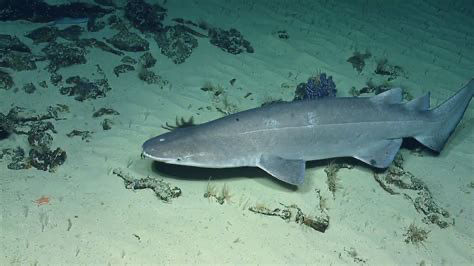
Although then unknown to her; Lingle was eye-to-eye with a rare prickly shark: a species who usually occupy depths of 300 – 2000 feet rather than the shallower submarine canyon of the La Jolla Cove. The prickly shark, which was likely attracted to the cove’s warmer waters and nighttime meal selection of fish practicing diel migration; glanced at Lingle and Dougherty before it swam onwards pacifying the filming of another “Jaws” sequel.
SIO researchers confirmed the very next day that the shark on the video was indeed a prickly shark (Echinorhinus cookei): a non-aggressive, deepwater shark; while simultaneously labeling the encounter as rare and cataloguing the students’ video for on-going research.
Lingle has since returned to the La Jolla waters for night dives and has not seen an E. Cookei since and confirms that this particular shark was exhibiting diel migration and “may have just wandered further than we expected”.
Is an Echinorhinus cookei Encounter a Cause for Concern?
E. Cookei is a deepwater, Pacific Ocean shark virtually unseen to human eyes outside of a submarine and recognized for its matte, dark grey skin covered with thorn-like denticles and two rear dorsal fins as one of two species in the scientific Echinorhindae family (the other being the bramble shark). Prickly sharks live solitary lives in colder waters (41.9–51.8 °F) and partake in nightly diel migration exiting the ocean floor layers to warmer, shallower waters either to mate or seek food being particularly fond of submarine canyons like that of the geological ocean floor of the La Jolla Cove. Having the capability to grow up to 13 feet; these sharks prefer to swim at a slow speed and capture their prey using a suction method instead of more antagonistic means. Encountering a prickly shark is so rare that scientists declare them as ‘Data Deficient’ unable to conclusively discern if they are a threatened species. Not being a peril to human life and being absent of high-grade meat for consumption means that prickly sharks are generally left to their own devices.
Lingle and Dougherty’s rendezvous with the La Jolla prickly shark is largely rare in the shallow depths but not necessarily a cause for a red-alarm - yet. Prickly sharks moving to the inshore waters of shallow, submarine canyons seeking an easy meal of fish, octopus, squid and other prey is not an anomaly. However, biologists agree that the rapid increase of ocean water temperatures due to climate change and global warming is heightening this behavior and throwing the prickly shark’s compass askew. As temperatures rise, prey moves to waters shore-adjacent which causes the prickly sharks and other deep-dwelling sharks to follow.
There is also an apprehension towards the decline of prey availability due to overfishing in stark contrast to historic counts which forces prickly sharks to journey to atypical locales for a meal instead of staying in their compacted habitat. Climate change is also wreaking havoc on ocean currents by melting ice and reducing heat transfer which effects the lifestyles of E. cookei such as their migratory timing exposing them to human capture vulnerabilities.
Although lesser in the case of prickly sharks; human behavior is also attracting these sharks to shallow waters closer to the shores. Leftover bait from fish farming or recreational fishing is the key factor resulting in human/shark encounters that end up on the daily news tickers. Sharks also prefer shallow, warm water to breed and birth their young.
Lingle and Dougherty’s experience is landmark and rare but not an immediate cry for help for prickly sharks as a species; but is signaling the desperation for mitigation of global warming en masse. It is absolutely vital to lessen carbon footprints and emissions in order to aid in the slowdown of global warming and curtail habitat loss for our apex predators. Often, actions that go without thought effect our oceans such as the use of fertilizer and pesticides in soils which flush into the oceans sparking toxic algae blooms. Household cleaning products containing phosphates are also speeding up the destruction of sharks’ ideal ecosystems. Simple behavioral modifications such as limiting fertilizer and cumulative natural product usage; goes a long way in saving oceans. Even the fashion red carpet raises eyebrows when incorporating shells and coral from tidepools for jewelry and clothing; plucking these critical oceanic cycle pieces.
Lingle goes one step further with advice when it feels insurmountable to stamp out global warming on a personalized level and maintains that, “Educating yourself about the ocean and sharing that knowledge is powerful”. Lingle also asserts that with the current political affairs in the United States (and even internationally) stripping wildlife and science protections makes being “thoughtful about the leaders you support vital because politics plays a major role in how the country treats wildlife and resources”. Lingle adds, “We cannot give up on the goal of sustainable coexistence with the ocean. It sustains life on Earth, provides oxygen, stores carbon, feeds the world’s populations, and offers immense beauty”. Without solid action in minimizing of the inevitable, sharks like La Jolla’s prickly sharks will have no choice but to make the La Jolla Cove and other shallow waters their new homes.
Directories / Credits
1: “La Jolla Sea Caves: History and How to See Them”, Written by Katie Dillon. Published on November 4, 2024 by La Jolla Mom
2: “Rarely Seen Deepwater Shark Encountered During Night Dive Off San Diego”, Written by Pete Thomas. Published on February 11, 2026 by For the Win at USA Today
3: “Divers Come Face-to-Face with Rarely Seen, Deepwater Shark Off La Jolla Coast”, Written by Steffie Roche. Published on February 11, 2026 by CBS8 News
4: “Rare Shark Spotted by Group of College Students During Nighttime Dive Off California Coast”, Written by Kieran Sullivan. Published on unknown date by Fox Weather https://www.foxweather.com/earth-space/rare-shark-spotted-during-night-dive-la-jolla-cove
5: “La Jolla Diver Stunned as Rare Prickly Sharks Cruises into Cove”, Written by Ben J. Costas. Published on February 10, 2026 by Hoodline San Diego
6: “Diver ‘Terrified’ After Coming Face-to- Face with Rare Creature Off Popular Coast: ‘It was just checking us out’”, Written by Erin Feiger. Published on March 18, 2026 by Yahoo News
7: “Group of Student Divers Encounter Rare Prickly Shark at La Jolla Cove”. YouTube Video Format Published March 2026 by CBS8 San Diego
8: “Deep Dive: Rare Shark Spotted for First Time in Panama’s Eastern Pacific”, Written by Leilia Nilipour. Published on March 19, 2024 by Smithsonian Tropical Research Instituted https://stri.si.edu/story/deep-dive
9: “Echinorhinus cookei Pietschmann, 1928 Prickly Shark” Classification, Written by Unknown. Published on Unknown by Fishbase
10: “Why Are Sharks Coming Closer to Shore?”, Written by Britannica Editors. Published on Unknown by Britannica
11: “A Short History of SIO”, Written by Deborah Day. Published on Unknown by Scripps
12: “Ocean Warming Alters the Distributional Range, Migratory Timing, and Spatial Protections of an Apex Predator, the Tiger Shark”, Written by Neil Hammerschlag, Laura H. McDonnell, Mitchell J. Rider, Garrett M. Street, Elliott L. Hazen, Lisa J. Natanson, Camilla T. McCandless, Melanie R. Boudreau, Austin J. Gallagher, Malin L. Pinsky, Ben Kirtman. Published on January 13, 2002 by Global Change Biology
13: “How Can I Help Sharks?, Written by Lois Flounders. Published on Unknown Date by World of Sharks.
14: Interview with Cali Lingle conducted by Orsolya Dunai, May 2026.


Really great article. Great information about a very interesting species of shark!
These articles are becoming an interesting series. Kudos to the writer for making the science accessible even for readers like me with a casual interest. I’m learning new things and looking forward to more.
Great article. What a unique looking shark!