
“The Sea Was In My Blood Right From The Start.”, An Interview With Marine Biologist, Invertebrate Zoologist, Marine Ecologist, Author, Professor, & Researcher, Dr. Richard C. Brusca

Updated: Dec 10, 2025
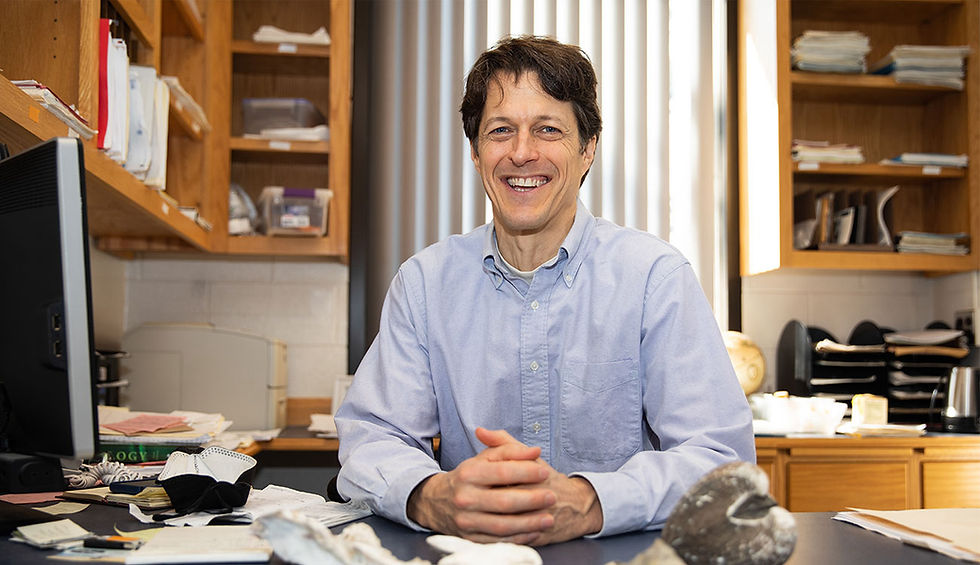
Recently, we were fortunate to interview the extraordinary marine scientist, Dr. Richard C. Brusca.
Dr. Brusca is a marine biologist, invertebrate zoologist, writer, researcher, and goldendoodle enthusiast known for his work with invertebrates, the Sea of Cortez, and Latin America. He is a prolific author, with over 200 publications and 16 books, and he has earned numerous prestigious awards such as the U.S.Department of Defence Award for Civil Service. Apart from his scientific ventures, he is also well known for his fiction novels, “In the Land of the Feathered Serpent”, 2019, and “The Time Travelers”, 2023, which led him to winning the 2024 Independent Press Award for Hispanic Fiction.
In today’s interview, we sit down with Rick to discuss his long and extraordinary career in marine science, his science communication efforts, his novels, his passions, his nonprofit work, and his advice for new marine biologists and early career ocean professionals, in a comprehensive 27-question interview. Before diving into today’s interview, please note everything said has been edited for clarity, and that the opinions of our interviewee do not necessarily reflect the opinions and values of our organization. With that being said, let us delve into the contents of the interview!

The Interview
Questions About His Passion
1. What sparked your passion for marine biology, invertebrate zoology, and the ocean?
I was fortunate to have grown up on the coast in California. In my youth I spent as much time as possible at the beach: tidepooling, body and board surfing, just exploring. The sea was in my blood right from the start. I would often cut a day of high school to hang out at the beach, surfing and just staring out at the broad Pacific and its hypnotic waves. I always had the notion of the Pacific Ocean being the largest thing on the entire planet and the enormity of it enchanted me. I knew it was over 5,000 miles of open ocean from my beach to the other side, to a beach in Japan where I imagined someone like me sitting and staring out across the Pacific thinking about how vast it is.
When I went off to college I started at Cal Poly San Luis Obispo, where I took every marine and invertebrate course they offered. I spent my weekends driving up and down the California coast looking for the greatest beaches to explore. I would visit the many marine labs along the coast and while away hours in their libraries. In my junior year, I got lucky andwas offered a job as a marine technician on the R/V Eltanin, a naval Arctic icebreaker that had been refitted as an Antarctic research ship. I spent seven months on the Eltanin, sailing into various ice packs in the Southern Ocean and learning the practical aspects of oceanographic sampling. On that voyage, I read Sir Alister Hardy’s still unrivaled oceanography book, The Open Sea. The book, and the experience, fixed in me forever a love of the ocean and a love for field work and travel.
2. What inspired your passion for the Sea of Cortez, also known as the Gulf of California?
I really knew nothing about the Sea of Cortez, but after finishing my master’s degree at Los Angeles State University one of my instructors asked me if I might be interested in moving to Mexico to help out the University of Arizona. They needed someone to build a small marine laboratory on the coast near a fishing village called Puerto Peñasco (a 4-hour drive from Tucson). I spoke no Spanish, had been to the Gulf of California only once, and knew nothing about building marine labs; but the whole thing sounded like such an exciting adventure that I jumped at the opportunity. He recommended me to the head of the U.A. Marine Biology Program, I flew out for an interview, and I got the job!
Two months later I was living in Mexico, learning Spanish, and trying to figure out how to construct a simple marine lab (with a running seawater system, etc.). Somehow I pulled it all off, and in the process discovered what an amazing body of water the Sea of Cortez is.
Near the end of my 2-year contract living and working in Puerto Peñasco, the great amphipod systematist J. Laurens Barnard took a sabbatical leave from the Smithsonian’s National Museum of Natural History to work at the U.A. He hooked up with me and we spent many months traveling around the Gulf collecting his beloved amphipods and revisiting the old Ricketts-Steinbeck collecting sites from the 1940s. By then I was so inspired by the beauty and rich diversity of the Gulf of California, I couldn’t imagine studying any other region of the world. That’s when I decided to enter the PhD program at the U.A. Jerry Barnard was my greatest mentor and inspired the entirety of my career.
3. What ignited your passion for the Southwestern U.S.?
After completing a two-year contract job for the University of Arizona, living in Mexico on the shores of the Sea of Cortez, I decided I wanted to get a PhD and become a college professor. I had already fallen in love with the Gulf and its desert shores, and the only university that had a marine program focused on that spectacular sea was the University of Arizona.
I was admitted to the program and once I settled into Tucson began to discover the Sonoran Desert. For me, it had many parallels with the sea, and even the intertidal zone: the challenging environment for the plants and animals, the extreme biodiversity, the endless complex relationships between the flora as well as fauna, its sheer, and often stark, beauty. It would be nearly impossible to live in the Sonoran Desert & not fall in love with it.
4. What captivated you about the Madrean Sky Islands, andhow would you describe them to those who are not familiar?
Moving to Arizona I was struck by the pattern of the landscape, which consists of a series of isolated mountain ranges separated by low valleys. It is the overarching pattern of the terrain as far as the eye can see. I learned that this region was part of the great Basin and Range Geological Province that runs from southeastern Oregon all the way to Sonora and the Central Plateau of Mexico.
Tucson is surrounded by four of these isolated ranges, the most well-known being the Santa Catalina Mountains. The Catalinas are one of 65 of these Basin & Range mountains that just happen to span the gap between the Colorado Plateau/Rocky Mountains and the Sierra Madre Occidental of Mexico—sometimes called the Cordilleran Gap. These 65 ranges are known as Sky Islands because they harbor unique higher-elevation plant and animal communities that are separated and isolated from other ranges by sprawling low desert valleys. Most of the ranges harbor endemic species in their oak woodlands and pine forests. Not only that, but they also serve as stepping-stones for temperate species from the north, and tropical species from the south, which gives these Sky Island ranges an enormous andinteresting mix of biodiversity. It’s what makes southeastern Arizona a global biodiversity hotspot.
Exploring these ranges around Tucson, one quickly learns that as you travel up in elevation the changes in plant communities mirror those seen driving north in latitude. This is a biogeographic relationship first described by the great explorer Alexander von Humboldt in the early 19th century, based on his work in the Andes. In the 1960s, the pioneering ecologist Robert Whittaker documented these vegetational changes in the Santa Catalina Mountains in great detail.
While working on a project developed by my wife, U.A. professor Wendy Moore—the Arizona Sky Island Arthropod Project (ASAP)—I totally fell in love with the Catalina Mountains. She was collecting arthropods all over the range, so I decided to use the same transects to document the plants, with the idea of comparing them to what Whittaker had found 60 years earlier. It turned out to be quite interesting because over those six decades a warming and drying climate had been established. We predicted that all of the plant species might have moved upslope to avoid these climate changes. Many had done so, but we also discovered that many hadn’t. Some had compressed their elevational range, others changed only their lower range limit, and so forth. Overall, the varied responses of the plants led to changes in community composition that were unpredictable at the outset of the project.
5. Was there any major person, place, book, or media franchise that assisted in the sparking of your passions for these subjects?
I was fortunate to have had some great mentors. As an undergraduate, Professor David Montgomery solidified my interest in invertebrate zoology and it was then that I began reading books by the great zoologist Libbie Hyman. I so admired Hyman that I wanted to accomplish similar feats of synthesis.
My MSc advisor, Dick Allen, taught me systematics, and we ended up publishing a number of papers together on mayflies. Those were my first scientific publications and Dick helped me learn the convoluted process of writing and publishing one’s research.
During my PhD work, I was inspired and mentored by the Gulf of California fish expert, Donald A. Thomson, and the wonderful amphipod biologist J. Laurens Barnard. Jerry Barnard was far and away the most important mentor in my life because he taught me how to have fun and do serious biology at the same time.
6. Across your career, you have worked with a plethora of different species. What is your favorite species that you have worked with? Generally speaking, what is your favorite marine or terrestrial animal?
It would be impossible for me to pick favorites (aside from my 85 lb. Goldendoodle, Marley). I find all of life utterly fascinating, and the world of invertebrates is so unimaginably diverse that every year new creatures are discovered that defy our imagination. Some of my colleagues and I have puzzled over invertebrate specimens for years before finally figuring out what phylum they even belong to (in some cases, a new phylum had to be erected to accommodate them).
There remain infinite mysteries to be solved in the world of invertebrates and they can be found in virtually any tidepool or sample from the deep sea. We know a lot, yet we still know so little. Not only that, but everyone knows invertebrates are spectacularly beautiful and far more charming than vertebrates!
Questions Regarding His Career In Marine Science
7. Where did you pursue your undergraduate degree, as well as your master’s degree, and was there any particular reason as to why you chose these institutions?
I completed my bachelor’s degree at Cal Poly San Luis Obispo, where I knew they had a strong marine biology program. I also knew it was a beautiful coastal region of California. That took me nearly seven years because I kept taking time off to travel (Mexico, New Zealand, Chile, Antarctica on the R/V Eltanin, etc.). I did my master’s work at L.A. State University only because I was living there, had gotten married, and had a child. I didn’t want to disrupt the family and my wife had a good job, but I got lucky and found a great thesis advisor, Richard K. Allen.
8. Which institution did you go to for your Ph.D. and what was your thesis topic?
After completing my 2-year contract with the University of Arizona, living and working in Mexico, I enrolled in a PhD program at the University of Arizona. They had the only graduate program in the country focused on the Sea of Cortez, and my newly-discovered mentor and friend Jerry Barnard was a visiting professor there (from the National Museum of Natural History). I wanted to study crab systematics, but at the time Professor John Garth (at the University of Southern California) was the preeminent Eastern Pacific crab specialist and he was very possessive about his group, thus discouraging me from crabs!
Instead, I fell in love with marine isopods, those little marine “pillbugs” that are so diverse and common. My PhD dissertation was a revision of a family of isopods that are parasites on marine fishes in the Gulf of California. The number of specimens I had available was enriched by culling through the University of Arizona’s fish collection, where I found my parasites still attached to the bodies of their pickled host fishes. I worked on isopods for over 20 years but eventually became interested in so many other things, especially Sea of Cortez conservation issues, that I finally let them go.
There is a bit of irony in all this, because after completing my PhD my first academic position was to replace the retiring John Garth at USC.
9. Do you mind speaking about the work that you have done in the Sea of Cortez? What has been your focus while in the Sea of Cortez?
My work there began by simply documenting the vast invertebrate diversity, over 5,000 described species, of that poorly known region, including writing keys to identify the common species. That grew into a body of systematic work describing the isopod crustacea of the Gulf, and that led to research on conservation ecology in the region. I’ve published many papers, books, and editorials on the region over the 50 years I’ve worked there.
Among the paradigm shifts I’ve tried to instill is the fact that the Colorado River was never important to the ecology of the Upper Gulf, because it actually never delivered much freshwater to the sea. There is ample evidence to support this, although for some folks it still seems so counterintuitive that they struggle with the idea.
Another paradigm shift I’ve pushed is that the Sonoran Desert should be considered a maritime desert, because our summer monsoon rains come almost entirely from evaporation off the Sea of Cortez. It is this summer rainy season that makes the Sonoran Desert unique among American deserts, providing for two rainy seasons annually and driving our biodiversity to very high levels. I’ve worked with UNESCO for many years on projects to evaluate their Biosphere Reserves in the Gulf, andI’m currently working with a large group of other Gulf specialists to produce a detailed assessment of the overall health of the Sea of Cortez.
10. Early on in your career, you worked with a scientist known as Jerry Laurens Barnard. We recently published an article discussing his life, work, achievements, and accomplishments. What research did you conduct with Jerry and where did you primarily conduct it?
Jerry took a 4-year sabbatical from the National Museum of Natural History to move to the University of Arizona as a visiting researcher. One of his primary goals was to undertake a comprehensive survey of the Gulf of California’s amphipod Crustacea. I was still living in Puerto Peñasco when he arrived, running a small marine lab that I’d built for the University of Arizona. On Jerry’s first visit to Peñasco we met and hit it off.
Subsequently, he and I undertook many expeditions around the Sea of Cortez, he collecting amphipods and me documenting the intertidal invertebrates for my then-forthcoming book, Common Intertidal Invertebrates of the Gulf of California (U.A. Press). Once I decided to work on isopods for my PhD dissertation,Jerry was invaluable as a mentor because amphipods andisopods are very closely related.
11. How did you become the Curator of Crustacea and Head of the Invertebrate Zoology Section for the Los Angeles County Museum of Natural History?
I was on faculty at the University of Southern California, where I also served as Curator of Crustacea for the Allan Hancock Foundation Oceanographic Collections. The Hancock collections were world famous and comprised the largest eastern Pacific collections in existence.
At one point in time, the U.S.C. administration made the bad decision to abandon the collections. They were actually considering trashing them. I managed to obtain sizeable funding from the National Science Foundation to transfer most of the collections to the Los Angeles County Natural History Museum, one of the best museums in the country. Once the Crustacea collection was moved, which took about 18 months, the museum opened a position for a Curator of Crustacea. I applied and was lucky enough to get the appointment. That collection, with approximately 130,000 lots (i.e., a single collection from one time and place) and millions of specimens, is second in size andimportance only to the Crustacea collection at the Smithsonian.
The move was so complicated, I could never have done it without the help of a very smart and hard-working assistant, Regina Wetzer. Regina went on to get her PhD in invertebratesand is now a Curator and Director of the Marine Biodiversity Center at the museum.
12. What led you to become the director of the Graduate Marine Biology Program at the College of Charleston in South Carolina?
There’s a bit of a story here. I’d left the L.A. Natural History Museum for an endowed curatorship position at the San Diego Natural History Museum. It was a great job, well-funded, in a very pleasant city. However, the museum’s Executive Director turned out to be a bad guy and one day the Board of Directors discovered he had been mismanaging the museum’s finances quite badly. All of a sudden, the auditors told us we were in big debt and would have to substantially reduce the budget.
A temporary new Executive Director was put in place with the charge to slash the budget. This fellow didn’t understand the role of science in natural history museums, so the first thing he did was start laying off science staff—curators, technicians, andcollection managers. Although my position was safe because of the endowment, watching my close colleagues get axed was stressful. It was clear to me that science was being dismembered at the museum. Just then fate seemed to step in and I was recruited by the College of Charleston to take over as Director of their Graduate Program in Marine Biology. It was actually one of the very best marine science graduate programs in the country.
I accepted the invitation and jumped into a high-level administrative position. It took me a few years to get my feet on the ground, with nearly 50 students and 100 participating professors. Talk about herding cats!
13. What led you to become a Senior Research Scientist with Columbia University in New York, and what sorts of research or teaching did you conduct while at that university?
This was another recruitment. I had just moved to Tucson to be with my new bride (Wendy Moore), who had started her PhD program in entomology at the University of Arizona. My friends and colleagues at the College of Charleston told me I was crazy to give up a good position with tenure, having no job waiting for me in Tucson. Yet, love prevailed.
I was initially offered a Research Scientist position in the UA’s Ecology & Evolutionary Biology Department and was about to transfer a very large National Science Foundation research grant I had from Charleston to the University of Arizona. Colombia University somehow found out about my situation and I was invited to visit their Biosphere 2 Center in Oracle, Arizona. Columbia had just taken over the Biosphere and they were looking for “new talent,” especially people who could come with grants “in their pocket.” They basically made me an offer I couldn’t refuse.
So instead of building a new lab at the UA, I did so at Columbia University’s Biosphere 2 Center where I continued working on isopod systematics and Sea of Cortez biodiversity and conservation. Then, after just a couple of years, Columbia asked me if I would consider being Director of Education for the Center. I liked the faculty there, and their teaching ideas were very creative as well as successful and strongly oriented toward field work. I took the new position, but had to cut back on my research.
I retained my Research Scientist appointment, unpaid, at the University of Arizona throughout all this.
14. How did you enter the role of Executive Director at the Arizona-Sonora Desert Museum, and what work did you do with the Arizona-Sonora Desert Museum Press?
Just four years into my job with Columbia University’s Biosphere 2 Center, I was invited to apply for a position at the Arizona-Sonora Desert Museum. Their Director of Science, Dr. Gary Nabhan, had left for a position at Northern Arizona University, and the museum needed to replace him. I had to compete against a couple of other folks but got lucky and got the job!
Then, after just a year or so, the museum’s executive director retired and the museum needed someone new. The Board of Trustees came up with a clever and unique idea—there could be two Executive Directors, co-directors! The Trustees knew me pretty well, and they knew the museum’s Director of Development (Robert Edison) quite well indeed. Bob Edison and I deliberated on the idea and decided we could easily work together by splitting up responsibilities. I liked to joke that Bob raised the money and I spent it. We got along well and both worked hard, and the museum thrived!
The entire time I was at the Desert Museum I also ran the ASDM Press, which was a lot of fun. We produced a good many books, almost all of which won national awards, from science tomes to children’s books, and even an award-winning cookbook. I learned a good deal about the fascinating field of book publishing during that period.
15. Broadly speaking, over the course of your career what types of research have you done involving marine invertebrates?
I’m one of those few invertebrate biologists who worked on many different groups, all the phyla really. My textbook, Invertebrates, treats all of the invertebrates in great depth, including systematics, biology, ecology, and phylogenetics. It’s hard to categorize my work on invertebrates because I’ve published on systematics, ecology, invertebrate conservation, biogeography, embryology, invertebrate archaeology . . . you name it. The textbook is now in its 4th edition, in four languages, and is the widest-selling text in the field.
My online database of invertebrates in the Sea of Cortez (over 5,000 species) is a primary reference for anyone working in the region.
16. Your work has taken you all around the world, from Antarctica to the Tropics. How many areas have you researched and which ones were your most memorable?
Well, that's a big question. I’ve organized and undertaken field expeditions all over the world. Many of these were research-ship based, usually relying on scuba and occasionally using manned submersibles.
My fieldwork includes most of the America’s: Guatemala, Nicaragua, Ecuador, Bolivia, Argentina, Brazil, Galapagos Islands, Peru, Uruguay, Chile, Mexico, Costa Rica, Panama, Tierra del Fuego, throughout the Caribbean.
In the Old World, I’ve undertaken field work throughout the Western Mediterranean, Spain, Morocco, South Africa, Swaziland, Namibia, Madagascar, Taiwan, and Thailand.
In the Pacific, I’ve worked in Bora Bora, Moorea, Tahiti, Rarotonga, Aitutaki, Tonga, American and Western Samoa, Fiji, Guam, New Zealand, Hawaii, Antarctica, and extensively throughout Australia.
It would be hard to pick a favorite because so many of the places are simply spectacular in terms of invertebrate biodiversity andsheer beauty, but certainly the islands of the tropical western Pacific stand out on both counts. I also favor Latin America because I’m a great fan of Hispanic culture and New World Indigenous history.
Questions About His Various Publications and Other Passions
17. How many books have you published thus far and what are subjects?
I’ve published 16 books, several that have gone through multiple editions, on topics ranging from crustacean biology to Sonoran Desert ecology to Sea of Cortez natural history. Some were bilingual (English-Spanish) and one has been translated into four languages (my invertebrate text: Invertebrates, Oxford University Press).
Two were novels. My latest book was a look at the relationship between science and the humanities; an important subject that doesn’t get enough attention. I’m currently working with a Colombian-Mexican colleague, Omar Vidal, on a book about Mexican conservation issues (to be published in Spanish).
18. What attracts you to Latin American History, as well as culture? What sorts of publications have you done involving Latin American history?
I’ve been attracted to Latin American culture and history for as long as I can remember. Perhaps it was growing up in Los Angeles, where Latino culture is hard not to notice. My love affair with Mexico, in particular, runs deep.
Our southern neighbors are better educated than us (the literacy rate in Mexico is over 95%; in the U.S. it’s 79%, and 54% of U.S. adults read below a 6th-grade level), and they tend to make decisions based on facts and thoughtful consideration rather than ideology (as is so common among Americans).
Also, compared to Americans they have a stronger sense of social justice, are generally happier and maintain a healthier outlook on life, are more family-oriented and, importantly, are deeply connected to their roots, especially their Mexica ancestry and the great Aztec Kingdom which still survives in many forms in modern-day Mexico.
Mexico never tried to force its Indigenous groups onto miserable reservations as we did in the U.S. They were left to live where they were and live the way they chose. But, of course, almost every Mexican born in Mexico has indigenous blood in their veins and they are part Native American—they are Mestizos. So it’s quite different from the U.S.
Another thing, my Mexican researcher colleagues don’t take themselves too seriously; unlike American scientists, who tend to delineate their entire identity as human beings by their career work.
By the way, it’s not just Mexico: the literacy rate in Chile is 97%, Venezuela 98%, and Argentina 99%. It’s always seemed easier to have meaningful conversations with Latinos than with U.S. citizens, because they are better informed, more broadly read, and are more adept at distinguishing between dogma andreality. Of course, that doesn’t mean Mexico doesn’t have its own set of problems, such as corruption and organized crime—both, by the way, descended from the era of unscrupulous Spanish colonial rule.
I’ve written a bit about the Mexican culture, and also the Maya culture of Guatemala. One of the more interesting studies I did, with a colleague in Mexico City—Omar Vidal—was an analysis of biodiversity and cultural diversity throughout Mexico (the two together are called “biocultural diversity”). We found the two to be tightly correlated, with biological diversity andcultural diversity (i.e., Indigenous diversity) trends closely linked. Areas of high biodiversity are also areas of high cultural diversity. There’s a lot of attention on stemming the loss of biodiversity, but very little on slowing the loss of cultural diversity.
With 364 living languages, Mexico is the world’s fifth most linguistically diverse country. But, 64 of these languages are facing a very high risk of disappearance. Thirteen languages have already gone extinct in Mexico in historic times.
Mexico is also the world’s 4th most biodiverse country, but over a thousand species are currently threatened with extinction. These threat patterns among languages and species are directly linked to one another.
19. What interested you specifically about the United States’ government, particularly the CIA’s involvement in Latin American politics and general affairs? Additionally, how does this subject appear as a backdrop in your books?
During the 1980s I was traveling a good deal in Central America, including a year-long sabbatical living in Costa Rica. I was collecting invertebrates along the coastlines of Guatemala, Nicaragua, and Panama, as well as working on a guide to the isopods of Costa Rica.
It was a turbulent time in the region, with civil wars going on in El Salvador and Guatemala. It was also the era of the Banana Wars and President Ronald Reagan’s illegal attempts to overthrow the new democracy of Nicaragua. The CIA was involved everywhere, mostly in unscrupulous ways. I found it all fascinating and began keeping copious notes, newspaper clippings, etc. I always had the idea of writing a novel about those years—historical fiction. I carried around my boxes of notes for 40 years before I finally retired and had time to start working on the book. My first novel, In the Land of the Feathered Serpent, is what came out of it.
The book has been a success and won several national literary awards, including the 2022 BIBA Award for Best Contemporary Fiction. It’s largely a memoir of my life in the 80s but it's multi-layered and is also a Homeric epic-style novel. It’s a big readand not for the faint of heart.
20. One of your latest books, The Time Travelers, showcases your appreciation for Aztec history quite thoroughly. May I ask what inspired you to write The Time Travelers, what your goals were with the book, and what the subject of the novel is?
You can’t spend time in central or southern Mexico without confronting its deep roots in the Aztec culture. It’s everywhere you turn. The name Mexico itself comes from the Mexica people who controlled the great Aztec Empire and built the first Mexico City. Aztec emperors and motifs appear on the country’s currency, in government, on buildings and street signs, throughout their version of the Spanish language, and in all the school books.
The Mexican people are a mestizo culture, nearly everyone having indigenous blood, most notably Aztec, or more properly, Nahuatl. Having a lifelong interest in cultural anthropology, writing a story about the Aztec empire came naturally to me. The most widespread Indigenous language in the New World is Uto-Aztecan, and today the largest group of Uto-Aztecan speakers is the Nahua People with over 1.3 million Nahuatl speakers in Mexico alone. Many of my closest friends in Mexico are Nahua or Nahua-dominant mestizos.
The idea for Time Travelers was to educate the reader about these things while simultaneously entertaining them with a fun story. The book won several awards, including an IPPY (Independent Press Award) for best Hispanic fiction of 2024.
21. In many of your works, your passions for Latin American history and the ocean interact and blend beautifully. How have these two passions interacted andplayed off of each other throughout your life?
Although I’ve worked all over the world, I’ve always found Mexico-Central America the most interesting region, both in terms of biodiversity and culturally. When competing opportunities arose, I always defaulted to Latin America. From 1978 to 1985 much of my work was ship-based in the Caribbean, primarily on islands that offer some of the best scuba diving in the world. Those projects, largely searching for bioactive compounds in marine invertebrates, also included a good deal of manned submersible work. Importantly, I never traveled to these destinations without adding in a few weeks of solo travel to absorb the countryside and the local culture. Most attractive to me was the high country of Guatemala, homeland of the Maya People, many of whom still live today as they have for thousands of years. It was my notebooks of those travels that eventually gave birth to my first novel.
22. Focusing on one of your other passions, on your website you discuss your appreciation of martinis, as well as fine wine. What captivates you about martinis specifically and do you mind sharing your favorite martini recipe with our readers?
The best martini is the simplest martini. Two shots (per serving) of a clean gin, such as Hendricks, Fifty Pounds, or Tanqueray in an ice-filled shaker. Shake vigorously. Swirl a bit of Noilly Prat dry Vermouth around the inside of martini glasses fresh from the freezer, then toss the Vermouth out. Pour the shaken gin into the glasses through a martini strainer and add three pimento-stuffed olives.
23. You have had a lengthy, extraordinary career. Across all of it, what would you say is your most memorable moment?
No doubt, the first time I ever saw Wendy Moore, who is now my wife of 30 years. It was truly love at first sight.
24. What has been your biggest triumph or proudest moment across your career?
Very hard question! Perhaps when my invertebrate textbook became an instant success and I knew I’d achieved my goal. It took 10 years to write the first edition of that book. Or perhaps it was when my second novel won an IPPY for best Hispanic novel of the year, or perhaps being made a Fellow of the American Association for the Advancement of Science.
25. I’m sure that you have faced just as many challenges andsetbacks as you have leaps forward. What has been the biggest hurdle or challenge that you have faced across your career and how did you overcome it?
We all face so many challenges and setbacks in our lives. I don’t think I could single out any particular one but I do know that in every case I just dug down, worked hard, and did what needed to be done, knowing that it, like everything, would pass. The more risks we take, the more likely we are to get knocked down, but the real mark of success is getting back up and carrying on.
One of my favorite quotes comes from Helen Keller: “Life is either a daring adventure or nothing.” We will never achieve our potential, become the person we wish to be, unless we have the resiliency to overcome life’s adversity, be a mindful participant, and not just a passive observer, and to get back up on our feet when we’re knocked down.
26. Do you have any advice for new marine scientists, aspiring marine biologists, and young people with a passion?
Work hard, as hard as you can. Read books, as many books as you can, including good literature. Identify your passions andstrive to follow them as much as possible; therein lies your wellspring of joy and self-satisfaction. Never give up.
27. Do you have any final words about your work, marine science, marine invertebrates, the Sea of Cortez, Latin American history, and the Southwestern United States?
Life is short, take big bites; and always try to follow your dreams.

A lovely photograph of Dr. Richard C. Brusca, & his Goldendoodle, Marley, exploring Puget Sound, Washington State, USA. Credit to Wendy Moore.
Directories / Credits
Strategic Partnerships
Reel Guppy Outdoors
SharkedSkooler
Marine Enthusiasts Podcast
Tides of Tomorrow
Cash Daniels
The Open Book, Topanga
Olivenbaum Music
Pitfire Artisan Pizza
Our Loyal Patrons
P. R. Ochoa


Comments