
“When I Finally Got Certified To Scuba Dive, I Immediately, Both Literally & Figuratively Dove Into The Ocean & Never Looked Back!”, An Interview With Marine Biologist Dr. James Lindholm

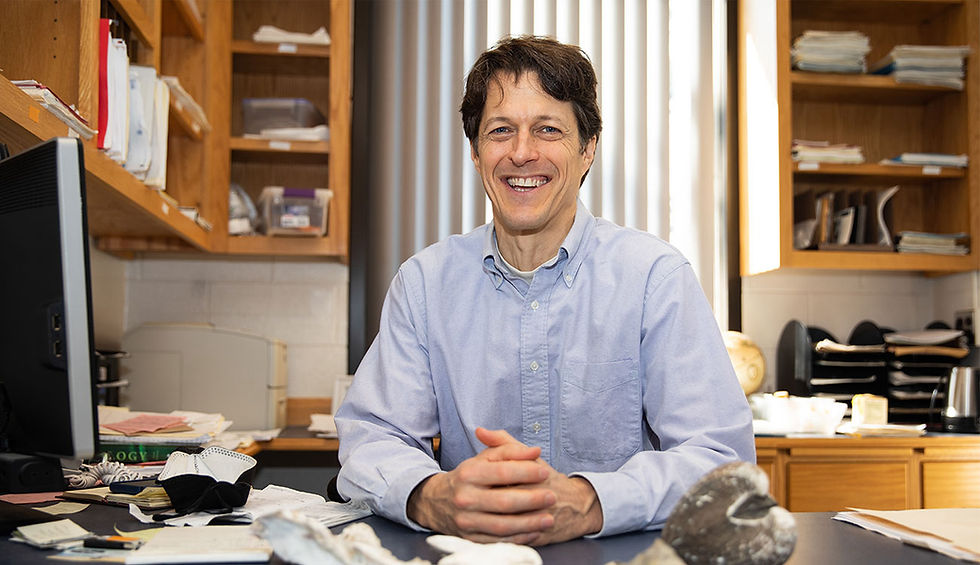
Recently, our head writer had the privilege of sitting down with the extraordinary Dr. James Lindholm, Marine Biologist, Seafloor Landscape Ecologist, Professor, Environmental Policy Advocate, Researcher, Author, & Ocean Conservationist!
Dr. James Lindholm is a marine biologist, scientific diver, seafloor landscape ecologist, professor, environmental policy advocate, researcher, author of the Chris Black marine fiction series, & ocean conservationist. He is well known for his illustrious career with CSUMB, his work in environmental policy, his ocean fiction series featuring marine biologist Chris Black, his work in ocean conservation, his work in benthic ecology, his work assessing humanity's effects on the ocean, & his work in coral reefs ecology.
In today’s interview, we sit down with James to discuss his research across a variety of fields, his trips to the Aquarius Undersea laboratory, his vast experiences underwater, his passion for the sea, & his advice to young curious marine biologists looking to make their way in the field in a comprehensive 25-question interview. Before delving into today’s interview, please note everything said has been edited for clarity, & that the opinions of our interviewee do not necessarily reflect the opinions & values of our organization. With that being said, let us delve into the contents of the interview!

The Contents Of The Interview
Questions About His Passion:
1. What sparked your passion for marine science & the ocean?
That’s a great question, it’s an interesting one. I think many of us have been asked this question more than once. I had a father who was a scuba diver & a mother who was a surfer, but neither of them was doing those things by the time I was born, so we don’t entirely know where my motivation came from. It appears that I was fixated on the ocean at a very early age, like pre-kindergarten.
My parents met on a diving boat off the coast of Santa Barbara. My dad was diving & my mom was out doing what we call bubble watching, she wasn’t diving that day. That was their first date. It was interesting, I saw my father’s gear in our garage. I remember being preschool age & walking around looking at the tanks, I knew the drawer that had regulators & things like that in it. I can smell the neoprene still now, from that garage all those years ago. I’ve asked this question of other people, & we’ve done a little research & found many people describe this phenomenon of being preordained to do something, but I don’t think science has an answer for it.
2. Was there any particular person, place, moment, or piece of media that assisted in sparking your passion?
There have been many people who’ve helped spark the passion along the way. From elementary school, I remember there was someone in high school, & then grad school kind of set me off on the direction that I am now & have been for the last 30 years. It reminds me of the importance of mentors, because I’ve had a lot of them, & they’ve helped shape how I think about the world, & many of the activities that I do. With respect to other things, I look at what motivates our students now, & it’s funny. None of them would recognize any of the popular culture that motivated me back in the day, so it’s not even worth mentioning. I played with toys that were action figures, & scuba divers. I watched every movie that had marine themes, & many of them in the 70’s weren’t very good, but it was fun to watch them nonetheless. I think by & large, I was always the kid who wanted to get wet, who came back from the field trip soaking wet for some reason. What I benefited from was having a few key mentors along the way who nudged me along & enabled that enthusiasm.
I saw Jaws when I was very young, I think I was seven when it first came out. My dad was adamant that I did not see it because he didn’t want me to get afraid of going in the ocean. Then my mom took me to it, & she got in big trouble, & it stands as one of the most impactful movies in my life. There’s a lot more going on obviously now, but back then it was quite an impactful movie for me.
3. What sparked your passion for marine fiction?
Well, I was an early reader, & I read everything I could find. My first book is dedicated to my mom, because she was feeding me books. I was reading spy novels, & other thrillers much earlier than you would probably want someone reading those. I started early. There weren’t a lot of marine-themed books in those days, they’ve increased over time. It always occurred to me that if I ever were to write something, I would try to weave in tales of undersea adventure. That’s how that came to be.
I read a lot of different things. I’ve read a lot of legal thrillers over the years. I’ve read medical thrillers. I’ve read a lot of spy thrillers. One of the things I find engaging about the books I’ve read, particularly series where you follow the same characters through multiple adventures, is that they offer you enough insight into the legal world, the medical world, or the spy world to keep you engaged. The good ones don’t overwhelm you with the content, because a lot of the time that gets a little tedious. It occurred to me that I hadn’t aspired to write novels. I write a lot of research papers on science. What I want to do is write a novel that’s engaging, hopefully exciting, & then insert & contextualize it by placing my characters in undersea situations. You learn a little bit on the side, but you’re not being browbeaten on the topic.
I’ve been working at the intersection of Science & Policy for a long time. Years ago, this was more common, but once upon a time there were groups that formed to help train scientists to talk to policymakers. If we were going to Washington D.C. to brief Congress or to go to the White House, this group would help us prepare our presentations & think about talking points. It’s far more common now, but that training, the focus on your audience, learning who you’re talking to, & tailoring your message because everybody has these different expectations & different aptitudes, kind of drove my enthusiasm for science communication over time. I see these novels as an extension of that science communication effort because I get feedback from readers that they enjoy a little bit of science tossed into the story.
I’ve been fortunate to travel all over the world, & a lot of people come up to me & say “I always wanted to be a marine scientist!”, but they didn’t enjoy calculus, or chemistry, or they found the laboratory classes too overwhelming. It struck me that there is a natural audience of people out there who are interested in the marine environment, but are not scientists themselves. The way to connect with them is to give them enough to connect with whatever enthusiasm they had, but not to overwhelm them with details.
4. What sparked your passion for scuba diving?
I think there’s no single answer to that question. I started surfing long before I was a diver. My experience with the ocean for many years was as a kid surfing. I had a few really cool experiences snorkelling at various points & realized “I think that scuba diving might be the way for me to do it.” When I finally got certified to scuba dive, I immediately, both literally & figuratively dove into the ocean & never looked back. I’ve been diving all over the world, & here at CSUMB (California State University, Monterey Bay) with a colleague, I started what is now the largest university dive program in the country. We’re training over 400 students a year, in a variety of different courses culminating in scientific diving. It’s been a career-long experience for me.
5. What is your favourite terrestrial, or marine animal personally, & what is your favourite marine or terrestrial animal that you have worked on?
It’s tough to narrow them down, it’s so hard to avoid being cliché because all of the animals I’d probably choose are ones that most people have thought about. I’ll tell you a couple if that is okay. One of the things I’ve been fortunate enough to do is I’ve done a lot of surgery on fish, surgically implanting transmitters so we could track their movements over time. Much of this work is done underwater. I have to hold these fish in my hands while I’m anesthetizing them, & conducting surgery on them. Then I swim them around until they wake up in my hands, & swim away. It’s really neat. I’ve done this to many species. From the moment we trap them underwater, remove them from the trap, anesthetize them, do the surgery, & have them swimming around in the water, it takes a little over 2 minutes. It was very quick, it’s a nice thing to do underwater. It’s not major surgery, you’re slicing a small incision along their ventral line on the bottom of the fish, inserting the transmitter, & then using sutures similar to surgery on humans to stitch them on. You also put an external tag on them that has an ID code, then finally swim it around & release it.
Probably the most compelling fish that I’ve done this to on the California Side is called the California Sheephead. The males get very big. In the Caribbean, the blue parrotfish is a uniformly beautiful blue. Watching these fish wake up & swim away has endeared them to me, so I love sheep-head & parrotfish. The surgery is more impactful for some fish than others. We have to constantly remind my students that for the purposes of discussion, we’re all human beings, & look at how widely variable our responses to anything are. So why would you expect every single blue parrotfish to respond identically? I’ve found a great deal of variability, some of the fish find it traumatic, & I’m not wild about that, but it’s something we have to do.
Also, like many of my students, I’m a fan of great white sharks. I’ve had several encounters with them over the years, I don’t work with them as a rule, but I enjoy them.
Questions About His Career:
6. What university did you attend for your undergraduate degree, & was there any particular reason you chose that university?
I chose California Polytechnic State University, at San Luis Obispo. I chose it largely because I like doing outdoor activities all the time. I grew up in the area, & I wanted to keep doing all those activities. Cal Poly was a fantastic university that provided me with the opportunity to do all the things I like to do outside. I went from preschool through undergraduate within a 25-mile radius. It was great, I loved going to Cal Poly. The Cal Poly learning by doing mantra set the stage for the rest of my professional career for sure.
That was very engaging to somebody who’d spent all their time out in the water getting wet & dirty. The idea of learning by doing the thing that you’re interested in was super compelling. Indeed our marine science program here (CSUMB), is in a very real way, informed by that experience at Cal Poly all those years ago. I think Post-Covid, there’s certainly a push to get as much online content as possible because people got used to doing things like school sitting on their beanbag in their pyjamas, & they still want that. Maybe that works for some majors, but for ours, I think that would deprive our students of these critical connections that are made by being on, around, or in the environment where organisms occur.
7. What university did you attend for your master’s degree, as well as P.h.D, & was there any specific reason you chose that university?
I’d gone to school for so long in the same area, so I took a couple of years off between undergraduate & graduate school. I surfed & dove a lot, & helped my friends open a restaurant. I kind of looked around to see what my options might be. I really wanted to go to a place in Massachusetts called Woods Hole. It’s out on Cape Cod in Massachusetts where the first private research laboratory in the country, the Marine Biological Laboratory, the National Marine Fisheries Laboratory, & the Woods Hole Oceanographic Institute (WHOI) all coexist. It’s this concentration of marine science effort. Being a Californian & not having spent much time on the East Coast, Woods Hole called to me. I enrolled in a Master’s Program at Boston University because they had a program where you could study in Woods Hole, but it was still administered by Boston University. I was always planning to come back to California when I was done with my Master’s degree, & see what I could figure out. By the end of the first year of my master’s, I’d met a couple of different faculty members, & gotten to know them very well. Over the summer, I applied for the PhD program, so the second year of my Master’s degree was my first year of my PhD. So, I stayed, & I never looked back!
I ended up living in Woods Hole for a year & a half, which was great. My dad’s family was from Cape Cod, so I was able to drive further out onto Cape Cod to visit them periodically. It was rather quiet. I’m from a small town, & I grew up outside of San Luis Obispo, so the small-town environment was perfect for me. This little community by the ocean with all kinds of world-class marine science going on was fantastic.
The Marine Biological Laboratory where the laboratory & our classes were had this incredible library with iron spiral staircases & catwalks with books. Spending time late into the night in the archives doing science was extraordinary as a graduate student.
For a variety of reasons, primarily related to the colleagues that I began working with, I ended up moving down to Connecticut for a while to finish my research there, even though I was still a student at Boston.
8. What was the first research project that you led, & what was the first research project that you participated in?
There were a lot of projects that I got involved with at various levels. The first consequential leading project for me was with this colleague who was on my P.hD committee. He was one of those mentors I was referencing earlier, his name is Dr. Peter Oster. He’s an emeritus professor at the University of Connecticut. When I started working with him, we would go out on long three-week research cruises. There was a cruise we went out on, on a large NOAA vessel, & we were cruising around & doing science all week. He got off the first week, & left a colleague & me in charge. Now we’re up on the bridge, talking with the captain about where we’re going to put the ROV. That was really exciting & compelling. I realized on that cruise that that is what I wanted to do for sure. That project was using ROVs to study fish interactions with the seafloor, & that set the stage for much of the rest of my career.
When I was in grad school, our understanding of human interaction with the marine environment was very two-dimensional. We would eat the things that came out of it, & maybe frolic in the shallow waters a bit, but few people understood what was going on deeper. Shark week was a big thing, but it wasn’t nearly as big as it is now. The internet was not as out of control as it is now. People didn’t have an understanding of what it looked like down there, including me! Using a remotely operated vehicle in 400 meters of water, & being able to see animals doing things in the environment that I’ve never been able to see before was super compelling.
A colleague of mine, Dr. Elliot Norris, worked for the Carter Administration many decades ago. He was one of the people who coined the term biological diversity. He drew this interesting analogy about what we understand in the marine environment versus what we understand on land. If we had to survey land the same way we survey the sea, we would have spent much of human history sampling water, flying over forests in the fog, dropping a net down into the forest, dragging it through the forest, bringing it up, & dumping it out to see what we found. Imagine you did that, you would find flowers squished up at the back of the land. You might find some hummingbirds also squished up at the back of the net, but you would miss any ecological connection between the hummingbird & the flower. For much of human history, if we did any marine science at all, it was dredging things up from the bottom, & dumping them out on deck to look at what we found. That’s still an interesting way to do science, & you can learn a lot that way, but you miss a lot of the ecological relationships. By taking an ROV, a submersible, or a variety of other tools down deep, you’re able to see the animal in the environment in which it occurs, the insights are extraordinary.
9. Take us through your research regarding the landscape ecology of fish. What research have you done in this niche?
I’ve been at it for a while, & it’s been all over the place. Fundamentally, since mid-grad school I’ve been interested in how fish living on (Benthic) or near the sea floor (Demersal) interact with the seafloor, & how they leverage habitat. This is one of the things that captivated me so much during those early ROV cruises.
I’ve been slowly trying to understand different attributes in different ecosystems as to how animals interact with the seafloor. Sometimes that means participating in mapping efforts to collect topographic maps of the seafloor. Then you take an ROV or a submersible out, & you’re able to target particular areas because you know what the relief of the seafloor looks like. Then with video, still photographs, & sometimes physical samples, we study.
In New England, we study a species of Acadian rockfish called Sebastes fasciatus. It’s one of the only three rockfish species in the North Atlantic. What’s interesting about New England is that its continental shelf is super wide, much wider than the West Coast. Also, they don’t have nearly as much rocky substrate as we do. When the last glacier moved down during the last ice age, the Laurentide glacier, it came down & basically ended right around Cape Cod. When it receded, it dropped all the boulders that it had ground up as it was moving southward. Offshore Massachusetts you have what otherwise would have been a deep muddy or sandy bottom, all of a sudden you have these long linear piled boulder reefs. So, you have this extraordinary habitat right in the midst of a flat sand or mud plane.
We were able to use ROVs to find those reefs, & study fish interactions with them. People often refer to the sea floor as a desert. It is not! There are enormous amounts of activity. It is true with respect to the types of fish I’m interested in that the more structure you find, the more fish you’ll get, along with a higher diversity of fish. Understanding why they’re there, & answering the questions “Did they grow somewhere else then move there?”, & “Were they spawned here?”, are all very important. During my research, we would tag fish at each boulder reef, which were typically a few miles apart. Afterwards, we would record their movement between each boulder reef in order to look at migration patterns. We found that a third of animals stayed at the reef where we tagged them. Another third were recorded moving back & forth between islands, while the last third moved off & left the area completely.
We’ve also done studies looking at genetic shifts in habitat usage. We looked at a species on the West Coast that is very interesting, it’s called a lingcod. It’s a large predator that eats fish & invertebrates. If you asked what habitat lingcods live in, most people would answer “rocky reefs”, & they would be right. Although they would be right, you have to think about how they occupy habitats at different stages in their life.
10. Part of your career has been spent researching anthropogenic impacts on the ocean, primarily through fishing. What research have you done in this regard, & what conclusions have you come to?
This has been a very interesting subset of my research. I stayed in New England for about 10 years total. There’s a lot of bottom trawling in New England, or at least there was at that time. Having spent so much time out underwater, I’ve looked at how animals relate to topographic structure & biogenic structure a lot. I should clarify that topographic structure is a physical structure like rocks, reefs, or sand waves. On top of those are anemones, sponges, & things that provide additional three-dimensional relief up in the water column.
Then I started working with a colleague on how towing a net over the seafloor impacts the habitats where fish live. When you trawl, you’re not only potentially extracting a lot of fish, you’re also altering the environment in which those fish are produced. It’s a double whammy to those species. I’ve done a number of projects on both the East Coast & the West Coast trying to understand how trawling impacts the seafloor. I think one of the coolest results of that project is the recognition that you need to match the tool to the environment, & that no tool
is itself necessarily bad. I’m not anti-trawling or anti-fishing by any means. I eat fish, many of us do, & there aren’t too many ways to get fish. In fact, right now there is no way for us to get fish without some kind of environmental impact. Trawling is one of those potential environmental impacts. What we’ve done from a research perspective is try to understand how different types of gears interact with different habitats, & what the different levels of environmental impact are.
We found a place off the coast of Morro Bay out on the continental shelf. We did a long-term study with the Nature Conservancy & we towed the net across the bottom in certain areas more than 10 times, in some areas once or twice, & then we had a control where there was no trawling. In certain habitats, we could see no difference between the intensely trawled, the moderately trawled, & the untrawled. This suggests that certain habitats are reformed frequently by swells, tides, & stormed. Others are more long-term, so you need to from the vantage point of a manager match the gear & effort to the type of environment. For example, if you tow a trawl through a rocky environment in deep waters with deep-sea corals. Those corals take 1,200 years to get to their height, so when you knock them down, that’s it for them. Now you’ve damaged an environment that either won’t recover, or won’t recover for at least another thousand years. Alternatively, you could tow in an adjacent habitat where it’s shallower & every time a storm comes through, the sand wave habitat is restructured. Maybe allocate some trawling to this area, & do something else in the deep sea.
11. How has scuba diving assisted your scientific research?
Scuba is an awesome tool. I love it, but it is a tool, & it’s not perfect for every application. If you’re studying large marine mammals, scuba diving is probably not the tool for you. If you’re working in 400 meters of water, scuba diving is not the tool for you. Scuba diving has a certain type of application. Within that context, it puts the marine scientist in the environment where the animals occur. I think that is invaluable. My preference as somebody who studies fish ecology on the sea floor is to be there. That’s my first goal. If I can’t be there on Scuba, then a sub is the next best option because I’m there, though I’m constrained a little bit. If I can’t do a sub, then an ROV where I’m getting live feedback to the surface is my next option. I want to be able to see what’s going on.
Scuba diving has been transformative in our understanding of how marine communities work. Before scuba diving was introduced, we were doing a variety of old-school things like towing nets. Now we know so much more by virtue of scuba diving.

12. How has using both underwater videos, & photographs shaped your work?
I’ve been doing a great deal of imagery based work now for maybe 30 years on multiple coasts all around the world. There are many, many benefits to it. One, you’re in the environment observing the animal. Two, the video or still photographs become a snapshot in time of what the ecosystem looked like. One of the things that’s pretty cool is that you can go back to those still photographs or videos & ask questions a decade later that you weren’t thinking of at the time. The paper I was talking about earlier which one of my grad students wrote on Lingcod, that project was the result of multiple videos taken from multiple projects up the coast. They were not dedicated towards Lingcod, but because of the ROVS which were on the Seafloor, we got data from Lingcod on them, & produced a very interesting coast-wide study. You wouldn’t have been able to do that without video, or it would have been much more expensive. Video & still photos have enabled us to understand how animals interact with their world, & to see them doing it.
I’ve spent my whole career trying to engage a non-scientific audience. That’s varied widely over the years. When I was doing a lot of ROV work, we oftentimes were working from converted fishing vessels. When we’d have an ROV in the water, I’d put a screen in the wheelhouse where the captain is. We would have captains seeing the seafloor that their families had been fishing for decades for the first time. It was interesting to see their fascination with the habitats. You know, they understood it in a particular way based on the feel of the way their gear was moving over the seafloor. They had a type of knowledge that’s very different than what science provides, to see the seafloor visually for them was very compelling & exciting. As the internet developed, I’ve developed a variety of different portals where video is available for people to check out.
More recently, immediately pre-COVID, I started exploring virtual reality as a research tool. We have some divers who come to CSUMB who are set on a career in diving & doing marine science. Then, several of them have had health issues set in, including things like late-onset epilepsy. We call epilepsy a contradiction to diving. They can’t dive anymore. My initial enthusiasm for VR was to think “If I took a camera down & swam sections of the seafloor like a diver does, could people collect the same type of data from a virtual environment, of a 360 environment inside a headset?” A graduate student did this for his thesis, & what we discovered was that yes, you can. You can capture essentially the same information from a VR environment.
Right around this time, COVID shut us down. I had a graduate class in fish ecology that needed to do a project & we still had three months left of the semester. So, I swam with a VR camera around several kelp forests in Monterey, & provided imagery to my students. They did a project collecting data from fish using VR. As COVID continued, I worked with a colleague of mine Dr. Corin Slown to develop a high school curriculum based on it. We’ve taken that high school curriculum around to a wide variety of high schools, as far away as the Canary Islands. It’s not passive. You don’t watch a movie & see things, nobody tells you what you are seeing. You swim an area of the ocean & are challenged to collect data like a scientist. It’s kind of a scavenger hunt. We give them an ID book & they watch them, & we give them a list of fish they have to find.
It’s mission-oriented, & they enjoy that. We have undergraduates using video to study the sea floor. We have high school students who have continued to broaden it. Now, we’ve been working locally with juvenile halls. We have a Juvenile Hall in Monterey that we have brought the curriculum to. 10 of the students really took to it. They were super enthusiastic & became very adept at collecting data from imagery. They approached me about a new long-term project, & we decided to do what I think is a novel approach to citizen science. We had them adopt a kelp forest in Monterey, & my students & I go out to collect VR imagery. Then, we bring it to the Juvenile hall where the students collect data. They then produce summary analyses that will display on a website. These students are incarcerated & are prevented from coming to the ocean, yet via VR, they’re going to not only be exploring the undersea world, but they’re going to be collecting data that helps us manage it.
We also have a project going with a local hospital where we’ve recorded 30 to 40-minute dives at interesting locations around the world, like a part of Cuba that’s closed off to everybody, Indonesia, or a kelp forest off the Channel Islands. Patients in great pain can sit with a headset on & watch with calming music in the background, & just take a dive. We’ve had patients who deferred pain medication, like stage four cancer patients, who deferred pain medication while they’re on the headset. Over the course of my career, I’ve been to the White House, I’ve briefed Congress, I’ve been to the State House in California many times, & I’ve dealt with international governments, but to have people in great pain relieved a bit as a consequence of the work that we’ve done is an extraordinary feeling. To have these at-risk incarcerated youth have the opportunity to do some of these things, there’s no comparison to that in my career. It’s the most rewarding thing I’ve done to date for sure.
I’ve fortunately avoided hospitals for most of my life, but I have been put in there once or twice. Everybody has been touched by this. Somebody in their families has had cancer or some kind of debilitating illness. My dad passed away from cancer, & I observed it, it was terrible. The idea that I could bring somebody calmness who was experiencing pain like I saw my father experiencing is very important to me.
13. What work have you done in relation to marine policy?
Well, it’s extremely frustrating & super challenging. Most of the time my colleagues joke that you know, you should go running & screaming in the other direction. One of the analogies I’ve seen is that if you eat sausage, you don’t want to watch a documentary about how your sausage is made. If the guy who was stirring the pot of sausage fell into the pot & is now a part of your sausage, you don’t want to know. That analogy is used a lot with respect to the political process. I think it’s very apt. I’ve seen the process first hand, it can be quite frustrating, it can be frustrating & difficult in ways that you would never expect. My colleagues & I joke a lot that much of our work has been better received outside of the United States. I was at a conference in Canada, & I was approached by two managers from South Africa. A month later I was in South Africa helping them work on some trawling projects.
Everything’s more complicated here. I was very fortunate early in my career to go to the White House to help draft language for an executive order that President Clinton signed. That was a very exciting early experience. That executive order created a nationwide marine protected area network. There was a website you could go to dedicated to it called mpa.gov, which is now gone. You cannot find any more. That was a high point in my early career. I got to go to Congress & talk to people on both sides of the House & the Senate. I got to see the types of questions they ask, which are not always the ones you expect. I’ve seen things scuttled by the attitude of one person in the room. I’ve also seen things happen as a result of one person in a room. Oftentimes, you hope when you conduct science, that the paper you write is read by the right people, & those right people develop reasonable laws based on your science. What you learn very early on is that nobody reads your papers except other scientists & maybe some staffers. You have to spend a lot of time distilling your work to make it accessible to the staffers & elected representatives.
14. What are you currently working on at California State University, Monterey Bay?
Lots of different things! I have a project I started way back in 2000. A colleague & I were on an island off the coast of Venezuela called Bonaire. It’s part of the Dutch Antilles. It’s a small tropical island. We sent an ROV down there, & we chartered a boat for 14 days. At the end of the 1st day, our ROV had broken beyond our scientists' ability to fix it. So we kicked it, sent it home, & we had 13 more days with the boats. We went to a pub, spoke about it, & came up with a plan. We started a project looking at how coral reef fishes cooperatively feed. Some of it is called “facilitative group foraging”. People had previously studied how it results in benefits to individual fish who participated in the group foraging. We started studying how the species richness, & reef biodiversity influenced group foraging. What we found in Bonaire was that at selected reefs, the more animals were group foraging, the higher the reef biodiversity was. Now, 26 years later, we have done this all over the world & found interesting commonalities across systems. My next trip is back down to that area in Curaçao in June to continue working on this project. We’ve done this in the Indian Ocean, South Africa, Indonesia, the Galapagos, Cocos Island, & Australia. It’s rather interesting, & illuminating.
I have several projects that leverage the incredible diving we have here in Monterey. We have a deep water canyon in Carmel that comes up about 200 yards from the shore. So you can dive into Carmel Canyon, which is pretty extraordinary.
I have a project working on an island in Southern California called San Clemente Island. It’s owned by the Navy. At the northern end of the island, there’s a military exclusion zone where you’re not allowed to go because they do military exercises. It’s where Navy SEALS practice their skills. We have been working there for 15 years now, trying to better understand how the military exclusion zone provides what we call de facto protection for the marine environment. Those are areas not closed to protect animals, but the fact that Navy SEALS are blowing things up means that fishing boats can’t go there. The fish community doesn’t seem to care that stuff’s being blown up. All they care about is that fishing isn’t going on. What we’re seeing is the benefits to the fish community of a de facto closure.
One of the first examples of this is a place called Merritt Island. There’s a reserve there that encompasses the area offshore Cape Canaveral. Due to all the sensitive things happening at Cape Canaveral, nobody can fish. At some point, somebody said, “Hey, wait a minute, there are more fish, & they’re bigger!” That laid the foundation for discussion about de facto protection.
15. Throughout your career, you have participated in an astonishing 6 missions to the Aquarius Undersea Laboratory in the Florida Keys. What were these missions for, & how would you describe the experience?
It was incredible. It was a highlight of my career for sure. I did six missions. For four of of them I was saturating (staying underwater), & for the other two I was the leader of the mission, but I was working from the surface. For the four times I was living there, I dove for a 10 day period. That’s more than a month of my life underwater. It’s extraordinary, there’s no comparable experience in my life. One of my favourite stories that I love to tell that has nothing to do with science is that my first mission to Aquarius began on Tuesday, September 11th, 2001, at 8:30 AM. So 15 minutes before the planes hit the World Trade Center was when my first mission started.
For 10 days my colleagues & I were underwater. Now, we had connection to the world, we had a laptop down there that had wireless, so we were able to see what was going on, but we were underwater for the first 10 days. For a lot of my generation who sat at home for 10 days, nobody was flying anywhere, & nobody could travel anywhere. Everyone was just watching the tors fall over, & over, & over again. We missed all of that. When we went under there was one world, & when we came up, it was a totally different world, & it’s never been the same world since.
The day that I flew from Florida to Boston was the first day that planes were allowed back up in the air. I’ll tell you, that was the most tense flight I've ever had. Everybody was looking at each other. I had a headache by the time I landed. It was a two-&-a-half-hour flight, very short, but everybody was watching & wondering if anything was going to go wrong. I had this profound headache when I landed.
From a scientific perspective, once I did the first mission, I understood what you could do there. So, I started writing proposals to do more work there. Three months later, I was back for a fish tagging project, & the following year again to tag more fish. You can spend eight to ten hours a day diving from this lab, that’s an incredible amount of time to collect data. When you live underwater, you don’t come to the surface, you get to spend more time underwater doing more science than ever before. There is also an opportunity to do fish tagging. In other areas of the world, when you don’t have an undersea laboratory, you hook the fish underwater & you bring it to the surface. The temperature & depth change is quite stressful on the fish. Then, you bring it onto the boat, & you put it in an anesthetic bath. I’ve done all this & the animal gets about 10 times the anesthesia it needs. Finally, you tag it, you put it in this release device, & send it hack into the deep hoping it’s going to resume normal activity & not be eaten.
In Aquarius, I was able to catch them right outside the habitat, hand-select the ones I wanted to tag, anesthetize them in two to three minutes, tag them, swim them around in my hand, release them, then watch them swim away after. I have a video of a hogfish that I tagged feeding on the seafloor two minutes after it was released. Six minutes before it was swimming around, it was anesthetized it had surgery conducted on it, it was revived, it’s eating again, & it had resumed its behaviour. From a science perspective, you’ve put an 800$ to 1,000$ tag in it, you want to see it doing its normal thing as soon as possible.

17. What work have you done in relation to marine conservation?
MPAs have been one of the primary focuses. I’ve been a strong advocate for marine protected areas as opposed to restoration efforts. I think we have a better track record of letting nature do what nature does best rather than trying to tweak it to produce some outcome that we’re interested in. I appreciate MPAs because there’s an opportunity to close an area off, & you don’t necessarily get the outcome that you’re interested in, but you’re allowing nature to do what it does best. I have done a lot of outreach efforts to try to bring other audiences into the marine environment, & there is a conservation element there.
I’ve also participated in many briefings tor policy makers as well as staff, & various NGO’s in Sacramento that have conservation implications. We did a briefing several years ago on fishing, for instance, that highlighted the fact that if you want fish, there are really only 3 ways you can get fish in the United States. You can have wild-caught fish which is associated with challenges, you can have aquaculture which is associated with challenges, or you can import things, which has a high carbon footprint & is oftentimes troubling. Any way to get fish in the United States has consequences. Rather than demonizing any particular one, what are the trade-offs we are comfortable with?
One of the largest issues for my students right now is desalination plants. They point out all the troubling things about desalination where you’re drawing in seawater that’s bringing in organisms, & impacting populations that are drawn in. I understand that. Then I suggest, okay, where’s our water going to come from if we don’t have that plant? Oftentimes, they don’t have an answer. We have to think about that. I asked them, how many of you protested the road you drove in today on? The answer is obviously that no one protested the road, but what is a road? A road is a habitat fragmentation device. Roads disrupt the movement of terrestrial animals all the time, but humans have accepted their presence in order to do things. I think we need to contextualize & understanding any new thing we demonize. We need to contextualize that into all the trade-offs we’re already accepting into our lives. I think it’s important from a conservation perspective that we need to talk about conservation, not preservation. Preservation is closing things off, leaving them as they are, & not touching them. Conservation is about reconciling the natural world with human needs.
Questions About His Books:
18. Avoiding spoilers, is the title & basic plot of your book series?
My goal was always to tell a story involving interesting characters that are put into difficult situations seeing how they respond. My first book was set up here in Carmel-by-the-Sea off the Monterey Peninsula. It was called Into A Canyon Deep (2017). It puts a team of scientists out doing research into direct interaction with bad people. They’re out doing ROV work, & there are bad guys who have been dumping waste offshore, & bad things ensue. I’ve also been interested in book series that get to follow a team of scientists or a team of characters over time, & watch how they develop. The next book takes some of the same team to South Africa where again, they are doing science, & they come into contact with some hard actors, this time the legacy of apartheid. They go next to the Galapagos off the shore of Ecuador, & there things go south because of some pirates. The next one features an undersea laboratory, very much like Aquarius, but it’s deployed in the Dry Tortugas off the coast of the Southern End of the Florida Keys. In that case, the mission to the habitat is threatened by political forces. It’s the same core group of people across all four books. They are put into difficult situations, & respond in different ways. That’s the kind of book I’ve always enjoyed reading.
I feel these books are perfect for reading on a plane, reading at the beach, or reading a few chapters before you go to sleep at night. I’m not aspiring to great literature. I’m more interested in a fun story that keeps you moving through it. I think some of the best compliments I’ve received were from a friend of mine who sent me a picture of her husband reading, & then she said “This guy never reads!” Now she can’t get him to sleep because he’s reading the book.

19. Who is Chris Black, & what is his role in the book series?
He’s a scientist who does similar stuff to what I do. His close friend, Mac Johnson, with whom he grew up with. Mac was a Navy SEAL then was injured in combat, had to leave the service, went back to school for an engineering degree, & ends up being an ROV technician in the same group that Chris works. Much of the story of the four books that I’ve written so far is about their friendship, their history, & how together they solve problems. Other people come & go. A little bit like life, there are people that you run into frequently, then there are some that touch your life once & you don’t hear from them again. So, you see those kinds of characters come & go as the adventures unfold. I am about 75% of the way through the fifth book which is going to introduce a similar type of story, but it’s a new set of characters. I’m hoping it will come out sometime in 2027. That’s with a new publisher. It’s a diverse group of people, some are characters, while some are more serious than others. They’re also younger in this case.
The new hero, his name is Magnus Gray. He’s had some life experiences that have affected him very early on in his scientific career, so he attacks problems a little differently than a more established scientist would.
One of the things I say for sure is that no character in any of my books maps 100% onto any one person. Inevitably some of the attributes of my characters reflect my own perspective or experience I’ve had. I have also had the great joy of working with some real characters over the years. They all show up in different ways in different characters in different parts of the book. Some of their stories show up too. I always attribute those stories to my colleagues in the afterward of the book. I am not Chris Black, nor am I Magnus Gray. There is no Mac Johnson. Many of my colleagues or students have reported seeing parts of themselves in some of the characters.
Something I’ve enjoyed is something I informally call revenge fiction. That’s where I if they disappoint me, or are unfavourable to me, a character that relates to them may have something very bad happen to them. I threaten them with that, which is really fun. I haven’t done it yet, but I like to threaten it.
20. Has your career in marine science shaped the way that you approach writing, & if so, how?
I think broadly where my career is influenced by some of my stories, the anecdotes that find their way into the stories are often experiences that I have had. The years have accumulated as have the stories. A lot of these stories find their way into fiction as side notes in the story that are fun & interesting. Once I started writing, every place I went, I started to think about what story could be associated with this location. To that extent, my career, where I’ve gone, & the types of experiences I've had, have found themselves in my novels so far.
For instance, the book I’m working on now is a two-parter. The first half takes place on an island offshore of Costa Rica called Cocos Island. It’s 400 miles offshore, it’s way out there. It is the place that Michael Crichton identified as the place for Jurassic Park. It’s also the place with the highest density of elasmobranchs in the world. It’s also historically a place back in the 17th & 18th centuries where piracy was happening, & people allegedly buried treasure out there.

21. What has been your biggest triumph or proudest moment across your entire career?
I would definitely answer that differently at different times in my career. From a policy standpoint, going to the White House & helping with that Executive Order was a high point. Diving at Aquarius was also a high point. Getting to travel around the world & work in remote places that most people only get a chance to see on film or on the internet has been a high point. We spoke about helping cancer patients, & helping incarcerated students.
The highest point of all, I’m a father to the daughter, & she is one of the things that makes me the proudest. Even though I have a job that could be done 24 hours a day, 7 days a week, I compromised, I was able to work around it. I was able to be present for lots of her activities. I missed very few of her soccer games that I coached, dances, or water polo games. When she was 10, we made her a scuba diver. She’s been all over the world with me diving & is now studying to be a scientist herself. To be honest, the highest point in my career is the ability to do that & engage her in it too. It has been rewarding & fun.
22. I’m sure that you have faced just as many challenges & setbacks as you have leaps forward, what has been the biggest hurdle or challenge that you have faced across your career, & how did you overcome it?
You don’t always overcome, you learn to work around many things. I tend to say the most impressive thing about me is my list of rejections. I have an impressive list of rejections whether that be grant applications, rejected peer-reviewed articles, & publishers. I was not prepared for how hard it is to get a publisher.
The funding climate has changed fundamentally, which has made the type of research I do, which is generally very expensive work offshore with ROV’s, a bit more complicated. We’re still trying to figure out how to deal with that. Thankfully, if funding gets tougher, we have focused work that can be done relatively inexpensively, such as leveraging the living laboratory of Monterey Bay to do projects right there, 20 minutes from campus. We still have money coming in various ways, & we’re making small dollars go further. The fact that we fail far more often than we succeed sounds like a cliché, but it’s absolutely true. Just like anybody else, we’re out there doing science while life is happening to us. People are dying, marriages are falling apart, & people are trying to work through it.
23. What is your advice to new marine scientists, aspiring ocean professionals, & those looking to enter the world of marine fiction?
With respect to science, whatever drew you to marine science, cling to it. If it was a trip to Monterey Bay Aquarium & you fell in love with otters, cling to that. It doesn’t necessarily mean that you’ll spend the rest of your life working with otters, but remember what drew you to it.
Come into science with an open mind. I didn’t enter graduate school to study the landscape ecology of fishes, yet here I’ve spent a career doing it.
Keep an open mind, stay motivated by what’s interesting to you, & understand you may go in a wide variety of different directions.
The world is full of people with good intentions, but good intentions only bring us so far. I’m a strong advocate for getting into some kind of STEM-based training. In addition to your good intentions, you can bring a real skill set to the table to help solve our problems. If you’re not great at calculus, mathematics, or chemistry, there are different ways to support the marine environment.
As for marine fiction, I would say if you have a passion for writing, go for it. Prepare yourself for a challenging endeavour if any kind of fiction is your goal.
24. Do you have any final words about marine science, ocean fiction, your research, or the beauty of the ocean?
There’s nothing as impactful to me as the ocean. If you ever have the opportunity to participate in & experience the ocean, I would encourage you to do so. It can be transformative. It’s not always easy, it’s humbling, I’ve nearly been killed in the ocean multiple times because it’s Mother Nature at its finest. I’ve found interaction with the ocean to define my whole life. My interaction with my daughter, my professional career, & much of my fictional interests. Many of the activities I do all happen around the ocean. I think the coastline of California provides a venue for understanding the ocean that is better than many places on the planet. I think despite that, we still need a lot of help in California. It’s a very well-studied place, but we still know very little overall. There’s plenty of work to be done if you’re motivated.

Directories / Credits
Strategic Partnerships
Reel Guppy Outdoors
SharkedSkooler
Marine Enthusiasts Podcast
Cash Daniels
Tides of Tomorrow
The Open Book, Topanga
Olivenbaum Music
Pitfire Artisan Pizza
Our Loyal Patrons
P. R. Ochoa


Comments