
Rising Ocean Acidity: What It Means For Antarctic Penguins’ Survival


Ocean acidification is one of the most serious consequences of contemporary climate change. As a result of rising atmospheric carbon dioxide concentrations, increasing amounts of carbon dioxide are dissolving in seawater, leading to a lower pH and disruption of the ocean's chemical balance. Antarctica, considered one of the most sensitive areas on Earth, is home to numerous penguin species whose survival is closely dependent on the stability of the food chain. The staple of Antarctic penguins' diet is krill, whose development and availability are directly dependent on ocean chemistry. Water acidification can negatively impact organisms, leading to cascading changes throughout the ecosystem. The aim of this article is to analyze the impact of ocean acidification on the availability of food for Antarctic penguins and to assess the potential consequences of these changes for their populations. Understanding the relationship between ocean chemical processes and the functioning of higher trophic levels is crucial for predicting future changes in Antarctic ecosystems and implementing effective protective measures.
Ocean acidification is a decrease in the pH of ocean waters, primarily caused by emissions of carbon dioxide into the atmosphere, which then enters the water cycle. Chemical reactions produce carbonic acid (H2CO3), which dissociates into a bicarbonate anion and a hydrogen cation, causing a decrease in pH and, consequently, an increase in ocean acidity.
Cold waters have a greater capacity to absorb carbon dioxide, which can increase acidification in these areas. Ocean acidification, along with rising water temperatures and lower oxygen levels, poses a significant threat to marine organisms and entire ecosystems.
Since the Industrial Revolution, humans have extensively used fossil fuels such as coal, oil, and natural gas, which release large amounts of carbon dioxide when burned (Zhao, 2025). Deforestation contributes to a decrease in the amount of carbon dioxide processed by plants. It is estimated that 10%-15% of global greenhouse gas emissions annually are caused by deforestation. These factors contribute to increased carbon dioxide absorption by the oceans. Ocean warming and glacial melting affect the chemical composition and acid-base balance of saltwater bodies, which translates into a disruption in carbon dioxide isolation. Ocean acidification is also influenced by, among other things, volcanic eruptions, whose emission of large amounts of carbon dioxide and other acidic gases affects water acidity. However, these processes contribute to ocean acidification to a much lesser extent than anthropogenic influences. Human actions are the most significant factor in the ongoing changes in water chemistry and the growing problem of decreasing ocean pH, which negatively impacts marine ecosystems.
The oceans have absorbed approximately 525 billion tons of carbon dioxide from the atmosphere, a quarter of the anthropogenic carbon dioxide emissions over the last 250 years. 22 million tons of carbon dioxide are released into the atmosphere daily, one-third of which is absorbed by the ocean. The current atmospheric carbon dioxide concentration is approximately 100 ppmv higher than the pre-industrial level (280 ppmv). The average pH of ocean surface water has decreased by 0.1, which is equivalent to a 30% increase in hydrogen ion concentration. According to IPCC emission scenarios, this average pH could drop by 0.3-0.4 units by the end of the century (Fabry, Seibel, Feely, & Orr, 2008), reaching a pH level lower than it has been for over 20 million years. By the end of the century, aragonite and calcite levels will be almost half of what they are today. When pCO2 values in water reach ~560 ppmv, aragonite depletion will be felt in the polar regions of the Southern Ocean - for calcite, this value is 900 ppmv.
Polar waters retain gases more easily, leading to higher concentrations. They have less capacity to buffer changes in acidity, making them more susceptible to acidification. Aragonite and calcite depletion could be a serious problem in areas such as the Arctic and Antarctic, and within the next 20 to 50 years, they could become sites of severe mineral depletion. Approximately 10% of the ocean surface is represented by the Southern Ocean, or Antarctic Ocean, which covers an area of almost 35 million square kilometers. It drives the global ocean conveyor belt and plays a key role in shaping ocean climate. According to preliminary studies, if greenhouse gas emissions continue at projected levels, Southern Ocean acidification will be felt earlier and more severely than in temperate regions. According to the Scientific Committee on Antarctic Research (SCAR), the Southern Ocean accounts for over 40% of the mean annual CO2 uptake, making it one of the main sinks for atmospheric carbon dioxide. Future acidification projections indicate that winter surface waters south of 60°S could reach 1000 μatm by 2100 when model projections incorporate seasonal CO2 cycles, and areas of the Southern Ocean could experience aragonite undersaturation as early as 2030 (IPCC RCP8.5) (Hancock, King, & Stark, 2020). Calcite undersaturation could occur in areas of the Southern Ocean surface waters by 2095.
Increased ocean acidification poses the greatest threat to calcified organisms, including corals, for which it causes slower growth and difficulty building structure. Acidification can also affect clownfish's ability to navigate on coral reefs and avoid predators. These changes pose a threat to some organisms that have a key impact on ecosystems. In the case of non-calcified organisms, metabolic processes may be exposed to increased hydrogen ion concentrations. The level of water acidification can cause changes in ion regulation, leading to higher carbon dioxide levels in the blood and a lower blood pH, which in turn affects oxygen transport and metabolism. This disruption of homeostasis forces the body to use more energy to regulate the acid-base balance. Less energy will therefore be allocated to development and reproduction. Acidified water can cause abnormal development of organisms, especially larvae. Young crustaceans die due to their inability to form a shell or carapace. Ocean acidification therefore has a significant impact on the development and reproduction of marine organisms. It not only causes abnormalities in the development of young individuals, but also increases mortality. It also plays a role in metabolic processes and the behavior of individuals, negatively affecting them.
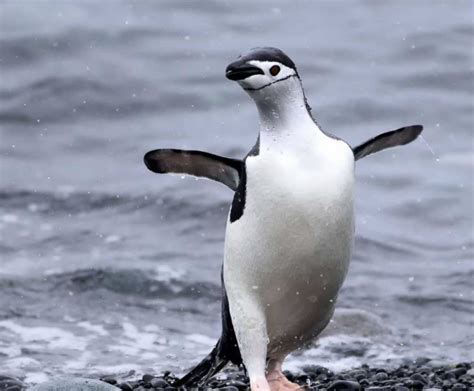
Chinstrap, Adelie, and Gentoo penguins feed primarily on Antarctic krill (Euphausia superba) and, to a lesser extent, fish, with a significantly higher fish content in Gentoo penguins than in Adelie and Chinstrap penguins. According to DNA analysis of fecal matter from Adelie penguins in East Antarctica (Jarman, McInnes, Faux, Polanowski, and Marthick, 2013), krill was present in approximately 70% of samples, being the sole dietary component in 20% of all samples. Antarctic krill (Euphausia superba) is a key component of the diet of Antarctic penguins, and its sensitivity to ocean acidification and warming may directly impact food availability for these birds.


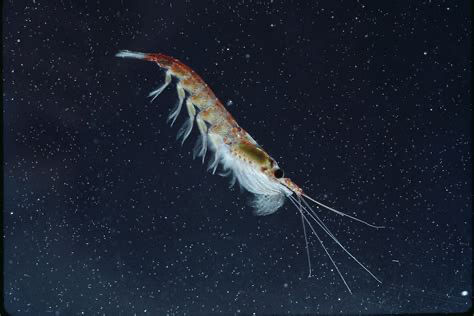
Antarctic krill is a key species in Antarctic food webs, linking phytoplankton production to higher trophic levels, including penguins. Their abundance and distribution are important for the organisms they feed on. Antarctic krill occur primarily around ice, where they depend on the biota present there. This is particularly important for larvae, for which the ice not only provides food but also shelter from predators. Global warming is affecting ocean ice, negatively impacting krill larvae. The waters of the Earth's largest ocean current, the Antarctic Circumpolar Current, are warming faster than the entire Earth's ocean (Flores et al., 2012). Antarctic krill have adapted to life in polar waters with stable temperatures. A temperature change of even 1 to 2°C can cause physiological and behavioral changes and affect their distribution. Increasing surface water temperatures can force krill to stay deeper, which can pose a problem for penguins that need to surface and breathe atmospheric air. Regional changes in CO2 concentrations will directly affect Antarctic krill, which occur in areas most vulnerable to acidification.
Krill routinely migrate vertically, which contributes to greater exposure to CO2, the partial pressure of which increases with depth as deep ocean waters contain more CO2. A study conducted on krill populations (Kawaguchi et al., 2011) experimentally exposed Antarctic krill embryos and larvae to 380 (control), 1000, and 2000 μatm pCO2. At 2000 μatm pCO2, development in 90% of embryos was stopped before gastrulation, and no larvae hatched successfully. Based on IPCC projections, by year 2100, pCO2 levels could rise to 1400 μatm within krill's range of living, posing a serious threat to their populations. This means that as pCO2 levels increase, the survival rate of young krill decreases. The embryonic and larval stages have a key impact on the structure of the entire Antarctic krill population, and negative changes in development, physiology, and behavior impacts the entire food web.
Despite penguins' adaptation to extreme conditions, they are sensitive to sudden environmental changes. Due to their location at one of the higher trophic levels and their adaptation to a constant food source and unchanging atmospheric conditions, they are unable to adapt quickly enough to changes. Their primary survival strategy is migration or changing feeding habits, not microevolution (Forcada and Trathan, 2009). The tendency to migrate in response to threats has been widely observed among species nesting on the shores of ice sheets and those living inland. Increasing climate change associated with melting ice sheets and the dislocation of food sources poses the greatest threat to Adelie and Emperor penguins, whose reproductive success depends on stable food, stable atmospheric conditions, and permanent ice cover (Boersma, 2008). Local food shortages and changes in ice extent result in fluctuations in penguin populations, mostly in declines.
During the breeding and chick growth period, negative environmental factors have the greatest impact on penguin populations. Climate change during this period leads to underfeeding, abandonment of young, and deaths due to maladjustment. A delay in reproductive activity is also observed, which is directly related to the growth of the chicks (Barbraud and Weimerskirch, 2006). It is known that synchronizing breeding with appropriate nutritional conditions is crucial, as the period guaranteeing reproductive success is short.
Current projections regarding water acidification and the coexistence of factors exacerbating environmental change suggest a reduction or even a halt in the growth of Antarctic krill populations and an increase in the frequency of vertical migrations (McBride et al., 2021). In waters rich in krill, penguins prefer to harvest krill close to land at shallow depths. Increasing krill depths result in increased exercise and energy requirements for penguins (Riaz et al., 2025). It is also known that krill shortages in the surrounding environment are a critical threat to penguins, directly related to the decline of already endangered populations.
Water acidification is responsible for the bioaccumulation of water pollutants and their interactions. The correlation observed between increased microplastic and nanoplastic toxicity in the acidic Antarctic environment is a poorly understood phenomenon. The biological responses of krill embryos to the simultaneous decrease in pH and the presence of microplastics are known. Multi-stressor tests have shown that increased microplastic toxicity due to increased water acidity significantly reduces embryonic development and reduces the hatching rate of krill (Rowlands et al., 2021).
Given the predicted negative changes in krill and fish populations and the intensive human harvesting of both species, it is impossible to accurately predict the behavioral and biological responses of penguins. Due to varying past responses and insufficient knowledge of the direct relationship between penguins and water acidification, future responses are unknown (Forcada and Trathan, 2009). The reduction in penguin food through migration and the reduction of krill as well as fish stocks constitutes a serious environmental problem. This negative effect is exacerbated by human harvesting of krill in krill-rich coastal zones, the preferred feeding grounds of penguins (Panasiuk, Gic-Grusza, and Korczak-Abshire, 2024). Given the threat to penguin populations, all measures must be taken to prevent the ongoing decline in the Antarctic krill population and the threat it poses to the entirety of the Antarctic ecosystem.
Citations / Directories
Barbraud, C. and Weimerskirch, H. (2006). Antarctic birds breed later in response to climate change. Proc. Natl. Acad. Sci. U.S.A. 103 (16), pages 6248-6251.
Boersma, P. (2008). Penguins as Marine Sentinels. Bioscience 58.
Fabry, V. J., Seibel, B. A., Feely, R. A. and Orr, J. C. (2008). Impacts of ocean acidification on marine fauna and ecosystem processes. Journal of Marine Science, pages 414-432
Flores, H., Atkinson , A., Kawaguchi, S., Krafft, B. A., Milinevsky, G., Nicol, S., . . . Werner, R. (2012). Impact of climate change on Antarctic krill. Marine Ecology Progress Series 458, pages 1-19.
Flynn, E. E., Bjelde, B. E., Miller, N. A. and Todgham, A. E. (2015). Ocean acidification exerts negative effects during warming conditions in a developing Antarctic fish. Conservation Physiology, Volume 3, Issue 1.
Forcada, J. and Trathan, P. N. (2009). Penguin responses to climate change in the Southern Ocean. Global Change Biology (15), pages 1618-1630.
Hancock, A. M., King, C. K. and Stark, J. S. (2020). Effects of ocean acidification on Antarctic marine organisms: A meta-analysis. Ecol Evol.
Handley , J. M., Baylis, A. M. and Brickle, P. (2016). Temporal variation in the diet of gentoo penguins at the Falkland Islands. Polar Biology 39, pages 283-296.
Jadwiszczak, P. (2009). Penguin past: The current state of knowledge. Polish Polar Research 30 (1), pages 3-28.
Jarman, S. N., McInnes, J. C., Faux, C., Polanowski, A. M. and Marthick, J. (2013). Adelie Penguin Population Diet Monitoring by Analysis of Food DNA in Scats. PLoS ONE.
Kawaguchi, S., Kurihara, H., King, R., Hale, L., Berli, T., Robinson , J. P., . . . Ishimatsu, A. (2011). Will krill fare well under Southern Ocean acidification? Biology letters, pages 288-291.
McBride, M. M., Stokke, O. S., Renner, A. H., Krafft, B., Bergstad, O. A., Lowther, A., . . . Stiansen, J. E. (2021). Antarctic krill (Euphausia superba): spatial distribution, abundance, and management of fisheries in a changing climate. Marine Ecology Progress Series 668.
Panasiuk, A., Gic-Grusza, G. and Korczak-Abshire, M. (2024). Availability to predators and a size structure of the Antarctic krill Euphausia superba in the 48.1 CCAMLR subarea. Sci Rep 14, 21538.
Panasiuk, A., Wawrzynek-Borejko, J., Musiał , A. and Korczak-Abshire, M. (2020). Pygoscelis penguin diets on King George Island, South Shetland Islands, with a special focus on the krill Euphausia superba. Antarctic Science, pages 21-28.
Riaz, J., Machado-Gaye, A. L., Chimienti, M., Kato, A., Ropert-Coudert, Y., Alegría, N., . . . Soutullo, A. (2025). Bout time for krill: contrasting Adélie penguin foraging behaviour during years of high and low krill availability. Animal Behaviour vol 226.
Rowlands, E., Galloway , T., Cole, M., Lewis, C., Peck, V., Thorpe, S. and Manno, C. (2021). The Effects of Combined Ocean Acidification and Nanoplastic Exposures on the Embryonic Development of Antarctic Krill. Front. Mar. Sci. 8:709763.
Saba, G. K., Bockus, A. B. and Seibel, B. A. (2021). Combined effects of ocean acidification and elevated temperature on feeding, growth, and physiological processes of Antarctic krill Euphausia superba. Marine Ecology Progress Series 665, pages 1-18.
Tai, T. C., Sumaila, U. R. and Cheung, W. L. (2021). Ocean Acidification Amplifies MultiStressor Impacts on Global Marine Invertebrate Fisheries. Front. Mar. Sci. 8:596644.
Xavier J.C., C. Y. (2018). A review on the biodiversity, distribution and trophic role of cephalopods in the Arctic and Antarctic marine ecosystems under a changing ocean. Marine Biology 165, 93.
Zhao, Y. (2025). Research on the Principle of Ocean Acidification and its Impact on Marine Organisms.
Strategic Partnerships
Reel Guppy Outdoors
SharkedSkooler
Marine Enthusiasts Podcast
Cash Daniels
Tides of Tomorrow
The Open Book, Topanga
Olivenbaum Music
Pitfire Artisan Pizza
Our Loyal Patrons
P. R. Ochoa


Comments