
“The More Exposure To Books & Educational Opportunities Kids Have At A Time When Their Curiosity Is Huge, The Better Chances They Have.”, An Interview With Oceanic Author Elaine M. Alexander


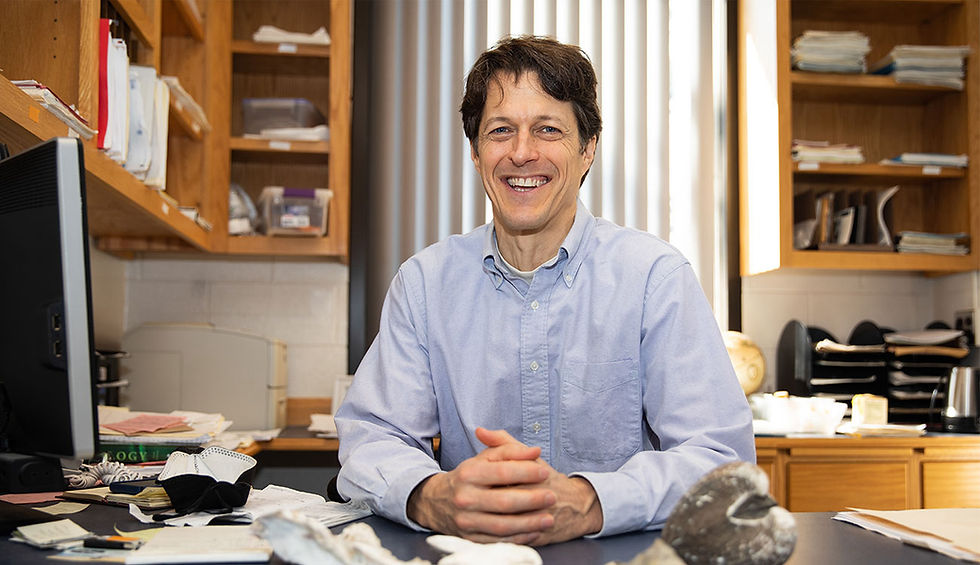
Recently, our head writer was lucky enough to sit down for an interview with Science Communicator, Librarian, & Children’s Book Author Elaine M. Alexander.
Elaine M. Alexander is a Science Communicator, Librarian, & Children’s Book Author known for her books Anglerfish: The Seadevil of the Deep, Death at Deacon Pond, & Giant Cuttlefish: Chameleons of the Sea.
In today’s interview, we sit down with Elaine M. Alexander to discuss her career, books, manuscripts, writing process, fascination with the sea, & advice to young ocean-oriented authors looking to make their way in the world. Before delving into today’s comprehensive 18-question interview, please note that everything said has been edited for clarity, & that the opinions of our interviewee do not necessarily reflect the opinions & values of our organization. With that being said, let us delve into the contents of the interview!
Contents of the Interview
Questions About Her Career
No. 1: What sparked your passion for the ocean?
I’ve always been fascinated by the ocean. I think I like the duality of it. It can be dark & mysterious, but in the sunlight it can glitter & sparkle. It’s very powerful. It’s dangerous sometimes, & destructive, but it can also be calming. We listen to ocean waves & it’s calming. I love the variety of creatures inside the ocean. I read somewhere that we maybe know about or we’ve explored about 5% of the ocean. I don’t know if that’s an accurate assessment, but I wouldn’t be surprised. To me, it’s as vast as space. Maybe that’s not quite as accurate, space is always growing & I don’t know if our oceans are, but it seems like that to a little small person like me. I just am always curious about it, & wonder what the scientific community will discover as they’re always discovering more.
I’m a little afraid of it at times. I’m in New England, & you can’t always see more than a few inches down in the water, so I remember as a kid when you’re swimming, & something would touch your leg, you’re like, what was that?! It has that dark & mysterious thing about it, but it’s also teeming with life, & it’s just an amazing ecosystem, or many ecosystems I suppose.
No. 2: Was there any particular person, place, media franchise, or event which assisted in sparking your passion for the undersea realm?
It started for me with this book series I’m doing with Candlewick, it started as a homework assignment. I love telling kids that when I go to schools, it really did! I was taking a creative writing class with Dr. Lisa Rowe Fraustino, & we all had to write a nonfiction piece suitable for ages four to ten. On top of that, my son had just seen Finding Nemo with the scary fish. He, like a lot of kids, was totally freaked out. I thought, two birds, one stone, if we went to the library & we got some books on Anglerfish, it would sort of demystify it, & I would also get material I needed for my assignment. I found a little bit, but what I found was that they didn’t know much about anglerfish at all. It’s a mystery. So, I said, let’s keep digging, & I did. I wrote this piece & my teacher was saying “Wow, this is really good! You should consider starting to submit it & get it out into the world.”
So I did! It took me a long time to find the right place for this manuscript. Once I started researching & finding out what books in what areas of the library didn’t have a lot of information, or didn’t have books, I saw an opportunity to write about an area that there was obviously a deficit, that would maybe increase my chances to get the book out there. I also thought, how cool! This is a mystery, there is a strange-looking fish, how does it live way down there, seemingly all alone? I was intrigued. Once I found out it was all females, I thought she’s just this beautiful, powerful, kind of strange-looking creature, but I thought that was beautiful in its own way. I like the oddities in life, & she certainly is. I was kind of hooked. Once I had completed that, I got advice from different editors who became interested in the manuscript, but ultimately passed, saying that I should write a series on other ocean creatures. I thought about that for a little while. What would I write? That’s kind of how I got started on it. There wasn’t any particular person, place, or thing, but sort of a kismet of things coming together. I love a good mystery, so even if I got to do some research to unearth that mystery, it’s okay by me.
No. 3: What sparked your passion for writing?
Well, I’ve got to give credit to my fourth-grade teacher Mrs. Demosey. She integrated writing into as much classroom work as she possibly could. She had us writing everything, poems, short stories, limericks, haiku, you name it! What I liked about her was that she told us we could all be writers, & I really believed her. It’s a lesson I brought with me forever.
I got back into writing when I finished my undergraduate degree, & I started taking classes with Dr. Fraustino, who is a published writer herself, in addition to being a professor. It helps you be in a group where you’re all striving to get your work as good as it can be, & you learn how to give good feedback to one another. I always think when you’re doing that, it helps spark your own interest. Somehow, it works. It’s like a magical thing. That’s how I got back.
I always liked writing as a kid though. I remember as a kid I wrote a report on every single planet in the solar system. I was really into space, I think some of them were for extra credit. I enjoyed it. There’s something about trying to not only create but make it better that is very hard, but, very worthwhile.
No. 4: What sparked your passion for working with youth?
I think for me, becoming a parent made a difference for me. I didn’t really see myself working with kids for a long time, but I became a parent & you change. You’re trying to give your child enriching experiences. Once I started working at a public library, I was thrown into it. I think I really enjoy the magical way young children, babies, toddlers, & preschoolers see the world. First of all, they’re very honest. They’ll tell you everything, no secrets with a preschooler. I enjoyed connecting with those young kids & their parents, & helping spark their interest in reading. I saw story time as a good way to set a good tone & get parents to see the value of reading at home. I’m hoping that by continuing programs like that, you grow a lifelong reader. I think it helps build that foundation. I’ve been doing it long enough, I just saw that one of the kids that was coming to my story time graduated as the salutatorian. That was a library kid! I love that. I’m not saying there weren’t many other things in between, but I really think it can build a good foundation. The more exposure to books & educational opportunities kids have at a time when their curiosity is huge, the better chances they have.
They are so honest, I love their honesty. They’re not as bogged down by concerns about what people think about them. They are straight up honest, especially the four-year-olds & under. They’re not afraid to be silly, they’re not afraid to laugh. Once you start to get older, you start to get a little more sophisticated, you’re in different learning environments, & we change. They lose some of that. I wish we could hold on to as much of that as possible as we age.
No. 5: What is your favourite species of marine or terrestrial animal? Why?
I hate picking favourites, this is a really tough one for me. I like all the oddities in life, no matter how strange, because one of the things I liked about these odd creatures is that no matter how strange we think they are, they’re perfectly constructed for the environments that they’re in. I think that’s amazing.
If I have to pick something marine, I might pick a seal. They kind of remind me of a marine version of a dog. I’ve seen too many at the aquarium, they’re trained, but there’s something very playful about them. I think they’re adorable.

On land, I love elephants. They’re very protective of their young. They build lifelong friendships with their females. I think that’s so cool!
As for domestic animals, I’d probably say dog. They’re loyal, & they’re happy to see you no matter what. You can’t beat that!
Questions About Her Career:
No. 6: Which university did you attend for your bachelor’s degree & was there any particular reason for you choosing that institution?
Not really. I went to Eastern Connecticut State University. That’s where I finished my degree. I started at UConn, & made some switcheroos. All were financial decisions for me. The main thing was cost. I finished my degree a little later, I wanted to attend the best school for the most reasonable cost. I really believe education should be accessible. I’m very practical about matters like that. To get some of my credits, I did an independent study, & I did some classes at Three Rivers Community College to get all the credits I needed to graduate.
I got my master’s degree at Texas Woman’s University, which was all online. That was the cheapest place to get your Master of Library Science at the time that I was looking. I think classes are what you make of them. I thought both programs were great. I had a lot of great teachers at Eastern Connecticut State University. I consider myself pretty fortunate that we’re in an area with so many great schools, you really can’t go wrong.
No. 7: How did you enter the field of library science?
After I finished my undergrad degree, I was writing for a local paper. It was okay, but I was looking for a change. I wasn’t sure if I wanted to go to grad school at that point. I was between 2 things, going to school to write children’s literature, or doing an MFA or MLS.
So, I got a job at the lowest level at a library I could, library page. The library was a smaller size, & I pretty quickly started learning all the phases of librarianship before I became a librarian. I started working at different-sized libraries, & I decided that enough aligns here, I should take the plunge & get my master’s degree to become a “real librarian”. I was doing pretty much everything anyway, I might as well get the title & the better pay if I could. So I went for it! I’m glad I did it that way, even if it seemed backwards. You can get in there, & you can figure out “Does this suit me? Do I have something to contribute to this industry?” I did, & I do now, & I don’t think I would have known that if I got the degree first & then went into it.
No. 8: How did you enter the role of a youth services librarian?
My path to youth services was a little different than most. As I said, I met the librarian at my local library through my work writing for a newspaper. We got to talking, she shared with me what librarian work was like, & I talked to her about what going out on assignment was like, writing newspaper articles, et cetera. When that opening came up at my hometown library, I went for it! Even though I was overqualified for the position, it gave me this really good opportunity to start learning from the bottom up. Once I started working for her, I got opportunities to start subbing when someone was out sick, I could do storytime. I love that you never knew exactly what the day was going to bring. You could have an every mundane day shelving books or checking people in & out, or you might be doing storytime! I love that element. It’s kind of funny how it all pans out.
As a kid, I always used to ride my bike to the local library. I always felt at home at the library. So, it shouldn’t have been a big surprise, I guess in some ways, it was kind of a surprise how well I fit in.
No. 9: How did you begin hosting story-times for children (babies, toddlers, preschoolers, et cetera)? Do you enjoy hosting story-times?
I love it! My first introduction was subbing, usually they would have some kind of lesson plan prepared. My director at the time wanted to create what they call a lap sit, or a baby program. Specifically non-walking babies, so usually under the age of 12 months. She gave me a little bit of feedback on how to do it, but I just took what she gave me & went running with it. I developed that program from scratch, & then it became very popular. Before long, she asked me to do a different age bracket, the preschooler set. That became very, very popular. I think I brought to it my love of children. I find a real strong connection with kids. I really enjoy their joy, it feeds me & my creative interest. It gave me a chance to try out different things.
I love to integrate music into the programs, & things of that nature. If I’m having fun, & they’re having fun, & we’re all learning together, nothing beats that. That’s really where it comes from. I usually incorporate lots of manipulatives, you know, egg shakers, scarves, clappy hands, anything that can make it fun for them. Hopefully, they get used to routines enough that it sets a structure for them, & it helps them later when they’re entering into preschool. They’ve already had circle time together, & learn how to share things. There’s something comforting in knowing that.
I think it big difference. I hear this a lot, & I’ve seen it with my own eyes too, they’re talking about kids’ attention spans not being as lengthy as they used to be. I see that in the length of picture storybooks, there used to be a much higher word count, but now we’re much lower. I don’t expect a toddler to stay still all the time, but anything you can do to encourage that it’s okay to sit back, enjoy this story, look at the pages, point things out to me as you’re seeing them, can help them build more of an interest. Anything we can do to help strengthen that is a positive thing to me.
Questions About Her Books:
No. 10: Take us through the process of writing your first book, Death At Deacon Pond. What inspired you to write this novel, & what does the novel discuss?

This was a homework assignment. I was doing an independent study, & I was very interested in learning how to write an entire novel. I’m a big reader, but I wasn’t sure if I had it in me. I started taking this class with another writer who could walk me through the process, & it was an amazing opportunity. I’m very lucky I was able to use it for college credit as well. I have always been a fan of dark & twisty mysteries, & I knew I wanted to write something a little dark & twisty. I added a supernatural element to it because I thought it would be fun. It’s a genre I gravitate to.
I kept picturing this scene that’s in the book, where this teen girl is trying to find clues to solve her father’s murder. She thinks she sees a dead body in the water, but you don’t know if she really sees it. She thinks her mind is playing tricks on her. That’s where she discovers that she does, in fact, see things that other people can’t. Of course, no one believes her. As she’s slowly uncovering the truth, every step that she does puts her more, & more in danger.
I love that it was set in a small town. I think that people have this impression of a small town that everyone’s safe, & nothing bad ever happens. Of course, that’s not true. That was my inspiration & focus for writing the book.
I do want to write longer books, I’m starting to try to write another one now. I have some manuscripts that have not sold, that I hope will sell someday, but in a different genre. Historical fiction is kind of a tough sell.
You really do need interest in a subject to sustain you over the long period of time it takes to write something. I have to study for quite some time before I can write about a subject, even for the shorter picture books that I’ve been writing. I’ve got to be interested or hooked enough, or I won’t feel like I can bring it authentically to the page. If it’s a character, then I’ve got to figure out who she or he is, & be ready to be on that journey with them. With Anglerfish, I felt that same way when I wrote. I pictured myself right in her skin, as she’s in the dark part of the sea, in the midnight zone. I felt like I was on the ride with her. That’s kind of how I want it to feel for kids when they’re reading too.
No. 11: One of your most recent books, Anglerfish: The Seadevil of the Deep, focuses on a peculiar marine animal known as the anglerfish. Anglerfish are well known for their usage of bioluminescence, as well as their sharp fangs & gelatinous appearance. What inspired you to focus your first children’s book on them? What was your writing process like?

It was a homework assignment from that super creepy creature in Finding Nemo. I was so interested, it’s poetic, this fish living so far below the ocean all alone, but also not alone. She usually has a few males attached to her. I thought that was so radical, but also very powerful. She’s way bigger than the males. I thought, if I'm curious, kids will be too.
Initially, when I gathered information at the library, I really scoured a lot, & they would have one or two sentences. I looked on the internet, & I found some. I went to sites like the Monterey Bay Aquarium, which, if I have my information right they were the first to film her underwater. I thought, wow! It was pretty amazing. There wasn’t a lot of information when I started writing the story.
I tried to picture what it was like for anglerfish. What’s’s the experience like? You’re all by yourself, sort of, sort of not. I knew I wanted to write a book that felt like a fictional story. Many nonfiction books when I was a kid were very dry, & encyclopedia-like. It was fine, you got facts & you wrote facts out for your schoolwork & such. But I wanted it to be creative nonfiction. I wanted it to read like a story, & to be more accessible to kids than the kind of nonfiction I had growing up. I see tons of it now, nonfiction with a creative element, & that’s what I wanted. There are kids that gravitate to nonfiction, but for kids that don’t gravitate to it, I wanted something that they could appreciate & enjoy too. That’s how I envisioned it.

When I wrote it, my professor at the time said “This is really good! You should see if you can sell it.” I did try for a while, I took a break for a while too from submitting it & such. It took me quite a while to find a publisher. I finally went to the Rutgers one-on-one conference. It’s a special conference where you have to submit a writing sample to get in. They judge your writing sample on whether or not you can come to the conference. You can’t just pay & go. You still have to pay, but, only the people that they decide can go. I got in, & I got an opportunity to submit my work. One editor was very nice, she said “I don’t work with books like this”, but someone there did, & she had been looking for a manuscript like this. She said she’d pass it on. I’d had a conversation like that with other editors before. I got a little excited, but I also thought “I’ve heard this before”, but it turns out she was serious, & made me an offer. The rest is history.
I hope I can keep my momentum up. I think when you’re writing, you hear a lot more no’s then yeses. It’s so magical when it finally happens that you have the right mixture of luck & hard work, & you find the right person for your manuscript.
No. 12: Your most recent book Giant Cuttlefish: Chameleons of the Sea takes readers on a journey through the fascinating world of cephalopods. What was your writing process for this book? What about cuttlefish made them an ideal subject for a children’s book?

Cuttlefish got on my radar when I read an article about them that called them the “rockstars of the ocean”, it was talking about how they “say it with skin”. They talk through their skin. They communicate moods, & it’s especially true during their mating process. They exhibit certain skin patterns & such. I thought that was fascinating! I thought “Wow! I had no idea. How do they do that?” I decided, just like anything, to see if it sparks my interest by gathering more information. I grabbed books of all sorts, & I started reading about them. I decided that it was too cool not to write about, & again, I saw I didn’t see much in the library that focused on cuttlefish. I had a few, but they mostly lumped them together with octopuses & squids, & I get it. I wanted to just write about one, & I chose the giant ones because I had no idea that there’s a whole industry that evolved around their mating season in Australia. People go out in boats & watch it, I thought that was really cool.
When I decided to write about them, I drafted a manuscript, I went through it many times, & I pulled in an expert. I was very fortunate that one of the experts was someone who had done experiments on whether or not cuttlefish could create a preference for which food they liked. She did other experiments to see how wild their patterns could get by putting some kind of pattern up, & seeing how quickly they could blend in. She agreed to look at the manuscript. I thought it was awesome to have someone who had this as her life’s work want to review my writing. She didn’t work with giant cuttlefish specifically, but she could give me excellent feedback.

I thought they were ideal, because there’s just not enough about them. There’s plenty about sharks, dolphins, lovable seals, & other creatures, but I didn’t see much about giant cuttlefish or cuttlefish in general. It’s weird enough, & rare enough. I guess that’s what I’m looking for.
No. 13: At present, you have 3 published books. Do you plan to publish any more books & if so, can you share what your next titles will focus on?
I have 3 more books that will come out with Candlewick. I’m really excited! The first one is going to be called Firefly: The Femme Fatale of the Night, it focuses on the Photuris firefly. If you know anything about fireflies, everyone loves them. She specifically targets other male Photinus fireflies to get a chemical she needs, Lucibufagin, so she can protect her young. It’s a chemical that wards off other creatures that might eat them, such as spiders. She’s fascinating!
Following that, I have one on the Giant Pacific Octopus, who is also a cephalopod. Very cool! I was studying both them & giant cuttlefish at the same time. I thought they were amazing, so I wrote one on the Giant Pacific Octopus as well. They’re very similar. They are also able to say it with skin, & are very intelligent creatures.
After that, I did one on eels! I became fascinated by eels after seeing one at a dock. I was like “Wow, what’s that? That’s an eel!” I started reading about them, & I realized that this was in brackish water. Most of the ones in brackish water tend to be males. I started reading about how they go from saltwater to freshwater back to saltwater. That is wild that they can adapt to 2 different communities, & that they change. I don’t know if you’ve read any, but there are 2 big adult books out there on eels. I read both of them. They talked about this history behind the European eel, American Eel, Japanese Eel, & I think there’s one that’s Norwegian. American eels & European eels all come from the same area in the Sargasso Sea. It’s just wild that they go on 2 different trajectories when they go back to the rivers, & live there for many years, before they go back to the sea to breed. It’s an amazing journey. I think it has mystified people for many, many years. That was a cool thing to learn about. I thought that there was no way I’m not going to write about this.
I have manuscripts that have not sold. I hope someday to publish them, but, even if not, I learned something. I wrote one on bluebirds, because I have bluebirds in my backyard, & I love to see them nesting. I was curious about why they were here in November, & why they were here before other birds. I found out that there’s stiff competition for nesting cavities. They’re taking a real risk being here so early, they could freeze over. I’ve seen them here as late as November, occasionally they stay all winter. It’s very unusual. I don’t know if that’s a climate change thing, or if they’re just struggling to get first dibs on those nesting cavities. We’ve got a bunch of bird houses out there. We have seen how aggressively other species will go after them, we unfortunately had a couple of fledglings killed by presumably another bird, we’ve seen it in action. I wrote a whole manuscript on it. I haven’t sold it, maybe I never will, but I do learn something in the process no matter what.
I have a couple on spiders, two different types. One that lives above water, & one that lives below water, which I think is cool.
I just finished one on coelacanths, which I think are fascinating, but no one’s seen that one but me. It was fascinating! It’s a fish that has stayed almost the same for thousands of years. It’s wild! I’m in the process of wrapping that one up. We’ll see.
We have to stay curious. What are we here for if we’re not supposed to learn & grow? It’s soul-crushing for me when I hear people are not curious or interested in anything. That’s kind of a bummer. We’ve got to be interested in the world around us.
No. 14: Has spending a career working with children influenced your ability to write a piece engaging to young readers? If so, how?
I think it helps to connect with them, & feel out what’s important to them. If you want to be a writer, you have to be a reader. I read a lot of books that are written for children, so I can see what other people are writing. It’s not to cheat! It’s to see what’s marketable, what people are checking out, & what they enjoy. You’ve got to read across the spectrum! Being in the library, & providing story-times gives me a lot of exposure to different picture books. I read all over the library. I read adult stuff too, but I can see what engages kids, what doesn’t, & what they gravitate towards. I hear them asking about certain things, axolotls are the top things in the last month or so, they’re going nuts. I can see those market trends, & try to stay on topic if I can. On the catch side, in writing, because it’s so slow to get to publication, I don’t know that following trends will help you to get your manuscript acquired somewhere. I look for where I see a hole in the market, where I have an opportunity to put something in that hole, & hey, you know, kids might want to read about giant cuttlefish.
No. 15: What has been your proudest moment or biggest triumph thus far?
Even getting published is amazing. It’s so hard to get your work out in front of the right people & get published. Fiona, the illustrator of Anglerfish: The Sea Devil of the Deep, & I were so honoured when we got the Cook Prize for Excellence in STEM Literature. I’m here in Connecticut, our book was nominated for a Nutmeg Award, which is the state award. It was also nominated for one in Louisiana, which I did go & receive, it was the number 2 spot. It was a good reason to go to Louisiana, I’d never been to New Orleans.
I also got packets of fan mail, which was so cool from kids. It was awesome! I wrote them a really nice letter back. I loved how inspired they were, & what they liked about the book. You don’t beat that, when you’ve made a connection. That’s pretty awesome.
No. 16: Across your career, I’m confident that you have encountered your fair share of hurdles & challenges. What is the largest challenge you have faced across your career? How did you overcome it?
For my writing career, definitely trying to break into the business. It’s really tough to get your work out there. I think it’s getting a little harder right now. Literacy rates are unfortunately going down, it’s just tough. When I originally sold Death at Deacon Pond, it was to a very small press, & they are out of business now. It’s tough for small presses. Right after that, I thought, that’s it! I got an agent, I was ready to go out there with other work, but then I didn’t get a quick sale, & my agent dropped me. I was stunned, I thought, this is it. It’s terrible.
One thing is to look for other opportunities. I went into that conference. I tried to go in being realistic, but having hope. I look for other opportunities where I could submit my work without an agent. Candlewick is normally a place you need an agent to get your work in. I was so fortunate that I got to the right person with the right manuscript. After Anglerfish: The Sea Devil of the Deep was doing pretty well, I asked “Would you be interested in seeing something else?”, & not only were they interested, but by then I had a new editor who said they would put it as a clause in my contract, that they got first dibs on my work. It doesn’t mean they’ll take it, but still.
I found that when you run into obstacles, you can’t let it defeat you. You have to keep growing as a writer. You have to keep faith in yourself, & be persistent. Jane Yolen, may she rest in peace, used to say “Butt in chair!” That means you get in the chair & you write. You keep at it. I loved how she used to share her rejections on her Facebook page, to show that even someone as great as her gets told no. I thought that was very classy, wonderful, & encouraging for those of us who are still in the trenches hoping to get published.
I never take it for granted. I always think “Well, if I never sell any more, I’ll have six books in the world.” I hope I do, I’m going to keep trying,
No. 17: Do you have any advice for science communicators working with youth, aspiring ocean-oriented authors, or people looking to do science education in a non-academic role?
One thing I would suggest for people interested in working with children is to try to engage them, & get them thinking beyond the page, like an interactive activity, or an artistic craft. Passive learning has its place. We all need that sometimes, but I think so much more fun can be had when it’s interactive. I think it solidifies something in their head. With all the technology out there, I think we miss opportunities to develop critical skills. Kids are so curious, take advantage of that, try to meet them where they are, & spark any kind of interest in the world around them. That’s the key in my mind. I always tell kids, “Please stay curious!” We need to remember it sometimes as adults too. Sometimes it’s easy to scroll on your phone, & you’re not really engaging. Do what you can to engage, & have something hands-on. I think it solidifies better in a child’s head.
No. 18: Do you have any final words about your books, career, the beauty of the sea, the wonder of cuttlefish, the perplexing nature of anglerfish, or science communication?
I hope that if my books do anything, they spark interest in children to be amazed about the world around them, to dive deep into the ocean, & learn more about the fabulous creatures in the sea. I hope that they think about what they can do to help preserve these special ecosystems for future generations. Above all, I hope they stay curious.
Directories / Credits
Strategic Partnerships
Reel Guppy Outdoors
SharkedSkooler
Marine Enthusiasts Podcast
Cash Daniels
Tides of Tomorrow
The Open Book, Topanga
Olivenbaum Music
Pitfire Artisan Pizza
Three J’s Kitchen
Presence News
Our Loyal Patrons
P. R. Ochoa


Comments